
The End of an Extraordinary Chapter: Reflections on Artist Residencies & Corporate Vision
The End of an Extraordinary Chapter: Reflections on Artist Residencies & Corporate Vision Today concludes my three-month artist residency at the Swatch Art Peace Hotel in Shanghai - an experience that transformed my…
Today concludes my three-month artist residency at the Swatch Art Peace Hotel in Shanghai - an experience that transformed my artistic practice & reinforced the critical importance of residency programs in an era where traditional support systems are under threat.
On Residencies & Declining Academic Support
Artist residencies provide what we desperately need: uninterrupted time, space, & community to push creative boundaries. For my “Dialogue” project exploring Shanghai’s urban-nature tensions, this residency provided invaluable context that evolved the work in unexpected ways, shaped by daily encounters with the city’s energy & diverse perspectives of fellow residents Fred Van de Walle, Ye Fan, Shin Yatagai, Boemo, Mark & Marc, Maria, Marina, Julia, Daniel & many other remarkable artists.
This feels particularly poignant given the alarming trend at my university, where sabbaticals for artist-academics are increasingly difficult to secure. Traditional academic sabbaticals are being eroded by budget constraints, making corporate-supported residencies essential for maintaining our creative ecosystem’s health.
Swatch’s Strategic Brilliance
I want to acknowledge Swatch Art Peace Hotel not only for their extraordinary generosity but for their remarkable business acumen. By investing in the arts, Swatch positions itself at the intersection of culture, innovation, & global dialogue. Those historic walls aren’t just providing space - they’re building cultural capital, fostering international networks, & associating the brand with creativity.
This isn’t philanthropy for philanthropy’s sake; it’s strategic vision. Swatch understands what many businesses are beginning to realize: supporting the arts creates authentic connections with creative communities, generates cultural currency, & positions companies as thought leaders in an experience-driven economy.
A Model for the Future
The connections forged here - from our group exhibition at Art House Shanghai to new gallery partnerships in Hangzhou - demonstrate the exponential value of these investments. As traditional funding sources contract, corporate residency programs represent a crucial lifeline.
I hope more businesses will follow Swatch’s lead in recognizing that supporting artists isn’t just giving back - it’s investing in innovation, cultural dialogue, & the creative thinking that drives progress across all sectors.
Shanghai, you’ve been transformative. The dialogue continues.

This post included a video. Watch it on LinkedIn.
Shanghai
\\Shanghai// If any happens to be in Shanghai please feel free to come by. I'll be showing my new Photo-sculpture, essentially it's a photographic image from the 'Garden' series developed here in Shanghai during the…
\\Shanghai//
If any happens to be in Shanghai please feel free to come by. I'll be showing my new Photo-sculpture, essentially it's a photographic image from the 'Garden' series developed here in Shanghai during the residency. It's printed on the acrylic and the hand/heat formed, in a responsive evolution of the taking and making phase of the image.
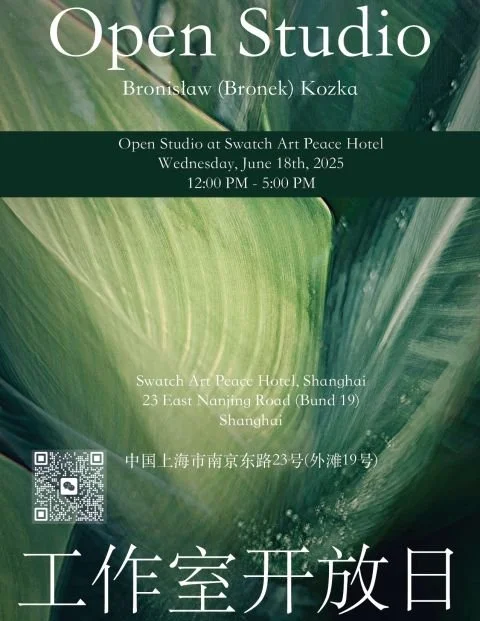
Open Studio
Wednesday, June 18th 12:00 PM - 5:00 PM
Come visit my studio during my Shanghai residency!
Showcasing new work from my new series, exploring the dialogue between urban Shanghai and nature through embodied photographic practice.
📍 Swatch Art Peace Hotel, Room 36
23 East Nanjing Road (Bund 19), Shanghai 200002
🆔 Please bring ID for reception check-in
📅 RSVP by June 16th if possible
Looking forward to sharing this journey with you!
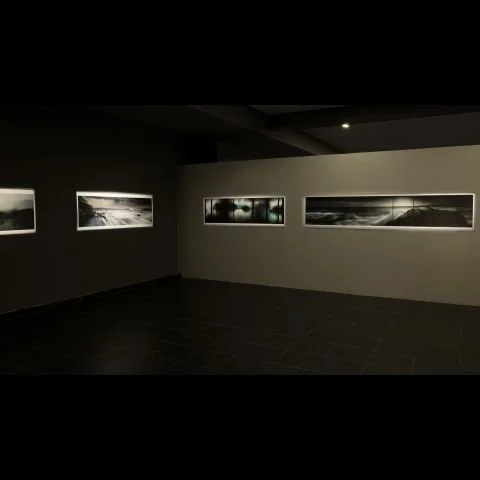
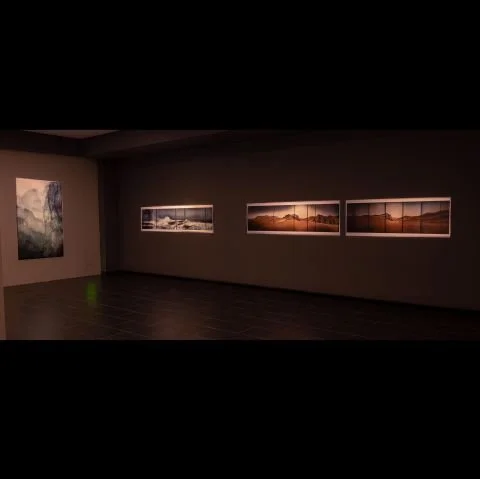
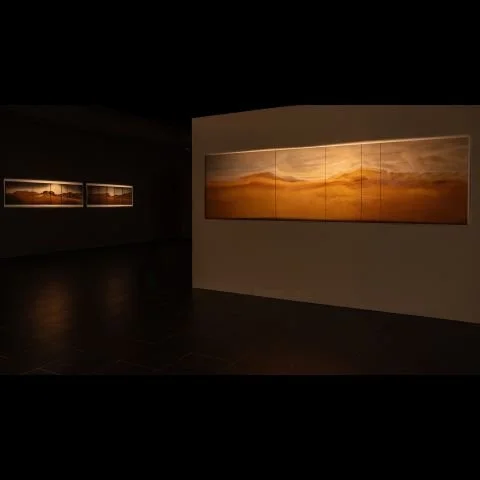
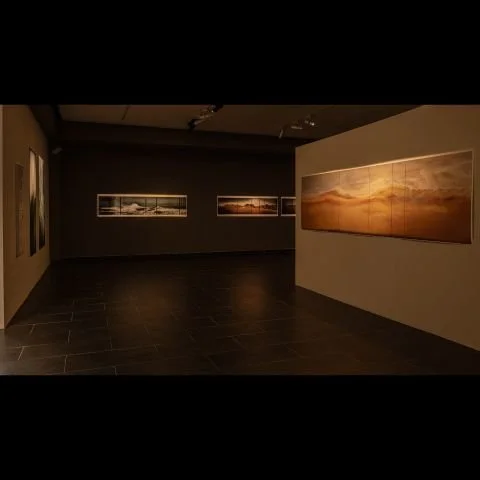
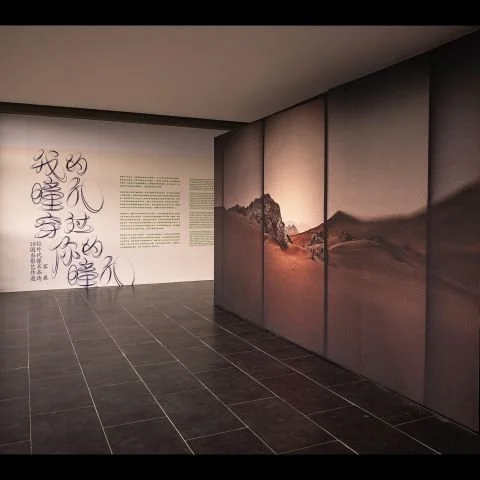
Reflecting on a milestone moment at Quanzhou Photography Museum
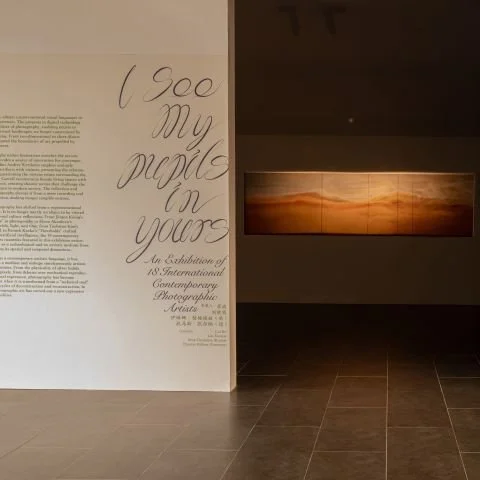
Reflecting on a milestone moment at Quanzhou Photography Museum I'm deeply grateful to Bo Ciu, Director of Quanzhou Photography Museum, for the opportunity to showcase my work in such a thoughtfully curated exhibition.…
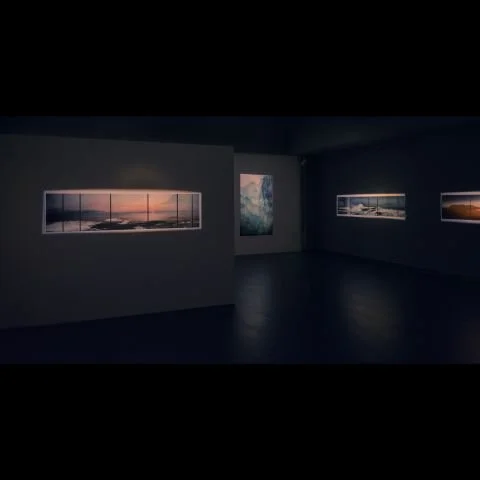
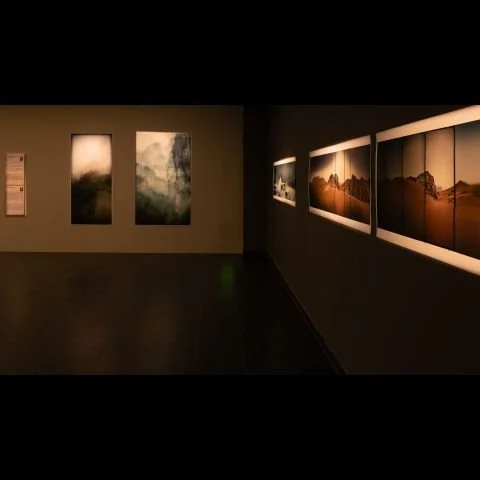
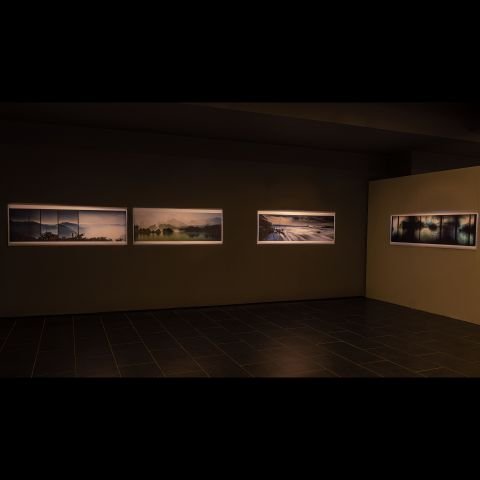
I'm deeply grateful to Bo Ciu, Director of Quanzhou Photography Museum, for the opportunity to showcase my work in such a thoughtfully curated exhibition. The response has been remarkable - so much so that we're already planning an expanded exhibition for next year.
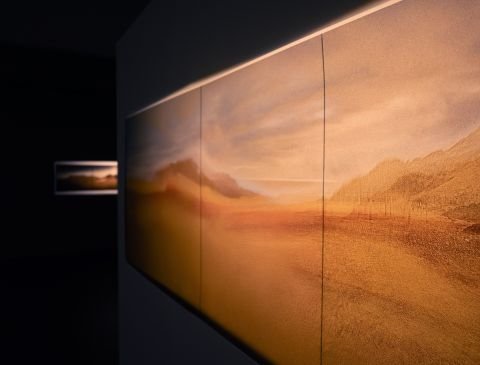
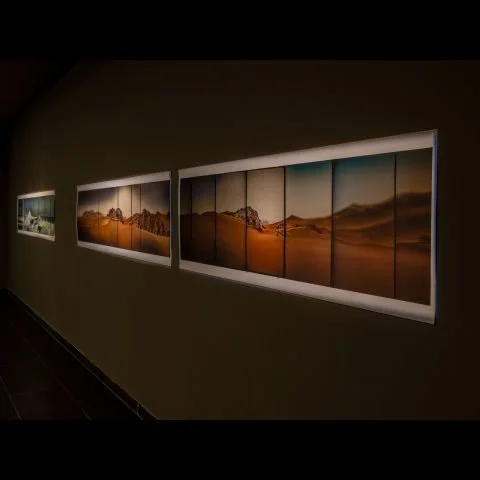
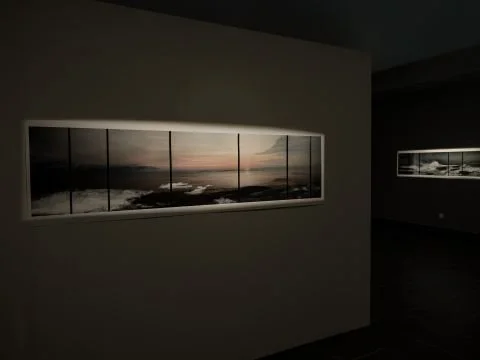
There's something profound about witnessing the dialogue between artwork and audience in a museum setting. Watching visitors engage with the panoramic landscapes, seeing them pause and reflect on the intersection of traditional photography and digital processes - it reinforces why I pursue this practice at the crossroads of technology and contemplation.
This exhibition represents years of exploration into what I call "Origin Image" methodology - photographs completed at the capture site, involving direct dialogue between photographer, place, and technology. The curved gallery walls at Quanzhou Photography Museum created the perfect environment for these immersive landscapes to breathe.
The connections formed during my Swatch Art Peace Hotel residency continue to enrich this journey. Having colleagues like Shin and Po join me for this opening reminded me that art-making is fundamentally about community and cross-cultural dialogue.
As I prepare for the expanded 2026 exhibition, I'm considering how to introduce my sculptural photography work alongside these pieces - another evolution in the ongoing conversation between traditional craft and contemporary innovation.
For fellow artists and academics navigating the intersection of practice and theory: sometimes the most meaningful validation comes not from metrics, but from the quiet moments when a viewer connects with your work in ways you never anticipated.
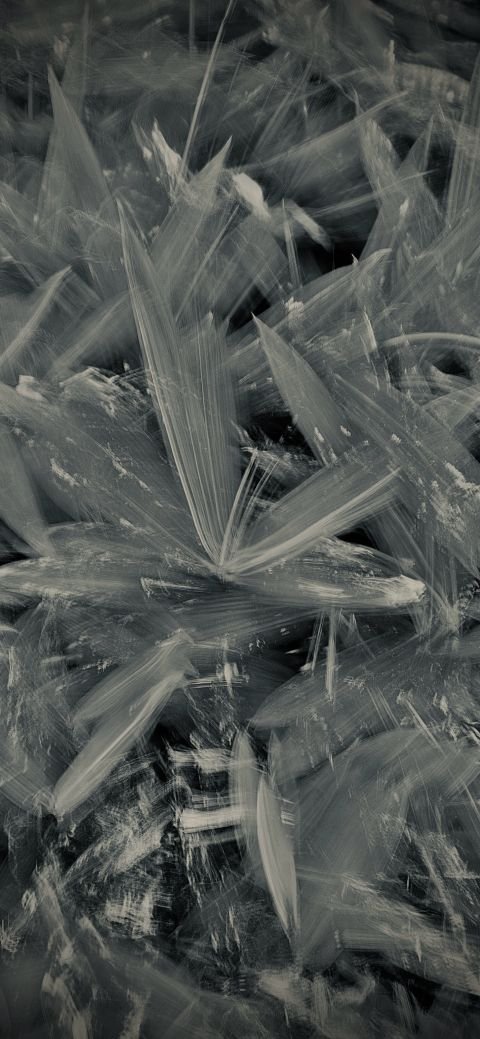
This series sits between states—between what is seen and what is remembered, what…
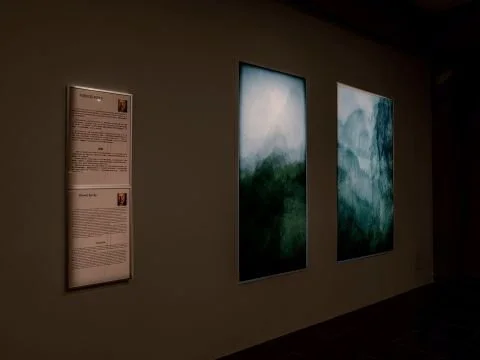
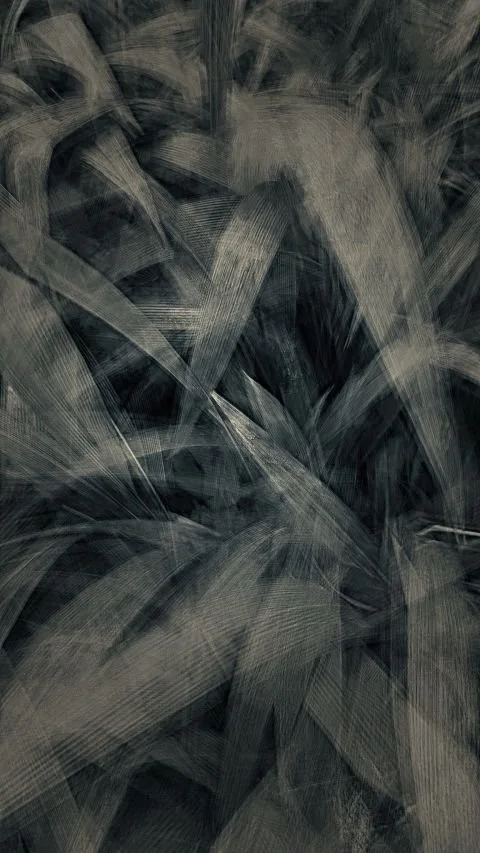
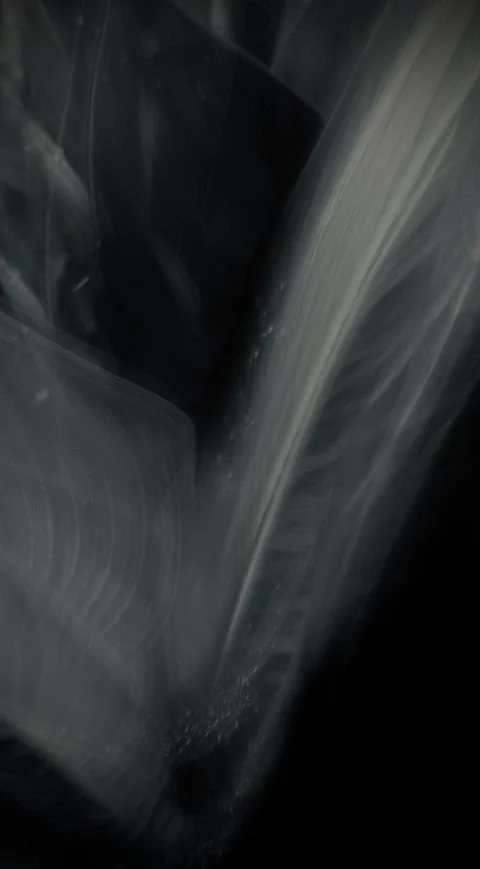
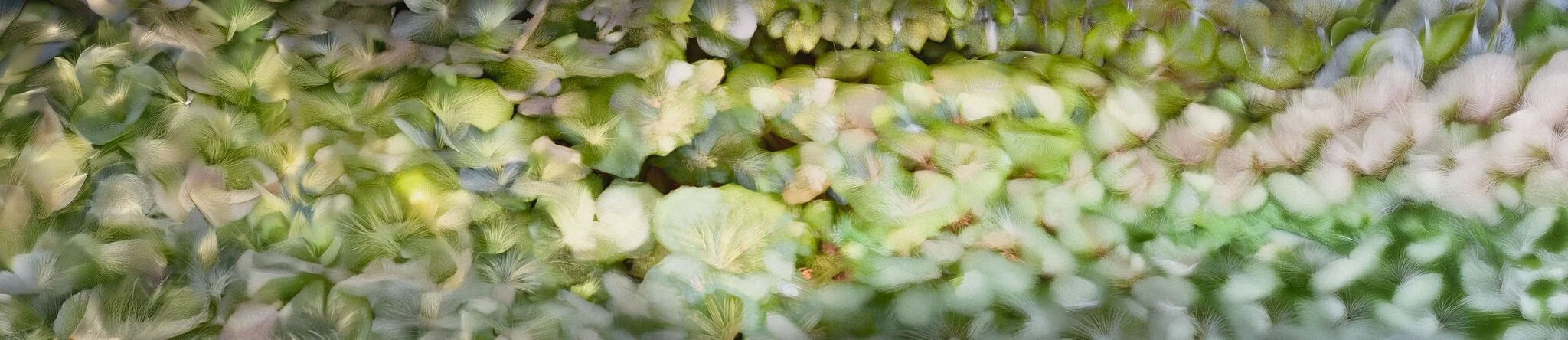
This series sits between states—between what is seen and what is remembered, what is real and what is imagined. The images emerge not from the world directly, but from what persists in the mind after the world has…
This series sits between states—between what is seen and what is remembered, what is real and what is imagined. The images emerge not from the world directly, but from what persists in the mind after the world has receded.
They are built from eigengrau—the grey we see in darkness, produced not by light but by the brain itself. In that space, memory and imagination become indistinguishable. These works inhabit that threshold.
Each image begins in something real: a leaf, a trace, a gesture of light. But as the image unfolds, it drifts inward—layered, uncertain, slow. The result is not documentation, but a kind of visual memory: soft, incomplete, yet emotionally exact.
This is not a record of the world.
It is what the world leaves behind in us.
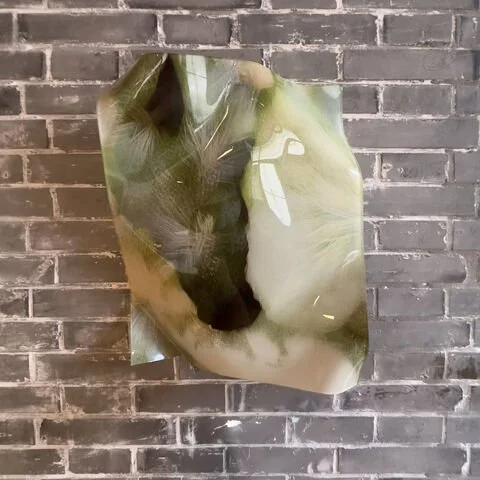
Falling into the garden, one curve at a time
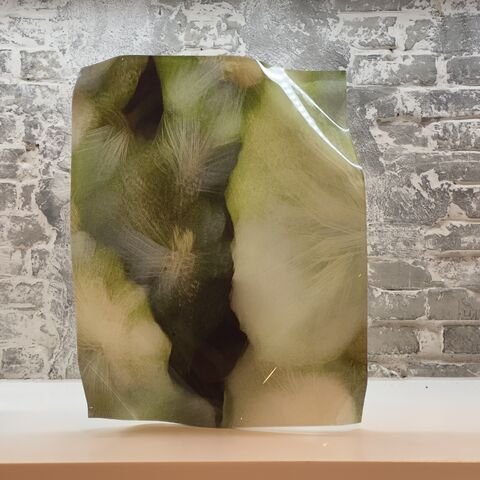
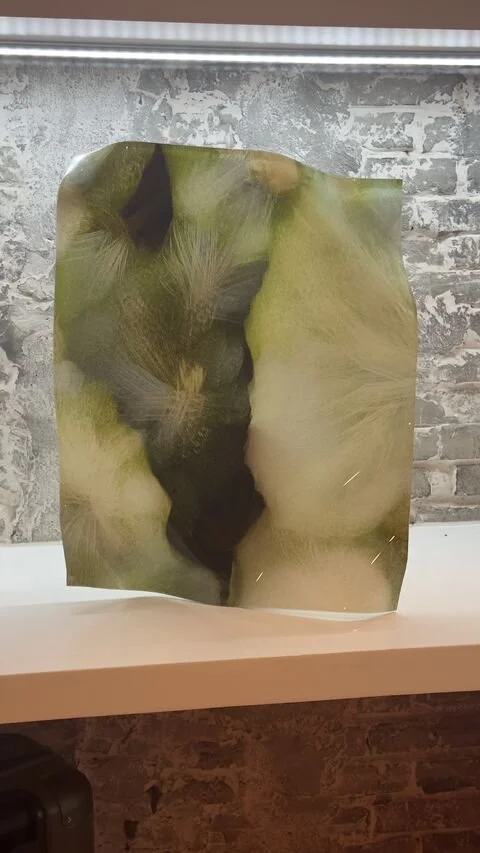
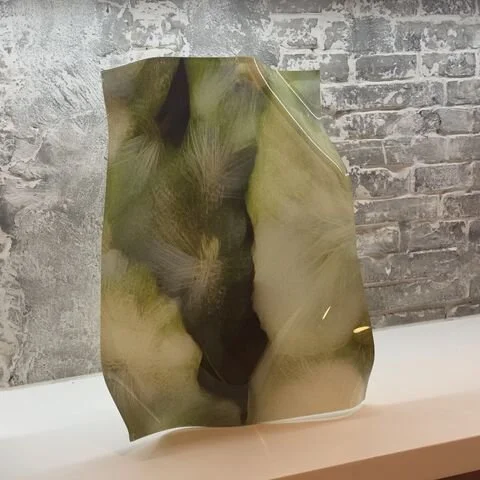
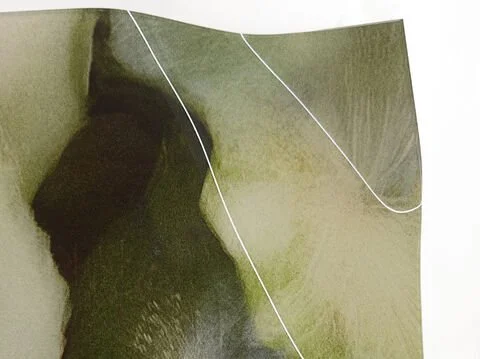
Falling into the garden, one curve at a time. What you're seeing isn't just a photograph—it's what happens when you work and shape printed acrylic by hand, responding to every line and contour of the image until it…
What you're seeing isn't just a photograph—it's what happens when you work and shape printed acrylic by hand, responding to every line and contour of the image until it becomes something alive.
I call it "To Be Held by the Garden" because that's exactly what I felt making the original image—and it's what I want you to feel when your eyes track across these curves. This isn't about touch. It's sculpture for the eyes, mind, and soul.
The breakthrough moment? When I held this test piece up to the wall and watched it come alive—depth, beauty, something I'd never seen before in this way.
This is photography meeting sculpture for the first time. Each discipline has informed the other, but they've never actually 'met ' until now.
Working and shaping the acrylic is like being back in the garden where I made the original image—meditative but intensely focused. One wrong move and it cracks, if fragile. You have to be completely present, completely connected. Just like the moment of capture.
The full finished piece is 2 meters by 50 cm and will be shown in November in Shanghai (art fair), unless it finds a home before.
But here's what I really want to know: Can you feel it through the screen? That pull into the garden? Because if this little test piece can do that digitally, imagine standing in front of the full work.
This is about deepening our connection to nature through art that refuses to stay flat on the wall.
Stumbled across an unassuming exhibition today — no fanfare, no English…
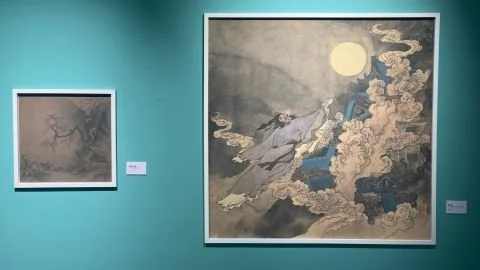
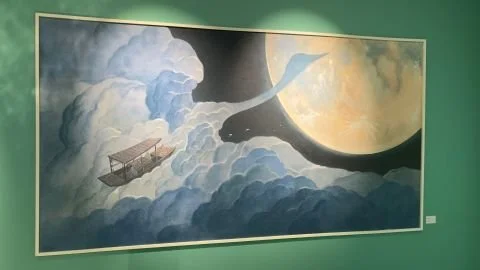
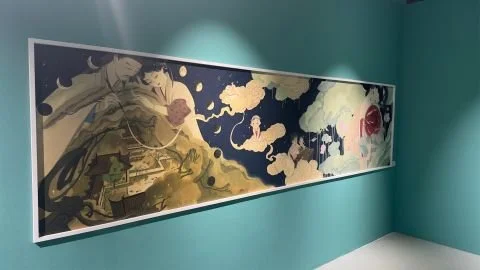
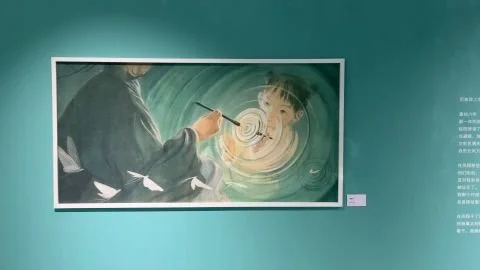
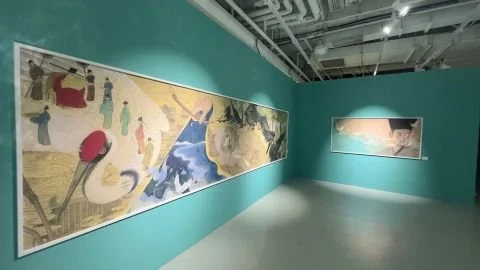
Stumbled across an unassuming exhibition today — no fanfare, no English translations, not even a brochure. Just a quiet series of teal panels in a hallway, following the life of Su Dongpo (Su Shi), the great poet and…
Stumbled across an unassuming exhibition today — no fanfare, no English translations, not even a brochure. Just a quiet series of teal panels in a hallway, following the life of Su Dongpo (Su Shi), the great poet and statesman of the Song dynasty.
With only my camera and the not-always-trusty help of AI translation apps, I pieced together a remarkable narrative. The exhibition followed Su through exile, joy, bureaucracy, grief, and moonlit poetry — all told in his own voice, via letters, verse, and reflections.
I loved this :
Drunk, I find joy in the shadows of flowers and bamboo.
I sing old tunes and chant poems under the moon.
Let me grow old this way, far from the dusty world.
There’s something about this desire for quiet transcendence — a life tethered to the natural, the poetic, and the unspoken — that resonates strongly with my own work. My recent projects often explore stillness and presence within urban environments, looking for those brief moments of clarity in the in-between spaces. Su’s line felt like it could have been scrawled in the margins of one of my notebooks.
It’s a reminder that sometimes the most meaningful encounters aren’t found on the official itinerary, and that even through cracked translations and dusty wall text, poetry has a way of finding its mark.
Recently listened to a compelling discussion on The Week in Art podcast about…
Recently listened to a compelling discussion on The Week in Art podcast about Christie's groundbreaking 'Augmented Intelligence' auction—the first major auction house sale dedicated entirely to AI-generated art. As an…
Recently listened to a compelling discussion on The Week in Art podcast about Christie's groundbreaking 'Augmented Intelligence' auction—the first major auction house sale dedicated entirely to AI-generated art. As an artist working at the intersection of photography & AI, two aspects particularly resonated with my practice: thoughtful human-machine collaboration & AI's capacity to access our collective memory.
In my work, AI isn't merely a tool—it's a creative partner in dialogue, beginning in the field with what I call the 'origin image'—intuitive, sensory, & situated in real environmental encounters. It's only later, through generative processes & algorithmic augmentation, that this image enters a second life. Ai doesn't complete my work; it converses with it—extending, resisting, sometimes reframing what was first felt on site.
This echoes what Louis Jebb noted about the most compelling AI art emerging from Christie's controversial auction: the importance of thoughtful human-AI connection in creating meaningful work that transcends mere technical execution.
What's equally fascinating is how AI can access our 'collective memories' to create what some describe as profound emotional resonance. When I work with point cloud data, LiDAR scans, or splat renders in projects like my Victorian High Country Series, I'm not trying to reconstruct reality—I'm trying to listen to it.
As Refik Anadol—whose work was featured in the Christie's auction—puts it: 'Data is not just numbers; it's a form of memory and can take any shape or form.' This transforms our understanding of what constitutes artistic material in the digital age."
Christie's auction itself tells a compelling story: it brought in $728,784, surpassing expectations, with nearly half the bidders being Millennials or Gen Z and 37% completely new to Christie's. Yet it also sparked controversy, with thousands of artists signing an open letter protesting the use of AI models potentially trained on copyrighted work without permission.
This tension reveals the urgent need for artists to actively shape how AI develops—not just aesthetically, but ethically."
My current work at the Swatch Art Peace Hotel residency in Shanghai explores these very tensions: between image and data, memory and machine, nature and network. To collaborate—truly collaborate—with AI is not to cede authorship, but to expand it into new territories of meaning-making.
In doing so, perhaps we build something more than pictures: shared perceptual spaces, communal echoes, felt resonances that emerge from the intersection of human sensibility and computational possibility.
The Christie's auction represents just the beginning of this conversation. As Ai becomes increasingly prevalent in creative practice, how do we ensure it serves human flourishing rather than replacing human creativity?
I'd love to hear your thoughts on Ai in creative work—whether you're experimenting with it, questioning it, or still finding your stance.
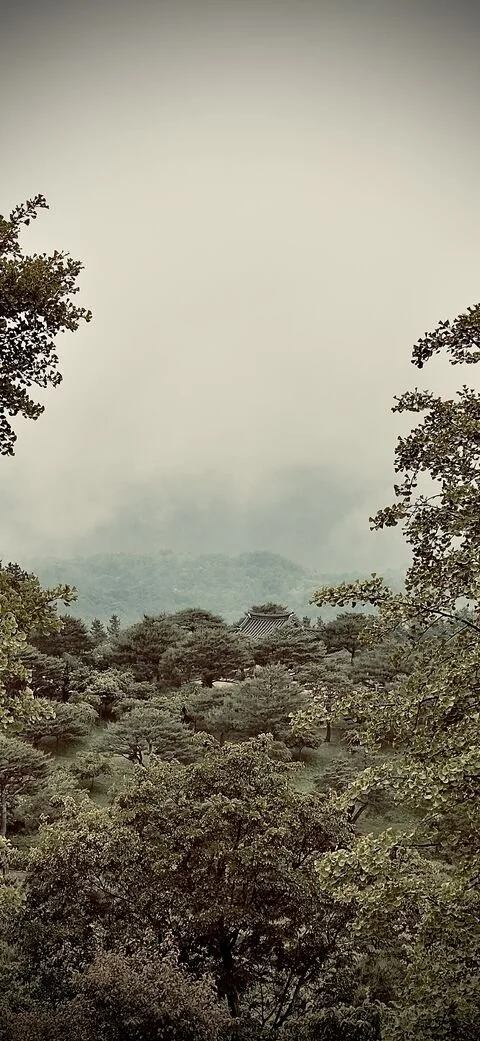
My Artistic Methodology: FAQ
During my residency at the Swatch Art Peace Hotel in Shanghai, the numerous exhibitions and open studios I've participated in have shown me how valuable a clear explanation of my artistic approach can be for visitors.…
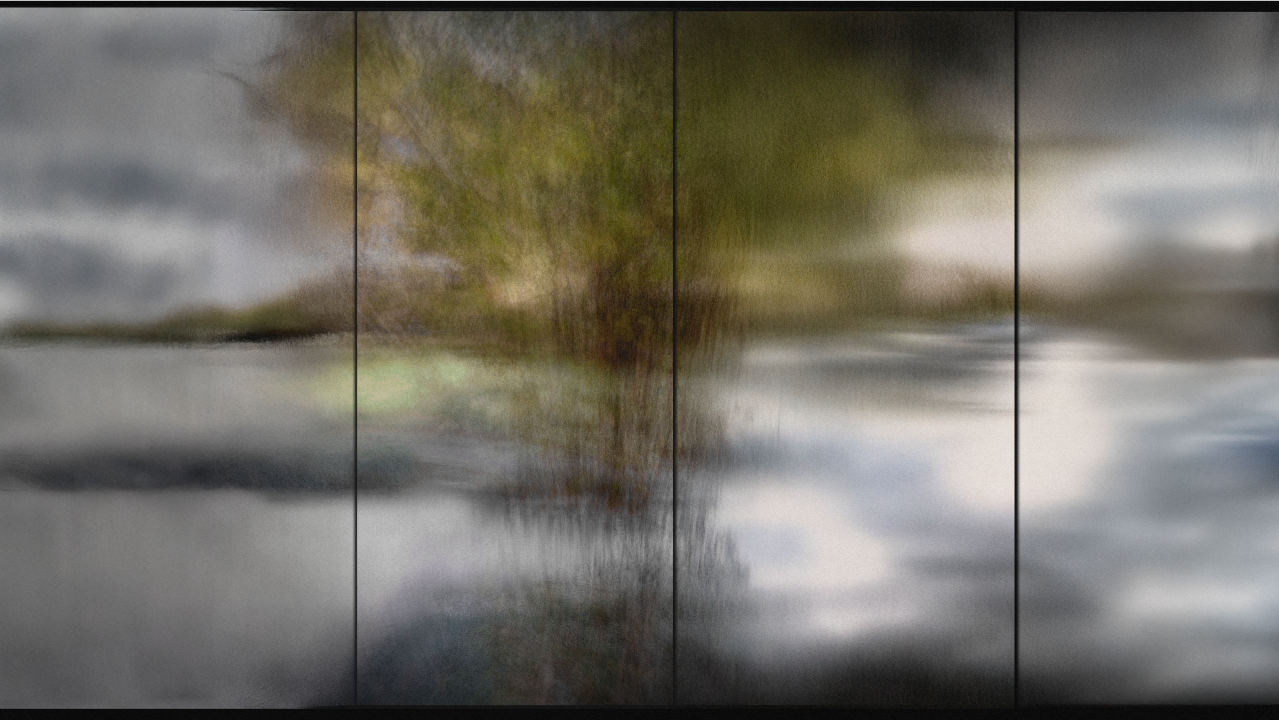
During my residency at the Swatch Art Peace Hotel in Shanghai, the numerous exhibitions and open studios I've participated in have shown me how valuable a clear explanation of my artistic approach can be for visitors. This FAQ is my first attempt to address the questions I'm most frequently asked when presenting my work. It's a work in progress, based on actual conversations with viewers and collectors.
My Method Making Approach
Q: What do you mean by "Method Making" in your artistic practice?
A: Method Making is my immersive approach to creating art that's similar to method acting in performance. Rather than simply documenting a landscape, I physically immerse myself in environments—hiking difficult terrain, experiencing weather conditions, and allowing my physical responses to become integral to the artwork. My bodily movements, breathing patterns, and even fatigue become part of the image-making process. This creates works that capture not just how a place looks, but how it feels to be present within it.
Q: How does your Method Making differ from traditional landscape photography?
A: Unlike traditional landscape photography that often prioritizes a single, perfect moment captured from a fixed position, my Method Making embraces time, movement, and physical engagement. I use real-time layering processes that incorporate my physical responses to the environment—from arm movements to breathing patterns to the effects of exhaustion from hiking. These bodily responses become visible elements in the final work, creating what critic Damian Smith calls "compressed realities" where time operates as an active feature within a still image.
Q: Why do you choose to work this way?
A: I believe that meaningful connection with landscapes requires more than visual observation—it demands physical presence and engagement. My Method Making approach allows me to develop a deeper relationship with the environments I photograph, capturing not just their visual qualities but their emotional and sensory dimensions. This methodology reflects my belief that in our increasingly digital world, we need art that reconnects us with natural environments through embodied experience rather than detached observation.
My Digital-Physical Integration
Q: How do you integrate digital and physical elements in your work?
A: My work exists at the intersection of physical experience and digital mediation. I begin with direct physical engagement with landscapes—hiking, scanning, and photographing—then use digital technologies like LiDAR scanning, AI processing, and layered exposures to create works that maintain the emotional truth of that physical experience. Rather than seeing digital and physical as separate realms, I view technology as a means to enhance and extend our connection with physical environments when used mindfully.
Q: What technologies do you use in your creative process?
A: I employ a range of technologies including LiDAR scanning, Gaussian splat scanning, AI image generation, and advanced digital composition. However, I approach these tools not as technical exercises but as extensions of my sensory engagement with landscapes. For example, when using Scaniverse or Polycam for 3D scanning, the physical act of moving through space becomes a performative element that shapes the final work. The technology captures not just the landscape but my movement and interaction with it.
Q: Does your work critique or celebrate digital technology?
A: My work does both simultaneously. I acknowledge the potential of digital technology to disconnect us from physical environments, but also explore how the same technology, when used mindfully, can create new pathways for environmental reconnection. My practice demonstrates how digital tools can enhance our perception and understanding of landscapes rather than replacing direct experience. This nuanced position reflects my belief that we need to develop more thoughtful relationships with technology in the Anthropocene era.
Shanshui Philosophy and Contemporary Technology
Q: What is shanshui philosophy and how does it influence your work?
A: Shanshui (山水) is a traditional Chinese approach to landscape art that translates literally as "mountain-water." My engagement with Asian art and culture spans over 25 years, beginning with my Master's research, my work with Lesley Kehoe Gallery, and my specialization in photographing Japanese lacquer and contemporary art. This deep connection has profoundly shaped my artistic vision.
Unlike Western landscape traditions that often emphasize realistic depiction, shanshui focuses on capturing the essence or spirit of landscapes through stylized representation. I integrate this philosophy with contemporary digital practices, seeking to evoke the emotional and spiritual qualities of environments rather than documenting them literally. My work, like traditional shanshui, invites viewers to mentally journey through landscapes rather than simply observe them.
I'm particularly influenced by the Tang Dynasty poet Wang Wei, whose poem "Zhong Nan Bie Ye" (终南别业) captures the essence of what I seek in my own work:
I walk until the water ends,And sit to watch clouds arise.
These lines embody the meditative engagement with landscape that drives my practice—the physical journey through space that culminates in quiet contemplation.
Q: How do you combine ancient shanshui principles with modern technology?
A: My approach merges the contemplative aspects of shanshui with the capabilities of digital technology. Traditional shanshui painters would immerse themselves in landscapes before returning to their studios to create works from memory and impression rather than direct observation. Similarly, I physically engage with environments, then use digital tools to create works that express the essence of that experience.
Over the past 15 years, my travels throughout China and involvement in photography festivals like Pingyao and Xposure have deepened this practice. The layering techniques in my digital process echo the ink wash methods of traditional shanshui, creating atmospheric depth and fluid boundaries that prioritize emotional truth over literal representation.
Q: Why is this fusion of ancient philosophy and modern technology significant?
A: This fusion represents a meaningful dialogue between Eastern and Western artistic traditions, as well as between historical approaches and contemporary practices. When I exhibited my Mountain Water series in China, the response was immediate and profound. Chinese photographers, artists, and academics instantly grasped the underpinnings of the work – the dialogue with shanshui painting, the layering of temporal and spatial perspectives, and the philosophical meditation on nature. These interactions were transformative for me.
By applying shanshui principles to digital art, I create work that counters the often detached, accelerated nature of digital media with contemplative engagement. This approach offers a potential pathway for maintaining deeper connections with natural environments in an increasingly digitized world, suggesting that new technologies can be aligned with ancient wisdom about our relationship with nature.
Environmental Connection Through Digital Mediation
Q: How does your work address environmental themes?
A: Environmental connection is central to my practice. My work explores how we might maintain meaningful relationships with natural environments in an era of climate change and increasing digitization. Rather than presenting pristine, idealized landscapes, my images often reveal the complex interplay between human presence and natural systems. The physical immersion required by my Method Making approach also emphasizes the importance of bodily engagement with environments—suggesting that environmental awareness begins with direct experience rather than abstract knowledge.
This theme is particularly evident in my "Hidden in Glass" collaboration with composer Ade Vincent, where we explore natural sanctuaries within urban environments across Australia's capital cities. Using glass as a metaphor for transparency and reflection, we combine advanced AI technology with traditional photography and field recordings to reveal these hidden spaces of environmental connection.
Q: What is the "digital sublime" in your work?
A: The digital sublime in my practice refers to the sense of awe, wonder, and sometimes disorientation that emerges from my digitally-mediated landscapes. Traditional notions of the sublime in art history often focused on nature's overwhelming power and scale. I extend this concept to explore how digital mediation can both enhance and complicate our experience of natural environments. My layered, sometimes deliberately glitched or fragmented images create a new kind of sublime experience that acknowledges both the power of nature and the pervasive influence of digital technology on how we perceive it.
Q: Do you see technology as a barrier or bridge to environmental connection?
A: I view technology as potentially both—its impact depends entirely on how we use it. My practice demonstrates how digital tools, when used with intention and physical engagement, can actually deepen our connection with environments rather than distancing us from them. The key distinction in my approach is that technology serves as a means of extending sensory experience rather than replacing it. This perspective offers a nuanced alternative to both uncritical techno-optimism and wholesale rejection of digital tools, suggesting instead a thoughtful integration that enhances our environmental awareness.
My current project, "Digital Rituals for Environmental Reconnection," directly addresses this question by creating immersive, interactive installations that use digital technology to facilitate deeper connections with natural environments. Through these digital rituals, I invite viewers to reconsider their relationship with both technology and nature.
Technical Process for General Audiences
Q: What is LiDAR scanning and how do you use it in your art?
A: LiDAR (Light Detection and Ranging) is a technology that uses laser pulses to create detailed 3D maps of environments. While it's commonly used in fields like archaeology and autonomous vehicles, I approach LiDAR scanning as a performative, meditative practice. As I move through a landscape with scanning equipment, my physical movements and choices shape the resulting data. The technology captures not just the environment but my interaction with it. I then process this data to create works that reveal both the physical structure of landscapes and my embodied experience of them.
Q: How do you incorporate AI into your artistic process?
A: I use AI not as a replacement for human creativity but as a collaborative tool that extends my artistic vision. I approach AI systems as "digital sediments" that have been trained on vast collections of human-created images. When I feed my own photographs into these systems, the AI responds with interpretations that sometimes reveal unexpected aspects or perspectives. I then engage in a dialogue with these AI-generated elements, selectively incorporating them into compositions that maintain my artistic intent while embracing the generative potential of the technology.
For example, in my "Hidden in Glass" project, I use Adobe's Photoshop Generative Fill alongside traditional photography, creating instantaneous layering techniques that reveal hidden natural sanctuaries within urban environments. The AI helps me uncover aspects of these environments that might otherwise remain invisible, while my artistic direction ensures the work maintains its integrity and purpose.
Q: What is a "splat scan" and how do you use it in your video work?
A: A splat scan (or Gaussian splat scanning) is a 3D scanning technique that I use to create immersive video experiences of landscapes. Unlike traditional video or drone footage, these scans capture environments from multiple angles and heights as I physically move through a space. For my current video triptych project, I'm creating SPLAT scans of three Victorian landscapes—coastal, alpine, and central Victoria—to capture the distinctive character of each environment.
The resulting videos offer viewers a unique perspective that combines the immersive quality of video with the exploratory nature of my physical engagement with the landscape. These works allow viewers to experience something closer to the actual sensation of moving through these environments than conventional photography or video could provide.
Q: What should I look for when viewing your work?
A: When experiencing my work, look beyond the immediate visual impact to notice the layers of time, movement, and physical engagement embedded in each piece. Pay attention to the blurred boundaries, the evidence of movement, and the atmospheric qualities that evoke not just how a place looks but how it feels to be present within it. In my immersive installations, notice how your own physical movement through the exhibition space becomes part of the experience—mirroring my own methodology of embodied engagement with environments.
Also, consider the dialogue between traditional and contemporary elements—how ancient shanshui principles might be expressed through digital media, or how physical presence and digital mediation interact. My work invites you to reconsider your own relationship with both natural environments and the technologies through which we increasingly experience them.
This FAQ is a living document that will evolve as my practice develops and as I receive more questions from viewers engaging with my work. I welcome your feedback and additional questions.