For some time, I have been working on this idea that began as a digital sculpture…
For some time, I have been working on this idea that began as a digital sculpture and is now starting to find form as a physical one.
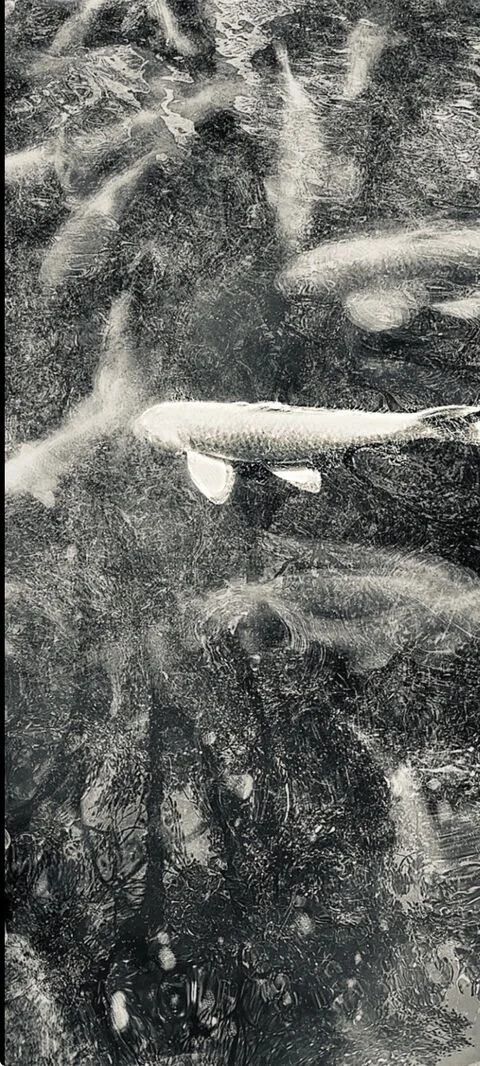
The work grows out of photographs I made around koi and the Chinese legend of the Dragon Gate. In that story, a carp that can swim upstream, endure the force of the current, and leap the gate is transformed into a dragon. It is a story of resilience, aspiration, endurance and transformation, but also of testing. The change is not gifted. It is earned through effort, pressure and passage.
That is part of what continues to hold me. The Dragon Gate story is not just decorative folklore. It carries deep associations within Chinese culture around perseverance, self-cultivation, ambition and becoming. What interests me most is the threshold itself: the moment of crossing from one state into another.
In many ways, that concern already sits at the centre of my practice. I often work with states of passage: between photograph and object, between atmosphere and structure, between the observed world and the constructed image, between the tangible and the immaterial. The Dragon Gate gives me a powerful cultural and symbolic framework through which to think about those ideas.
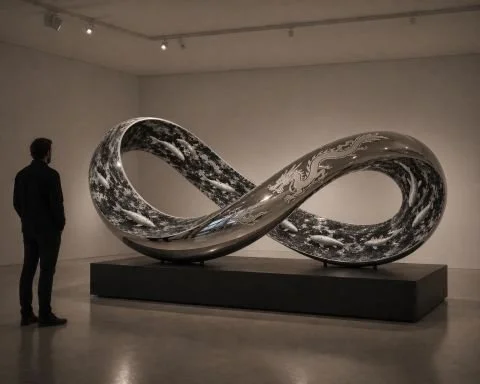
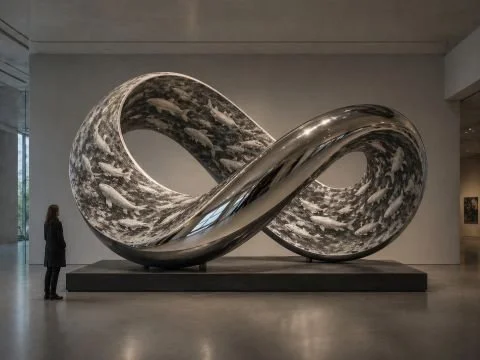
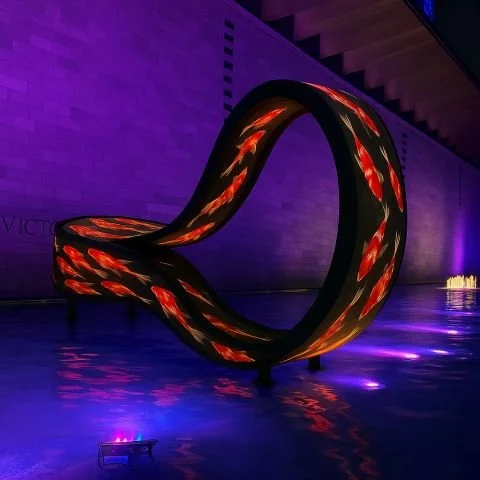
My first conception of this work was as a digital piece: a large Möbius form built from LED advertising-style panels, with moving imagery flowing continuously across its surface. That version still interests me. In some ways it remains the most ambitious expression of the idea, because the moving image and the continuous twisted form both speak directly to circulation, transformation and time.
But the practical reality of a large LED sculpture is significant. It requires complex fabrication, programming, transport, power management and ongoing maintenance. Screens age. Components fail. Software dates quickly. The work can become heavily dependent on systems rather than material presence.
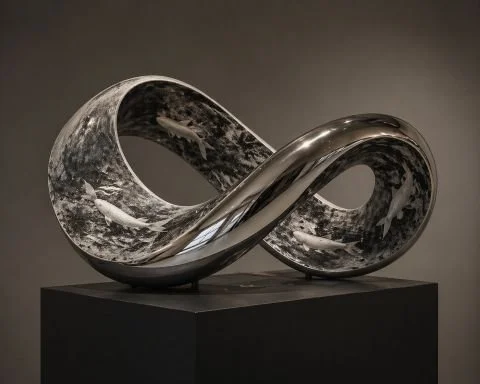
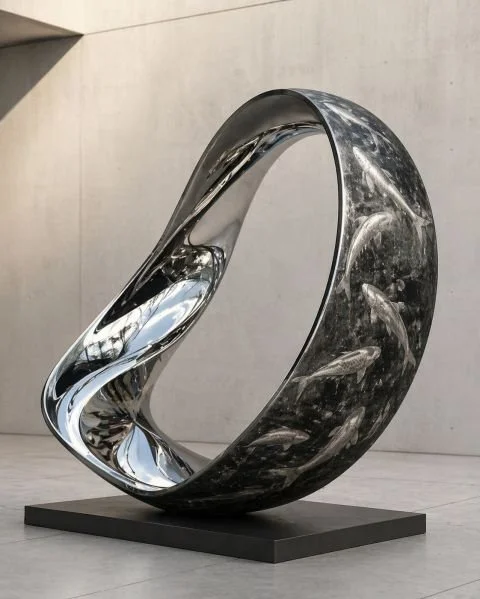
So while I remain interested in that version, I have also been developing the idea as a sculptural object. In this form, one side carries the image world of the fish, while another surface becomes reflective, etched and transformed. Rather than relying on animation, the work asks the viewer to move. Transformation happens through light, reflection, surface and embodied encounter.
That shift makes sense to me both conceptually and practically. A static object can still feel alive. It can hold time differently and invite a slower, more contemplative engagement. It is also a more accessible proposition: easier to fabricate, install and maintain, without losing the conceptual force of the original idea.
So this project sits somewhere between mythology, photography, sculpture and spatial thinking. It begins in an old Chinese story, but it also speaks to artistic process itself: the long upstream push, the repeated testing, and the attempt to move from one state of practice into another.