
From Naxos to Kraków: The World of Si On at Bunkier Sztuki
Having just completed a month-long residency on the Greek island of Naxos, I arrived in Kraków expecting little more than a few quiet days reconnecting with a city that holds a particular significance for me. Although I was born and raised in Australia, my family history is bound up with Poland, shaped, like so many Polish family histories, by war and displacement long before I existed. Every visit therefore carries a faint sense of recognition that sits underneath the ordinary business of being a traveller. What I did not anticipate was that the most interesting and unusual encounters of the trip would be with the work of a South Korean artist, and that it would take place at Bunkier Sztuki, Kraków's gallery of contemporary art.
The convergence was an unlikely one. I had spent weeks on a small Aegean island thinking about landscape, memory and the slow accumulation of an image, and I had come to a city my family left under duress, only to stand in front of paintings made by an artist who was born in Korea, trained in Japan, passed through New York and has now lived and worked in Kraków for several years. Contemporary art produces these intersections more often than we admit, but rarely so neatly. It is also a useful reminder that Poland, a country whose recent cultural narrative has often been told in terms of emigration and loss, is now quietly a place that artists from elsewhere choose to settle in and build from. Si On has apparently been present in the city for years while remaining almost invisible within its art scene, which makes this first institutional solo exhibition feel less like an introduction and more like a long overdue recognition.
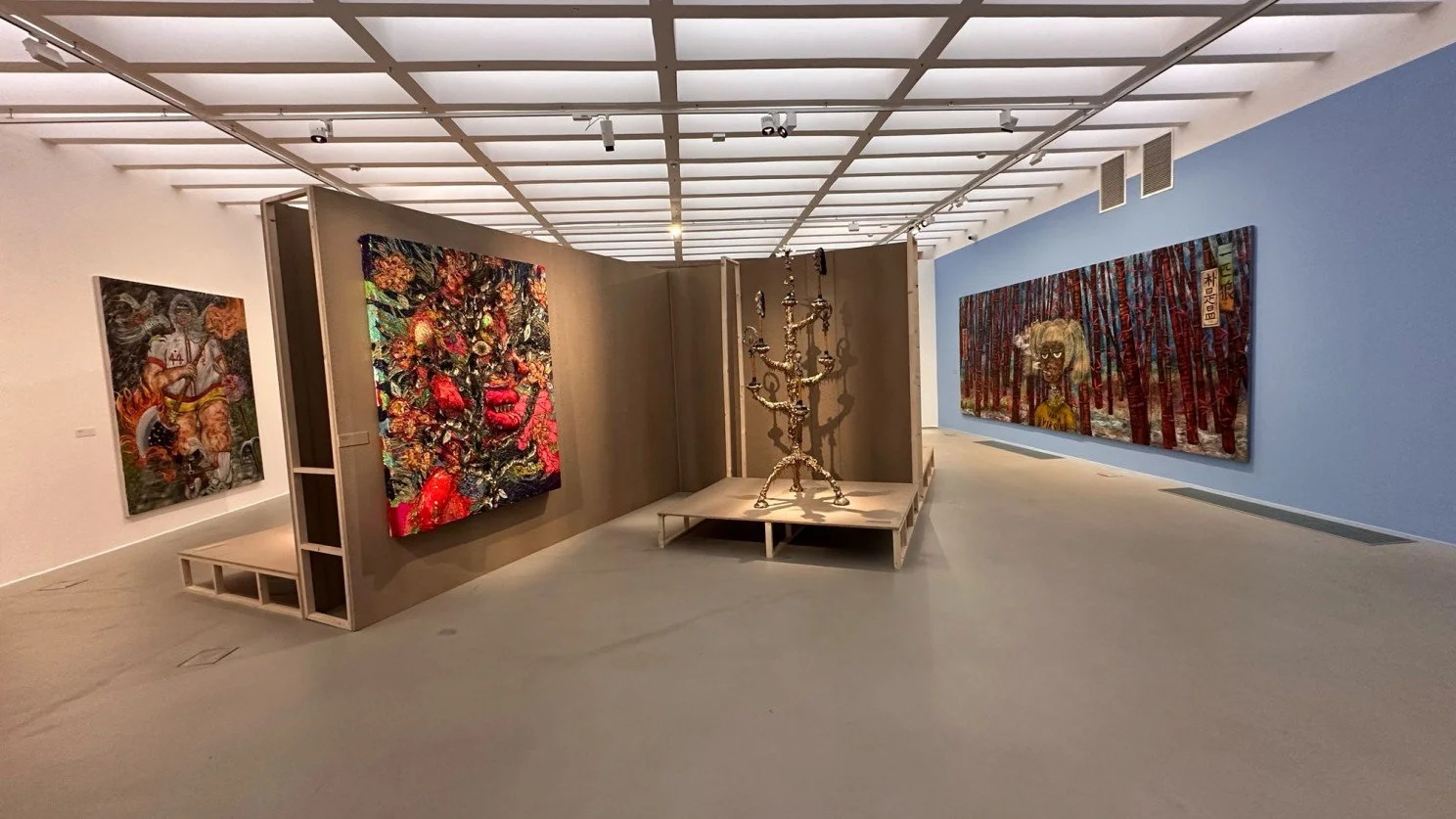
The gallery deserves a few words of its own before the work, because the building does a great deal of the curatorial labour here. Bunkier Sztuki occupies one of the few genuinely brutalist structures in Poland, a 1960s concrete pavilion set into the green ring of the Planty, with fragments of an old granary embedded in its façade. That rough, fortress-like quality gave it the nickname that eventually became its official name. The gallery reopened in 2024 after three years of renovation, and the refreshed interior turns out to be an ideal container for an exhibition of this ambition. The spaces are generous without being precious, and they allow very large paintings, freestanding sculptures and fully wrapped rooms to coexist without competing. On my previous visit the surrounding parkland had been deep in snow and the cultural programme had effectively closed for Christmas, so seeing the building open, busy and ringed by summer foliage felt like encountering a different institution altogether.
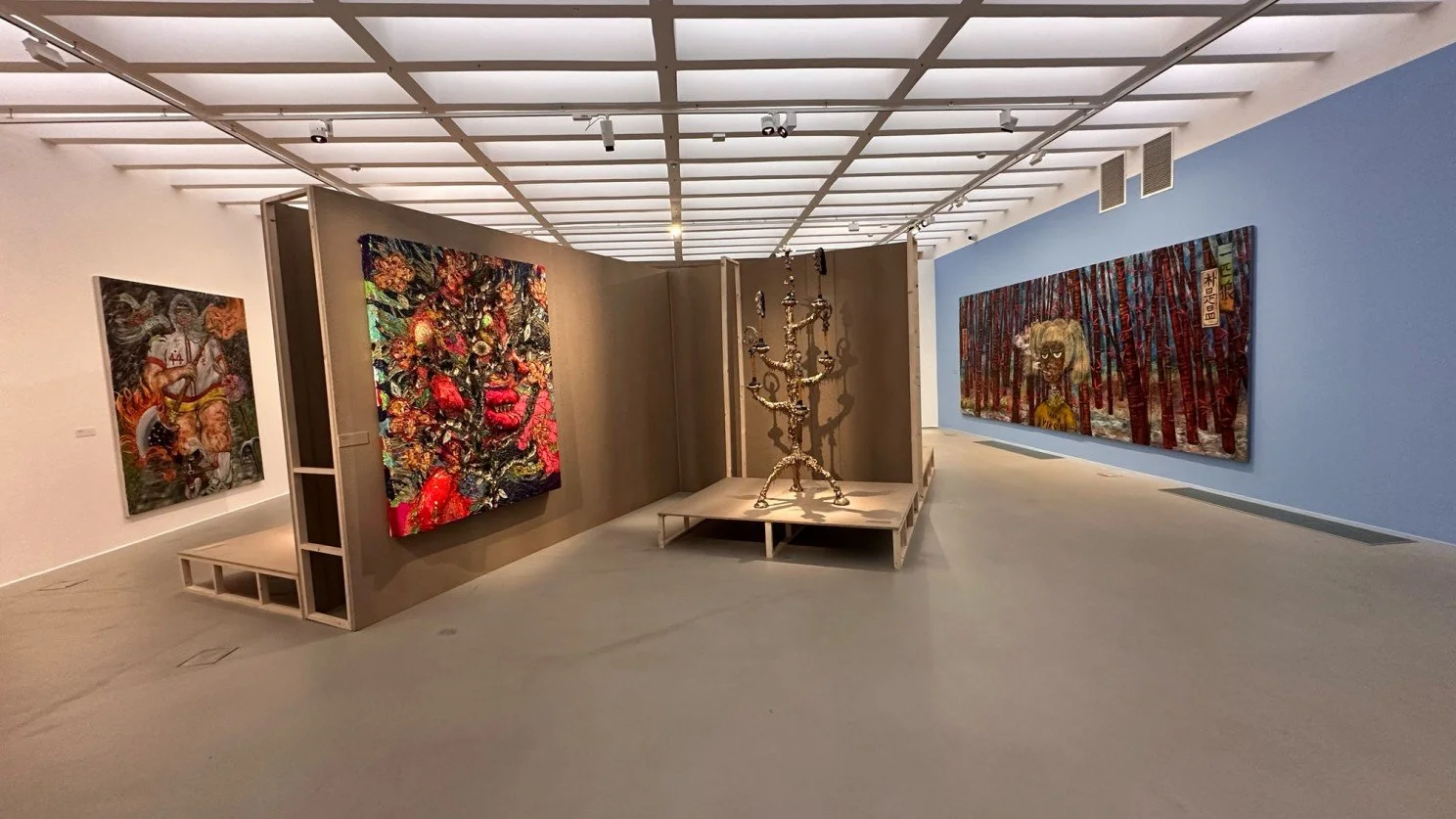
The exhibition is titled "The Magic Woman and Other Stories", and the title is accurate in a way that most exhibition titles are not. This is not a display of discrete works hung in sequence. It is closer to a constructed world, populated by recurring figures that move between paintings, sculptures and video as though they all belong to the same expanding mythology. The curatorial framing is itself unusual. The exhibition is the curatorial debut of the novelist Dorota Masłowska, and rather than imposing an interpretive structure she has answered Si On's images with a literary text of her own, written as a parallel narrative that runs alongside the work without explaining it. The result is two authors occupying the same rooms, one in paint and one in language, neither subordinate to the other. For anyone interested in translation and the gaps that open between cultures, and I count myself firmly among them, that arrangement is quietly fascinating, particularly since Masłowska is writing about an artist whose first language is not the one the text is composed in.
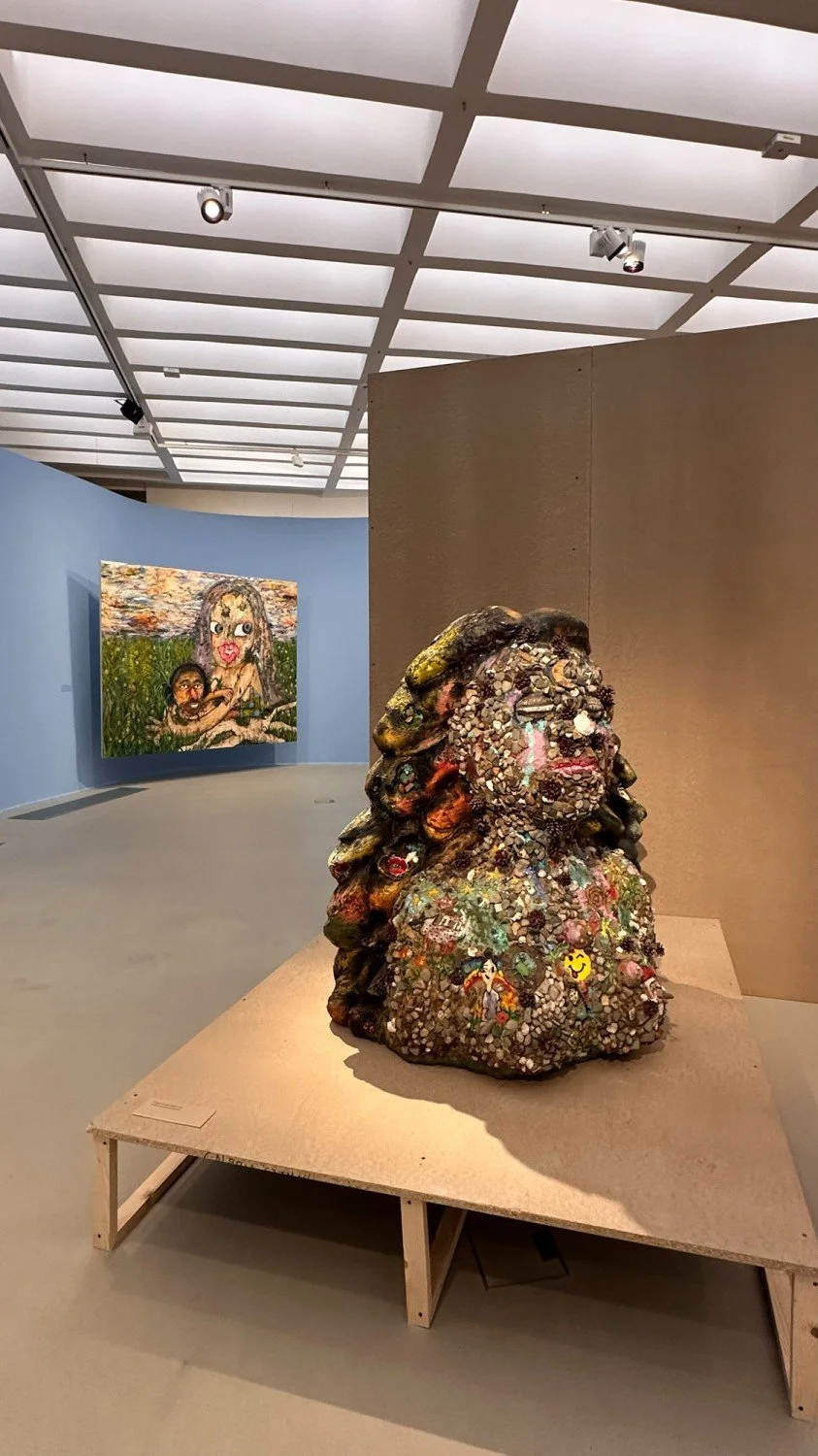
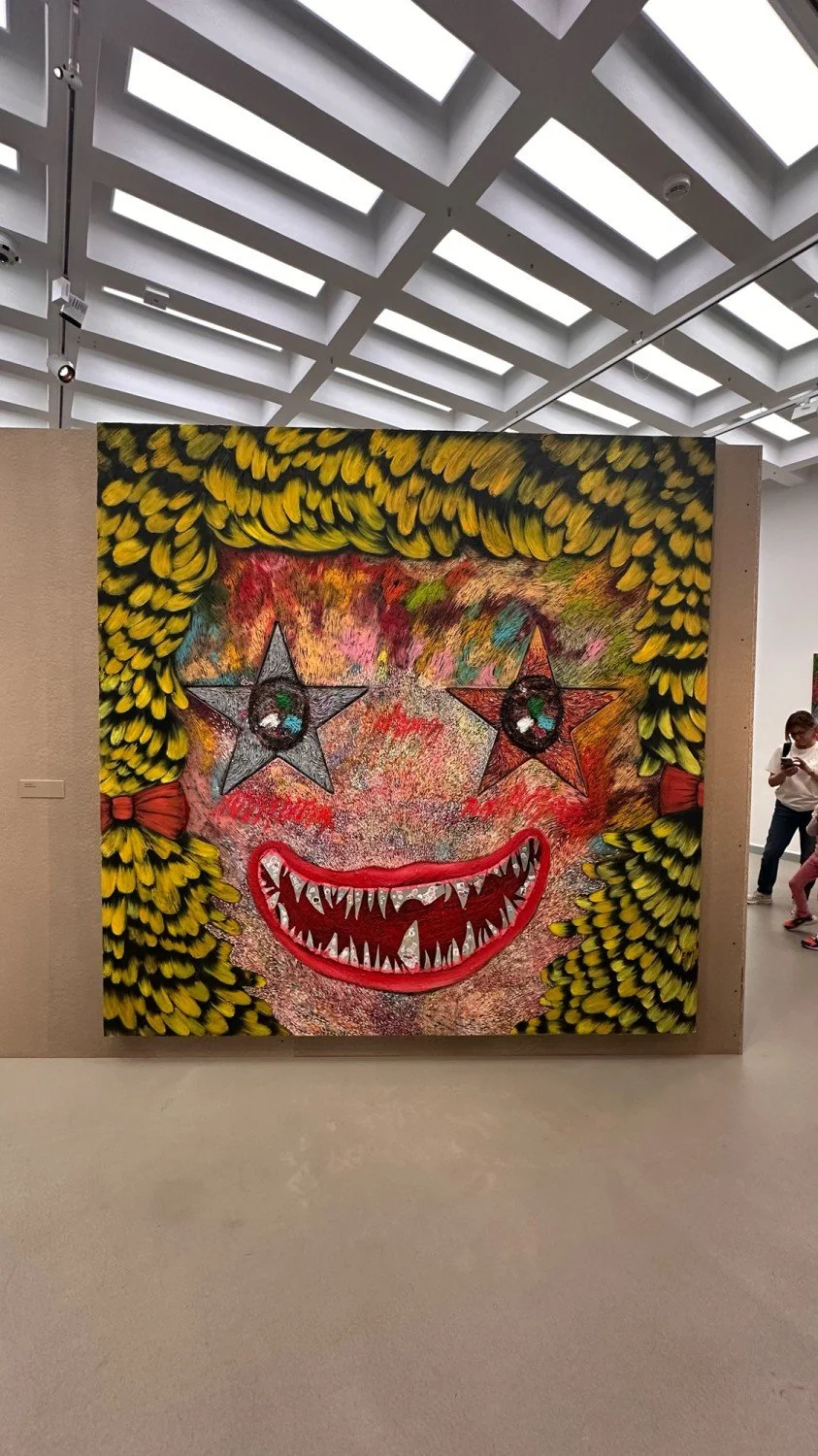
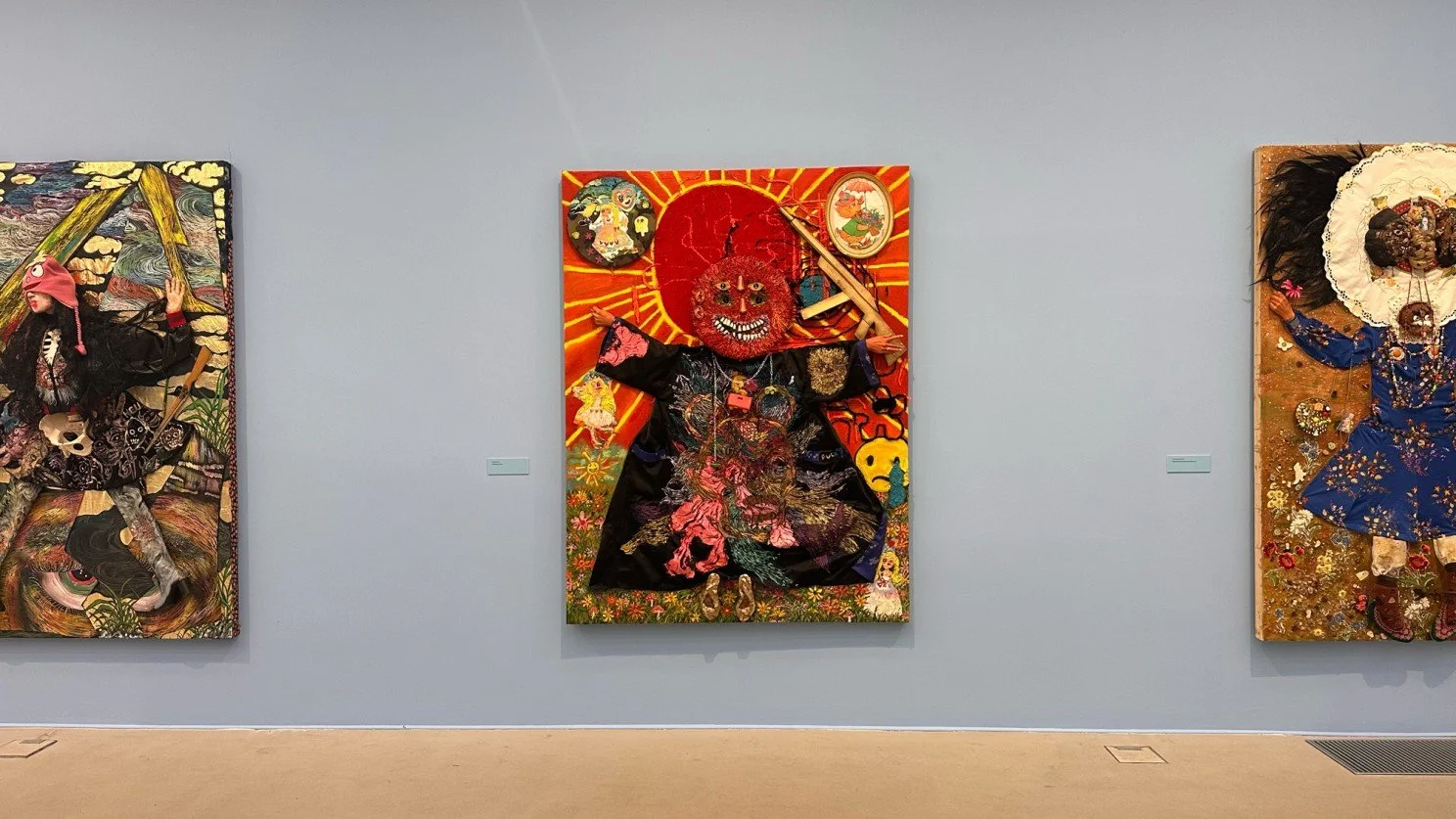
What gives the whole environment its coherence is a logic of transformation. Si On comes from a family with shamanic traditions and has spoken about her own practice as a form of shamanism, and once you know this the exhibition reorganises itself around the idea. Bodies do not stay put. Figures emerge from vegetation, dissolve into wallpaper, swell to the scale of landscape or shrink into something cradled and dependent. The artist is, by all accounts, a physically small person, and there is something pointed in the fact that she paints herself enormous, predatory and frequently monstrous. The curatorial text gives these recurring beings a name, the SiOnoids, and describes them as legions of an unbreakable self sent out into the world. That framing is more useful than it first sounds. It explains why the figures never resolve into conventional self-portraits and never settle into a single readable emotion. They are versions, drafts, alternative selves, and the exhibition is the theatre in which they are staged.
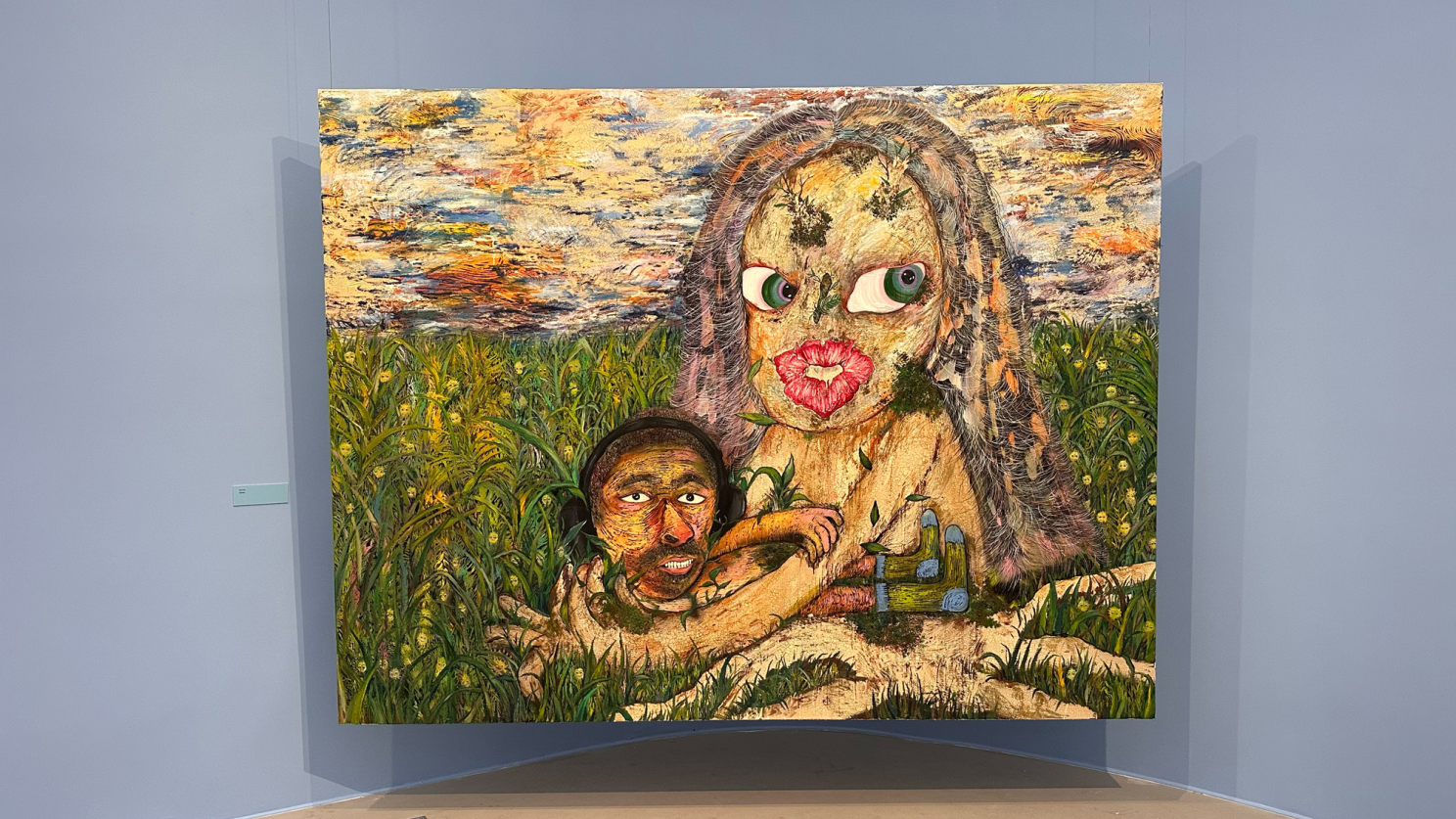
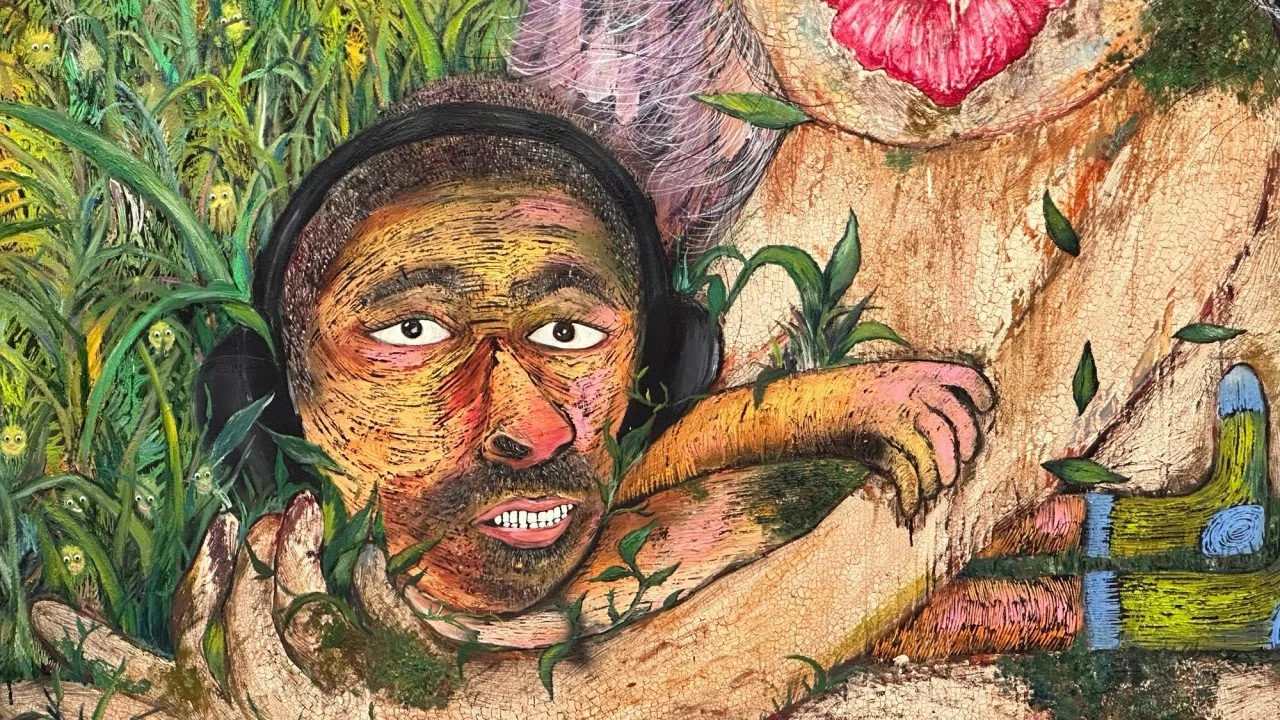
The painting Nursing is the clearest demonstration of how this works. A monumental female figure rises out of dense foliage, holding a much smaller adult figure who is wearing headphones. The title points towards care and protection, but the image withholds any comfortable reading. The reversal of scale is the key move. The larger figure becomes almost geological in her presence, while the smaller one reads as protected and confined at the same time, and the surrounding plants and small watchful creatures are not decorative filler but active participants in the scene. The painting ends up posing a genuinely difficult question about dependency, about where nurture ends and control begins, and about how the relationships that shaped us in childhood continue to organise us long after we believe we have outgrown them. It is visually spectacular, but it is the emotional ambiguity that stays with you.
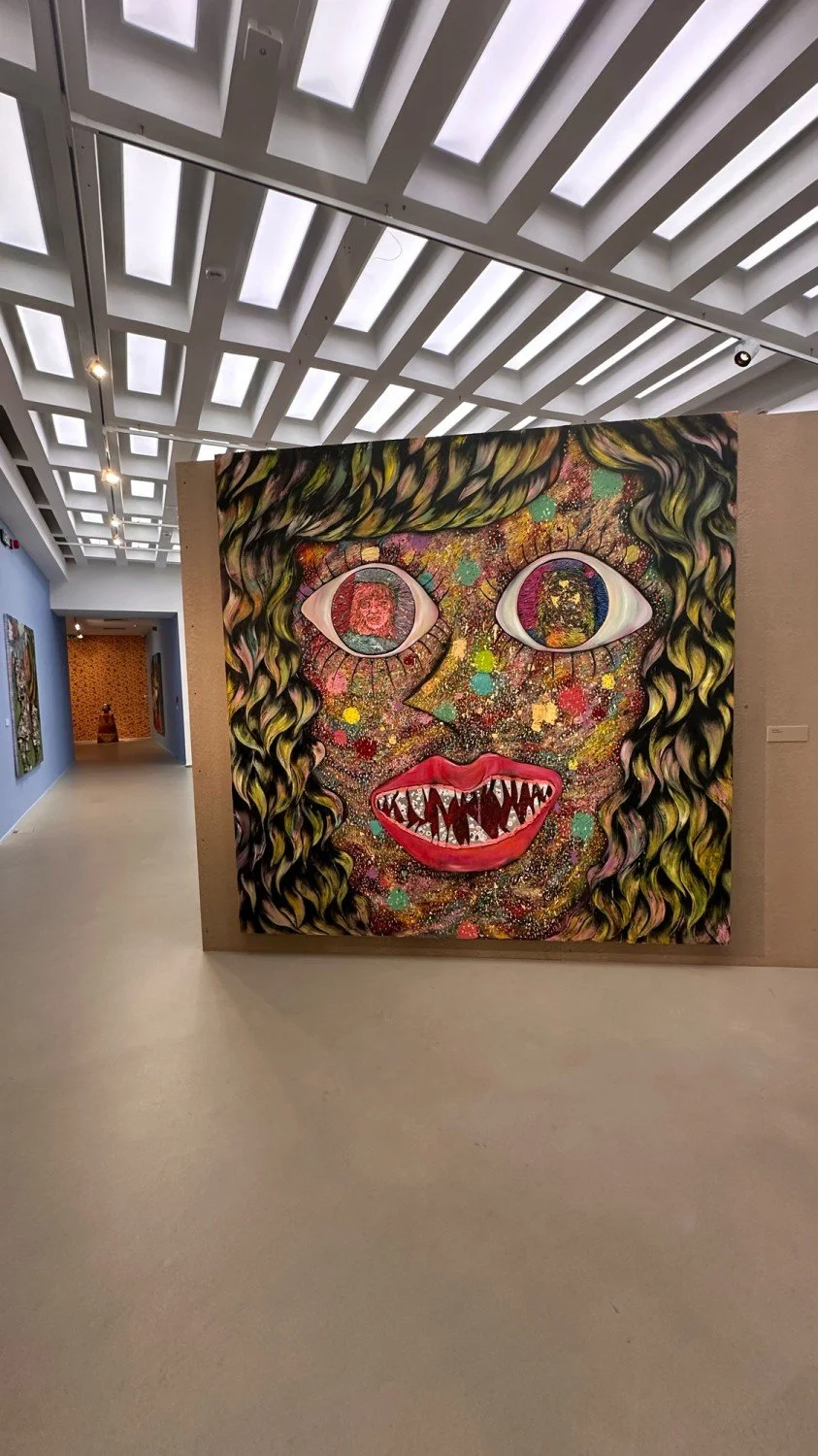
Nearby, a work titled Born With a Void (Nice) stopped me for longer than anything else in the building. The title alone is remarkable, and the figure carries an expression that manages to be exhausted, knowing, vulnerable and faintly defiant all at once. As someone whose own practice circles constantly around absence, I found myself unusually implicated by it. In my work the void tends to be spatial and technical: the missing data in a point cloud, the deliberate emptiness that shanshui painting calls liú bái, the atmospheric blankness that gives an image room to breathe and lets the imagination do its work. Si On approaches emptiness from an entirely different direction, treating the void as emotional and existential rather than formal, something a person is born carrying rather than something acquired through loss. Yet the underlying proposition is strikingly similar. The void is not presented as deficiency. It is presented as a generative condition, a space that shapes us and that we negotiate, and that recasting of absence as productive rather than negative is one of the quiet intelligences running through the whole exhibition.
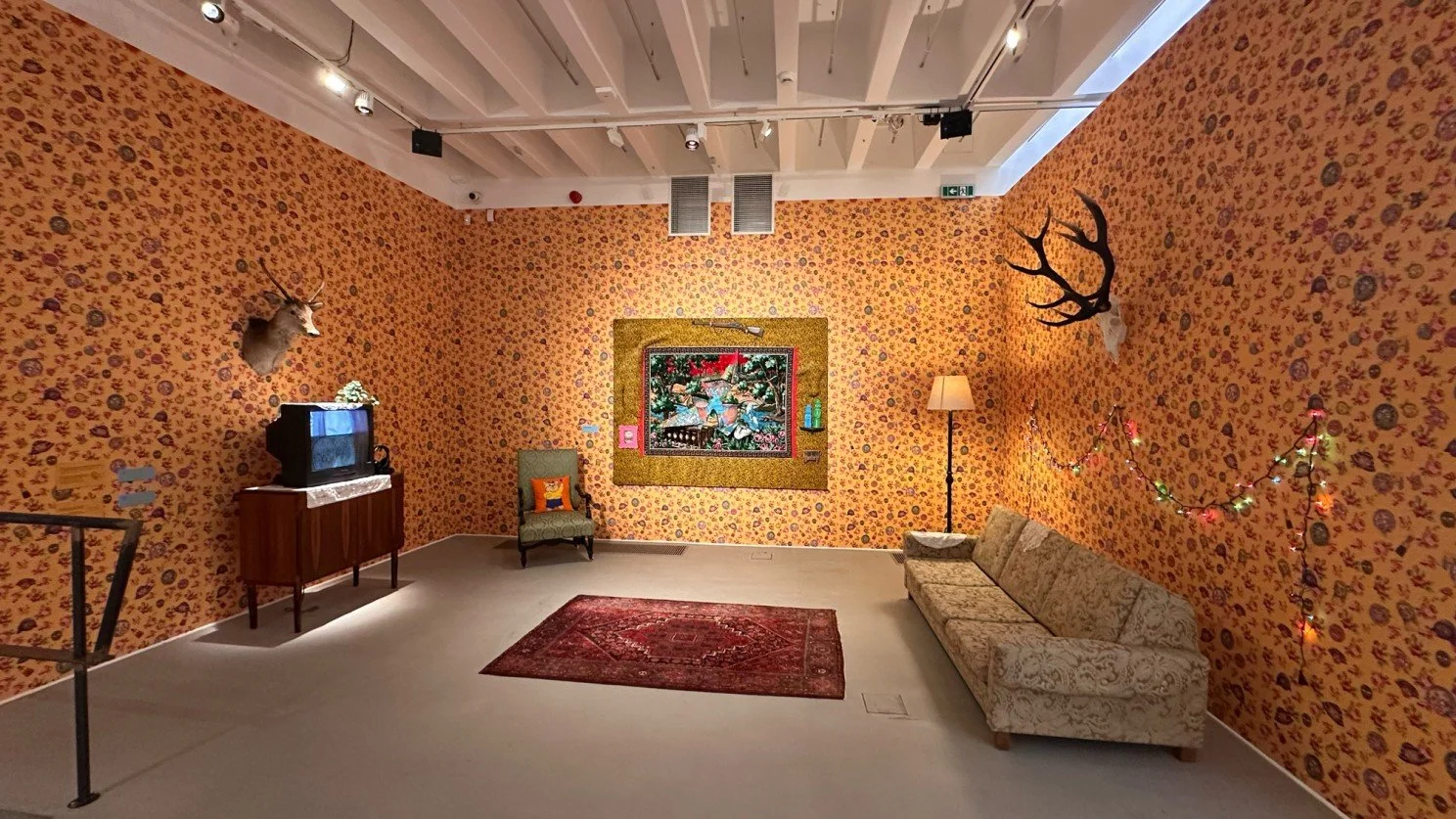
The room I enjoyed most, and the one I suspect most visitors remember, is the installation wrapped floor to ceiling in floral wallpaper. The first impression is entirely benign. The colours are warm, the pattern reads as domestic and cheerful, and the furniture suggests a lived-in interior. Then the faces begin to appear. Creatures surface between the flowers, eyes open where you did not expect them, and small distorted figures reveal themselves the longer you stand still. The decorative slowly becomes psychological, and the comfortable becomes uneasy, until the entire room reads as a subconscious rendered as interior decoration. What impressed me was less the imagery than the understanding of how people actually occupy a space over time. The piece is built on the knowledge that a viewer's first impression will be comfort, the second curiosity and the third disquiet, and it stages that sequence deliberately. As a strategy for making domestic space carry psychological weight it is both clever and genuinely unsettling.
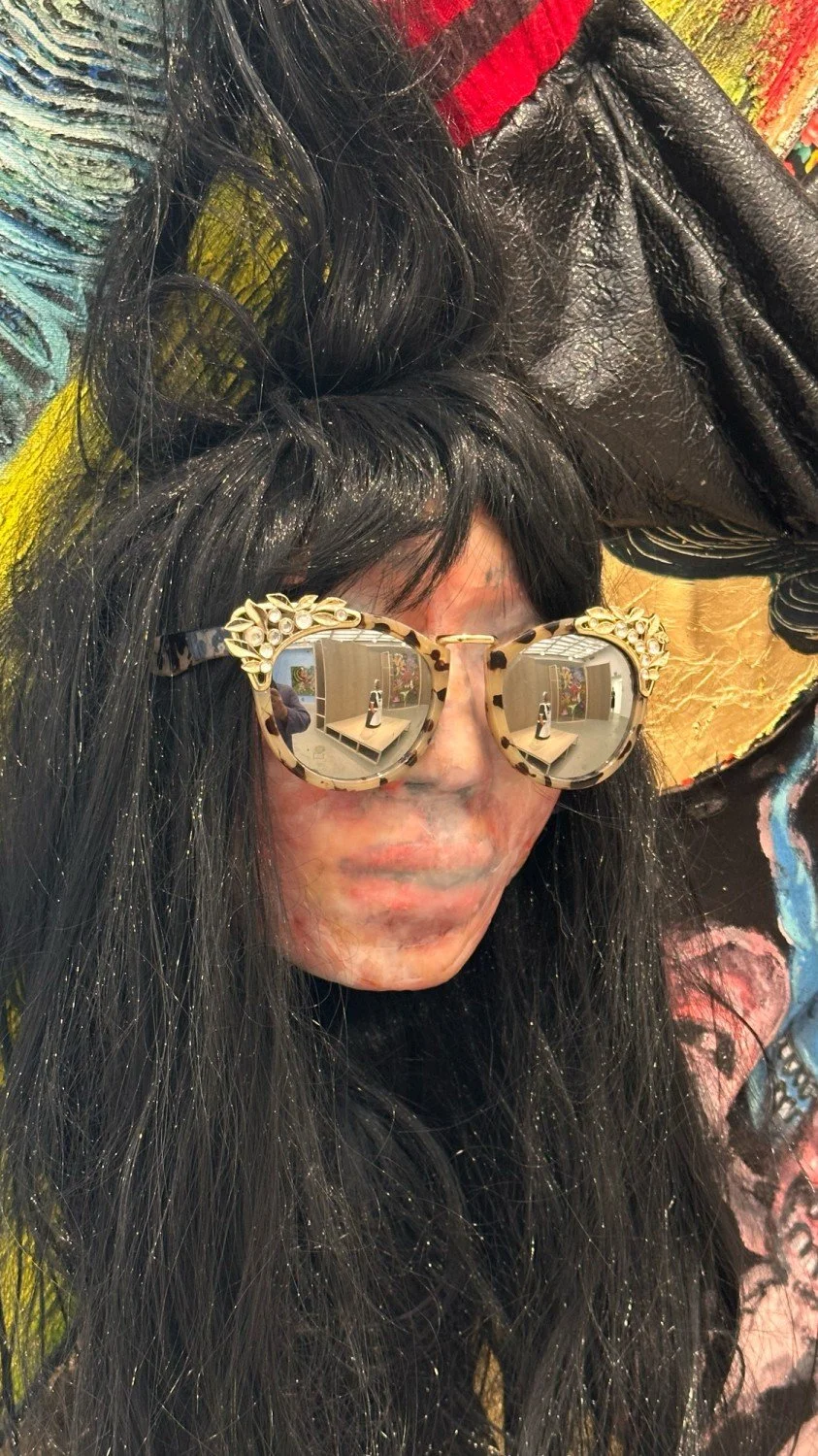
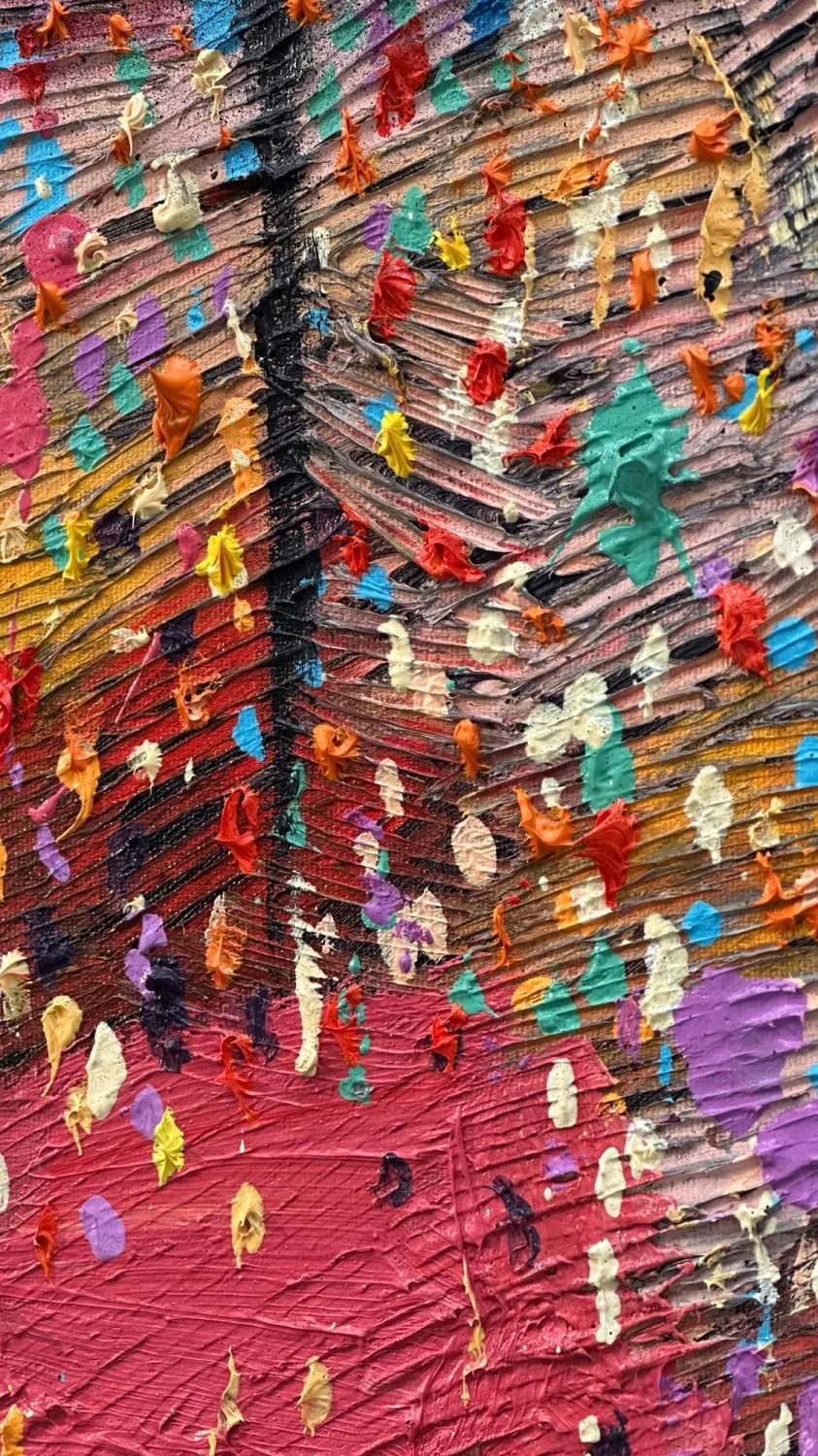
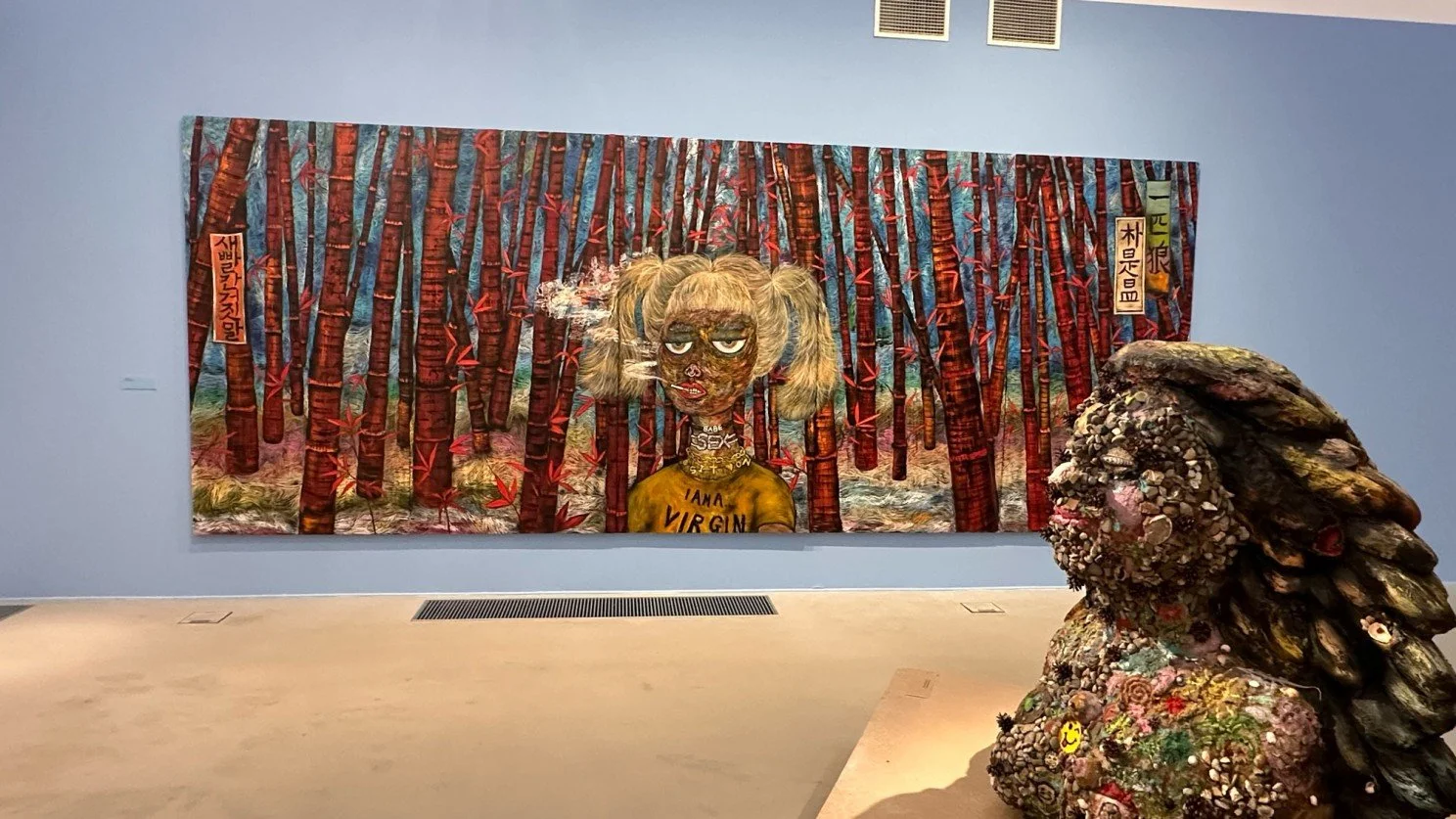
The sculptures extend these concerns into three dimensions and are, for me, where the exhibition's preoccupation with the body becomes most physical. Works such as Queen from the Wasted Land have an almost archaeological quality. Their surfaces accumulate stones, shells, organic fragments, paint and debris, so that they read less like objects that were modelled and more like objects that grew, gathering the evidence of time as they went. They brought Władysław Hasior to mind, and his rough, ritualistic assemblages drawn from Polish folk tradition, which is a comparison I suspect Si On might welcome, given how openly her work engages with folk and popular registers. The body, in these pieces, is not a fixed form to be represented but a site of struggle and transformation, a surface on which experience is deposited. The corporeal becomes a kind of biography, and the material itself becomes memory, which is a very different proposition from the idealised or contained body that sculpture has traditionally offered.
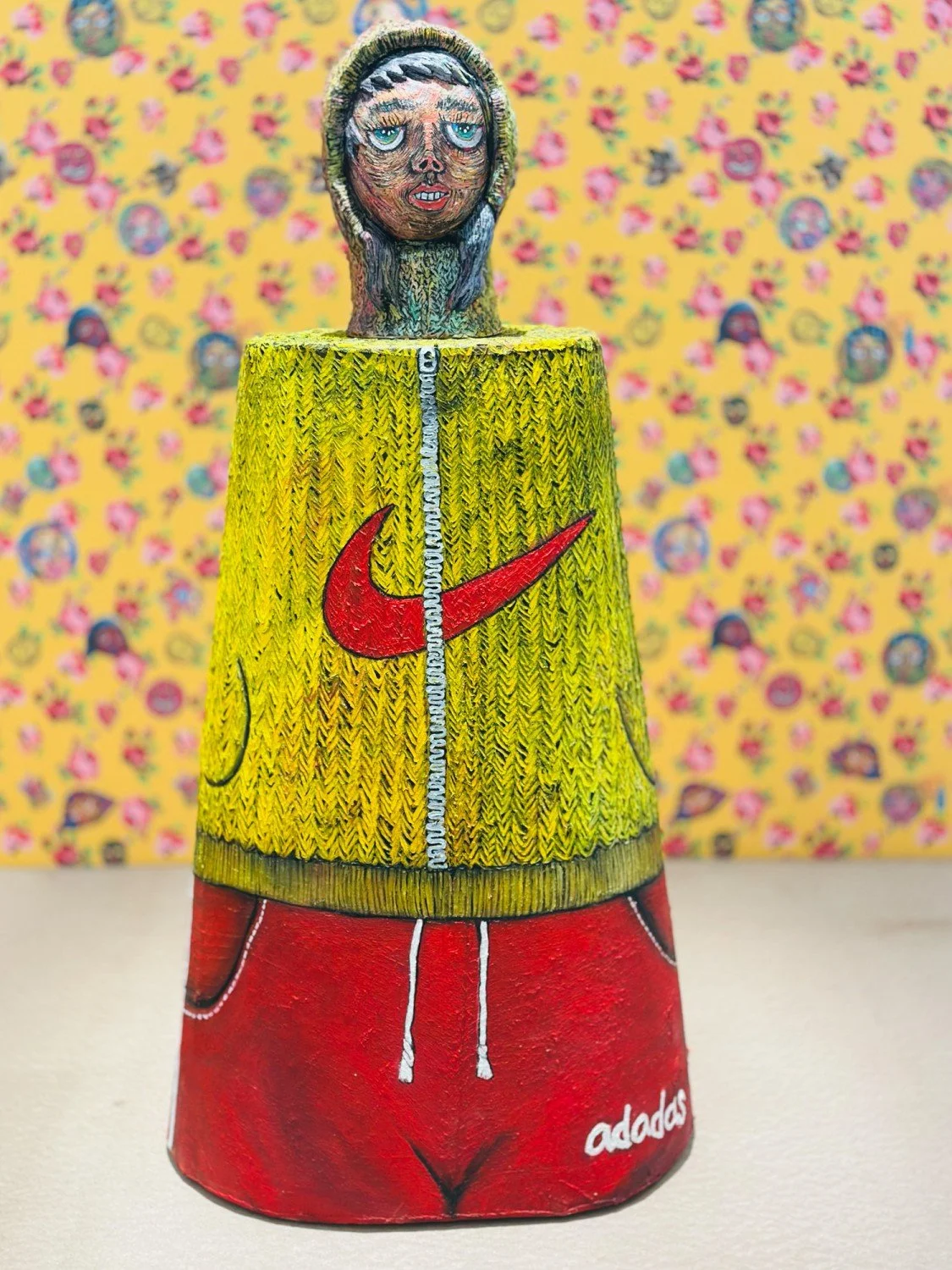
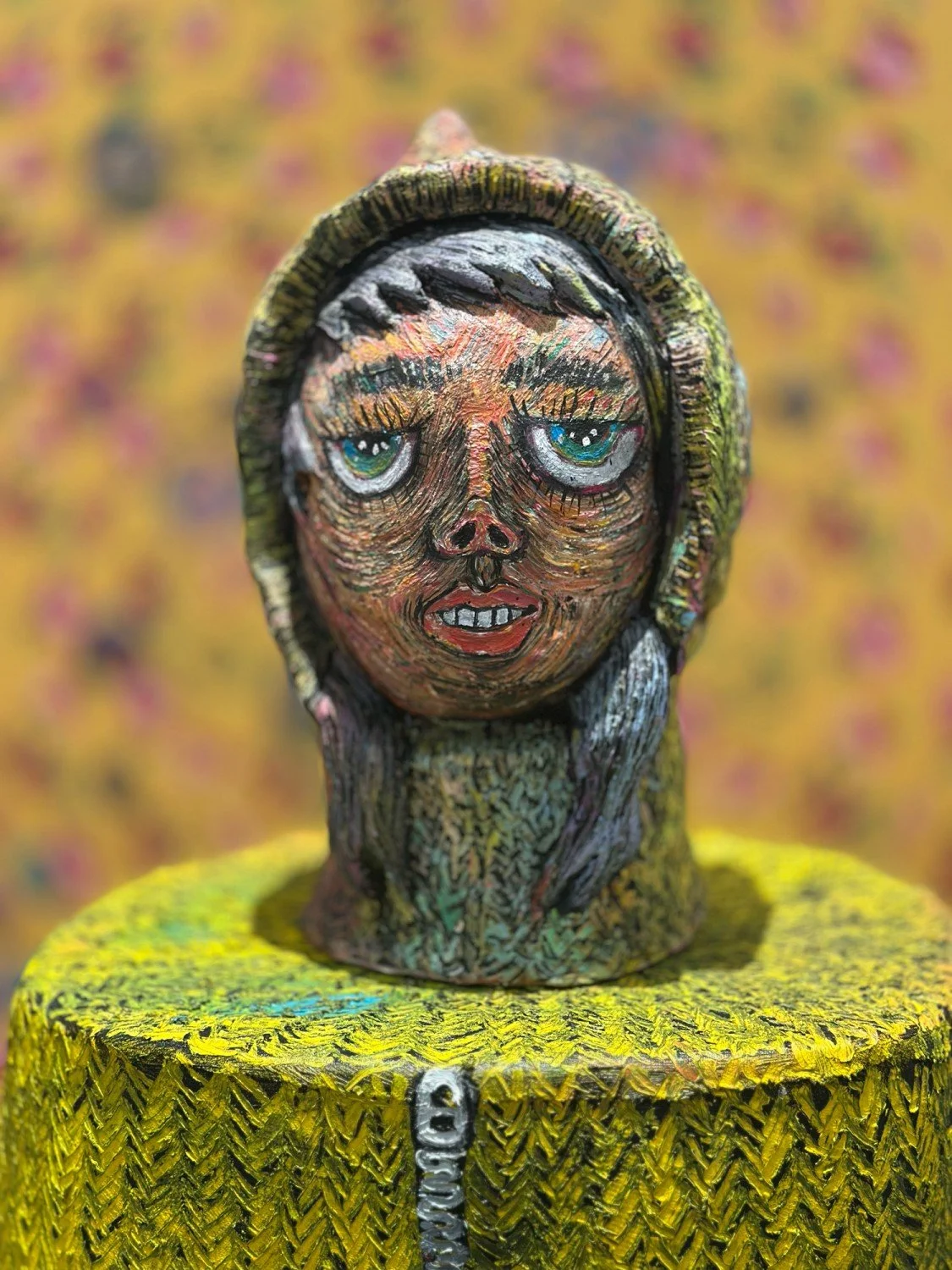
It would be easy to make all of this sound heavy, and the genuine surprise of the exhibition is that it is not. Humour runs through everything. There are figures in knitted hoodies bearing unmistakable sportswear logos, references to consumer culture lodged inside folk-art idioms, cartoonish characters and grotesque faces that make you laugh before you have worked out why you should perhaps be uneasy. The humour is not decoration and it is not a softening agent. It functions much as the trickster does in mythology, destabilising categories and using absurdity to make difficult material approachable. Consumer culture, loneliness, instability and the fragmentation of identity all become discussable precisely because they arrive wrapped in play. Many artists working with trauma and selfhood become earnest to the point of airlessness, and the work suffers for it. Si On consistently avoids that trap, and the generosity of the approach, the willingness to let a viewer in through pleasure before asking anything harder of them, is rarer than it should be.
If the exhibition has a single organising statement it is probably the one that gives a work its title, I Am More Than Oneself. The figures are fragments of identity rather than portraits of individuals, and the whole environment proceeds from the conviction that a person is plural rather than singular: a child and an adult at once, a carer and a dependant, a confident self and a frightened one, the person we are and the several people we are still becoming. In an art world, and a wider culture, increasingly preoccupied with fixed categories and stable, legible identities, there is something bracing about an artist who insists on multiplicity and is content to leave her contradictions unresolved. The exhibition does not reconcile care with control, or humour with grief, or nature with culture. It simply allows them to occupy the same space, which is, after all, how they tend to occupy a life.
Walking back through the Planty afterwards, I kept returning to the chain of circumstances that had delivered me to those rooms. A Korean artist building a body of work in Poland, an Australian with Polish roots arriving from a Greek residency, a contemporary gallery housed in a brutalist bunker in a city shaped by centuries of migration and reinvention. On paper these are unrelated stories. Inside the exhibition they did not feel unrelated at all, because Si On's real subject is transformation as lived experience: the transformation of identity, of memory, of relationships, and of the people who move between countries and cultures and carry the residue of each. That is what I think the exhibition contributes to contemporary painting and installation, beyond its considerable visual ambition. It treats mythology not as a set of inherited stories but as a working system for making psychological experience visible, and it refuses the now familiar separation of beauty from discomfort, offering both at full strength and trusting the viewer to hold them together. I left without the feeling that I had understood it, which is usually the surest sign that an exhibition is worth remembering. Arriving in Kraków as I did, carrying my own complicated relationship to place, family and memory, it proved to be exactly the right work at exactly the right moment.
Bronisław Kózka.