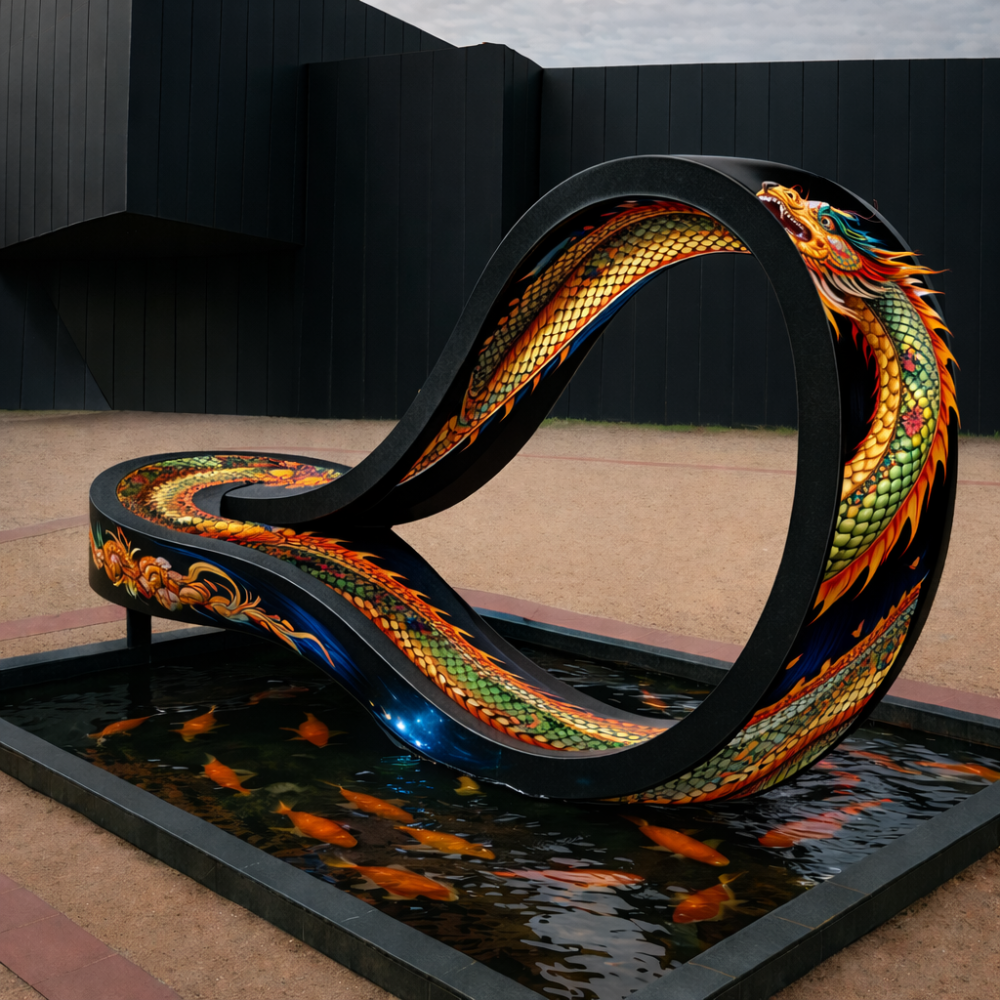
Leaping the Dragon Gate: From Photograph to Sculpture
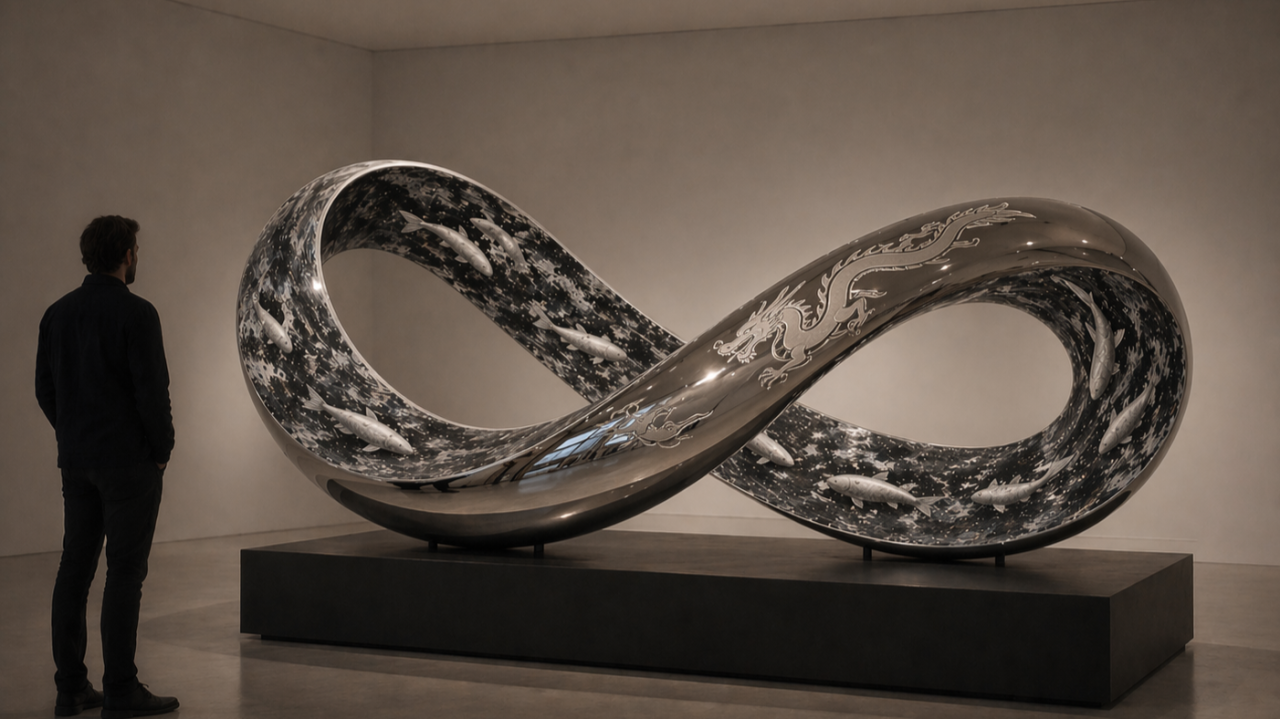
For some time, I have been carrying an idea that began as a digital sculpture and is now starting to find form as a physical one.
The work draws on a body of photographs I made around koi, and on the Chinese legend of the Dragon Gate. In that story, a carp that is able to swim upstream, endure the force of the current, and finally leap the gate is transformed into a dragon. It is a narrative of persistence, resilience, aspiration and transformation, but also of testing. The point is not simply that the fish changes form. It is that the change is earned through effort, pressure and passage.
What continues to hold me in that story is how deeply it sits within Chinese visual and cultural thought. It is not merely decorative folklore. It is bound up with ideas of discipline, endurance, self-cultivation, fate, ambition and becoming. The image of the carp moving against the current has long been used to speak about perseverance in the face of difficulty, and the leap itself is a moment of threshold: a crossing from one state into another. That threshold is what interests me most.
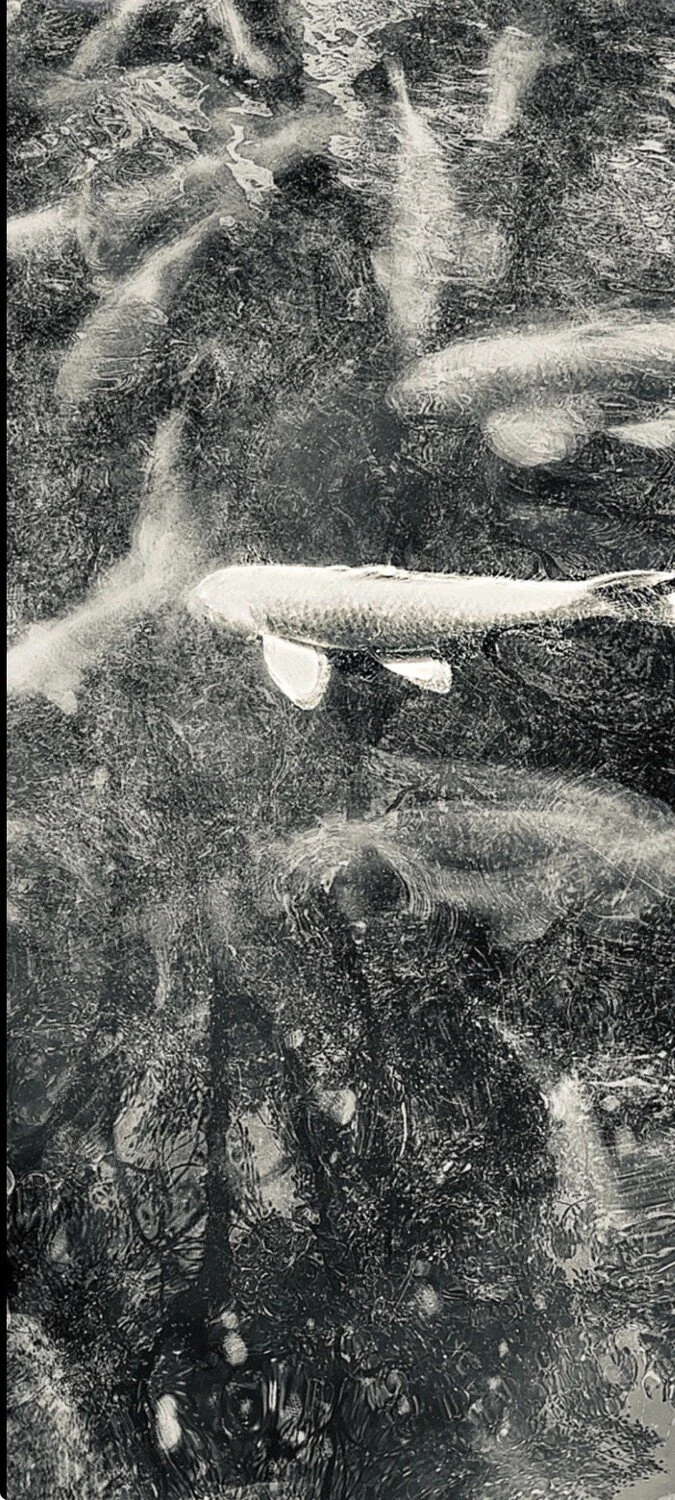
In many ways, that concern is already present across my practice. I have often worked with states of passage: between photograph and object, between atmosphere and structure, between the observed world and the constructed image, between the tangible and the immaterial. I keep returning to points of transformation, to moments where something is no longer one thing but not yet fully another. The Dragon Gate story gives me a very clear cultural and symbolic structure through which to think about that.
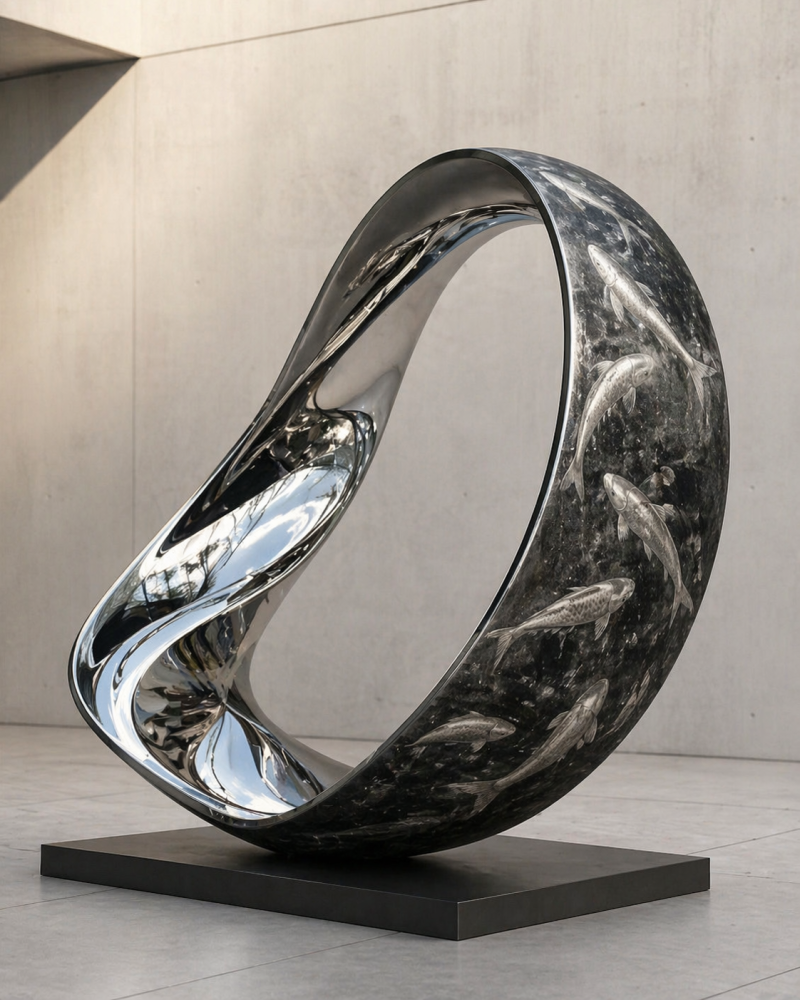
My first conception of this work was not as a static sculpture at all, but as a digital piece. I imagined a large Möbius form constructed from LED advertising-style panels, with moving imagery flowing across its surface. That version still interests me. In some ways it remains the most ambitious expression of the idea: a continuous moving image wrapped around a continuous twisted form, with the fish in motion and the transformation implied through time, light and circulation. The Möbius strip seemed right from the beginning because it collapses inside and outside into one continuous surface. It is an ideal structure for thinking about transformation, duality and passage, because there is no absolute division between one side and the other. One becomes the other through movement.
At the same time, the practical reality of a large LED sculpture is not insignificant. It requires substantial infrastructure, fabrication expertise, power management, programming, transport considerations, and ongoing maintenance. A work like that is alive in a literal sense, but it is also permanently dependent on systems that can fail. Screens age. Components need servicing. Software dates quickly. Installation becomes technical in a way that can sometimes overwhelm the poetic core of the work.
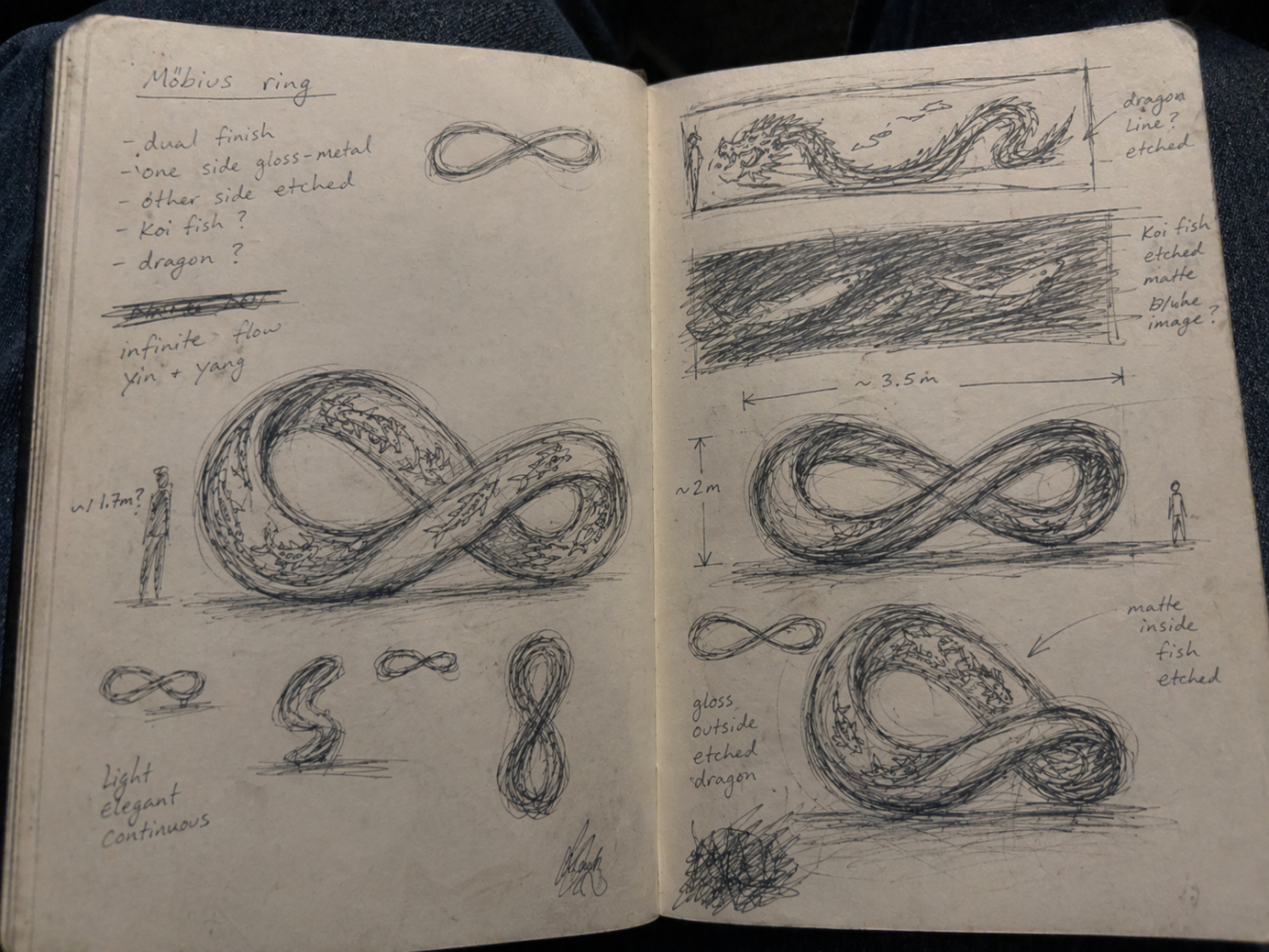
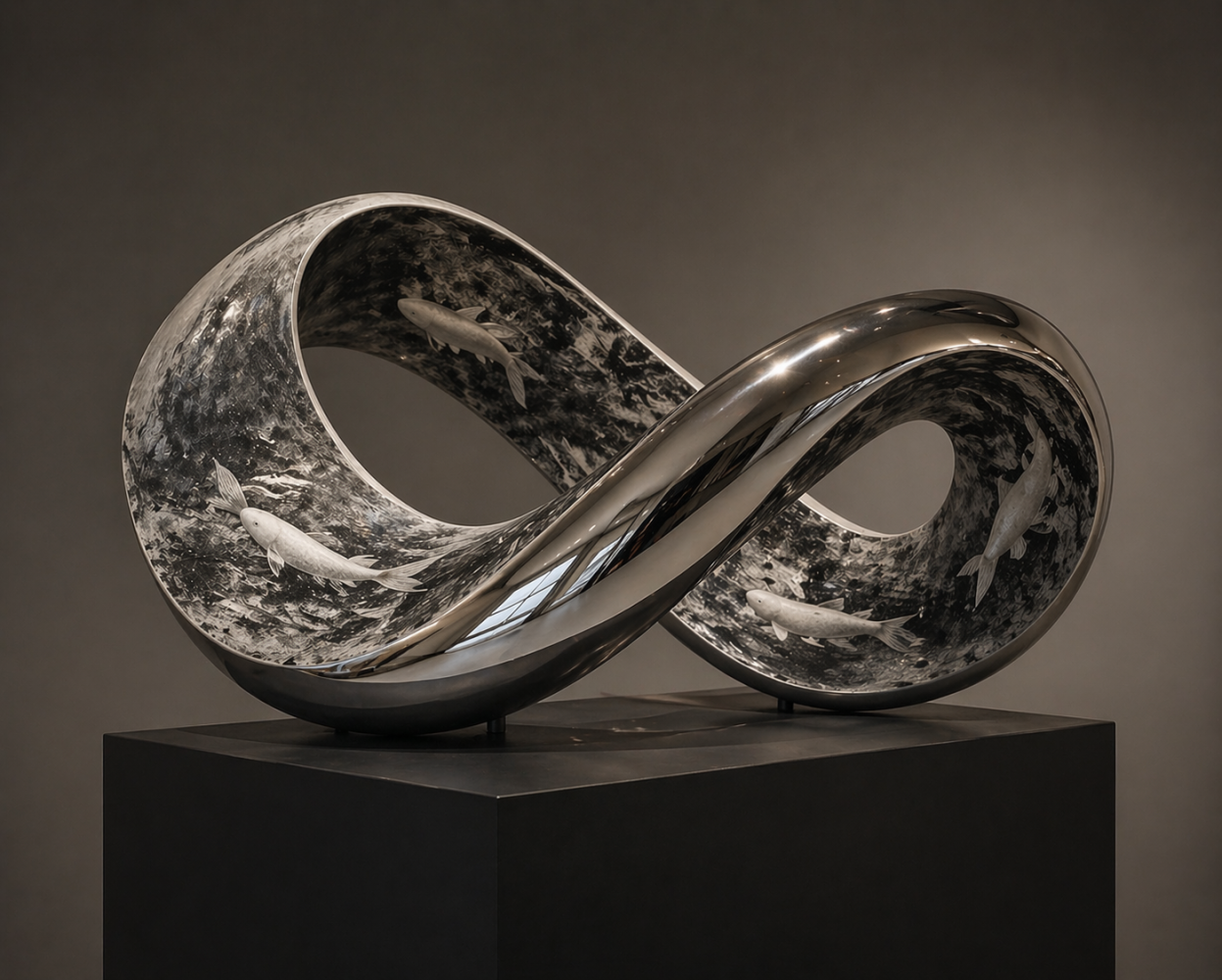
So while I am still very interested in that live display version, I have also been developing the idea as a more materially resolved sculptural object. In this form, one side carries the image world of the fish, while another surface becomes reflective, etched, or otherwise transformed. Rather than relying on animation, the work asks the viewer to move. Transformation is no longer delivered only through moving pixels, but through bodily encounter, changing light, reflection, and the shifting relationship between image and form.
That matters to me. A static object is not necessarily less alive. In fact, it can sometimes create a slower, deeper kind of engagement. It can hold time differently. It can invite contemplation rather than spectacle. And from a practical point of view, it is also a more accessible proposition: easier to fabricate, easier to install, easier to maintain, and perhaps easier to place in the world without losing the conceptual integrity of the original impulse.
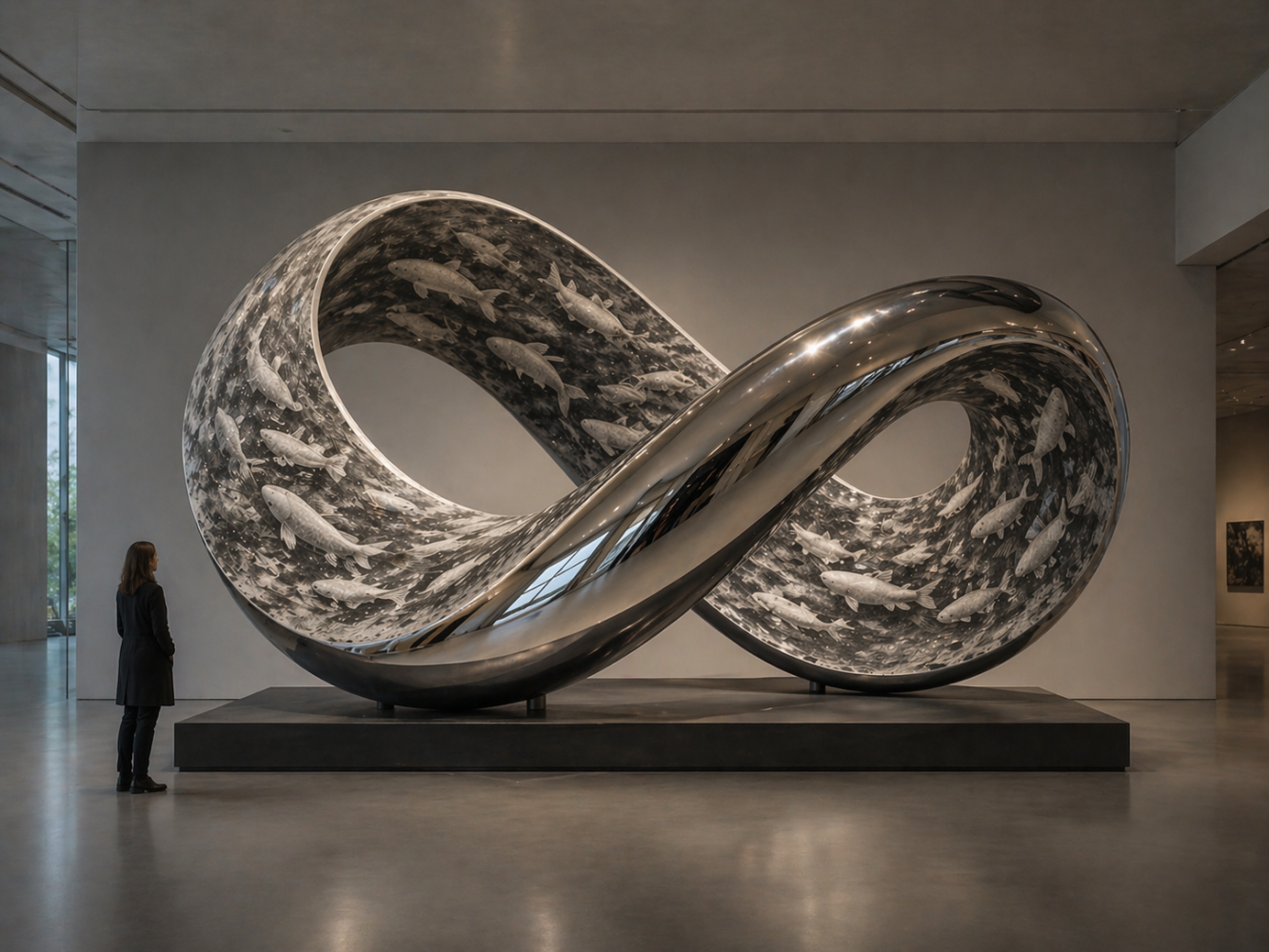
I suppose what I am trying to do is retain the conceptual charge of the digital idea while allowing the work to become more physically grounded. That is not a compromise so much as a shift in register. The original LED concept was about movement, light and transformation through image flow. The sculptural version is about transformation through material presence, surface, reflection and embodied viewing. Both are concerned with passage. Both are concerned with becoming.
This also connects to a broader concern in my practice: how an image can move beyond being merely looked at and become something one encounters spatially and bodily. I have long been interested in extending photography into objecthood, into surfaces and structures that ask the viewer not simply to see, but to navigate. In that sense, the Dragon Gate work feels like a natural extension of earlier concerns. The legend provides the narrative armature, but the real question is how transformation can be made present in form.
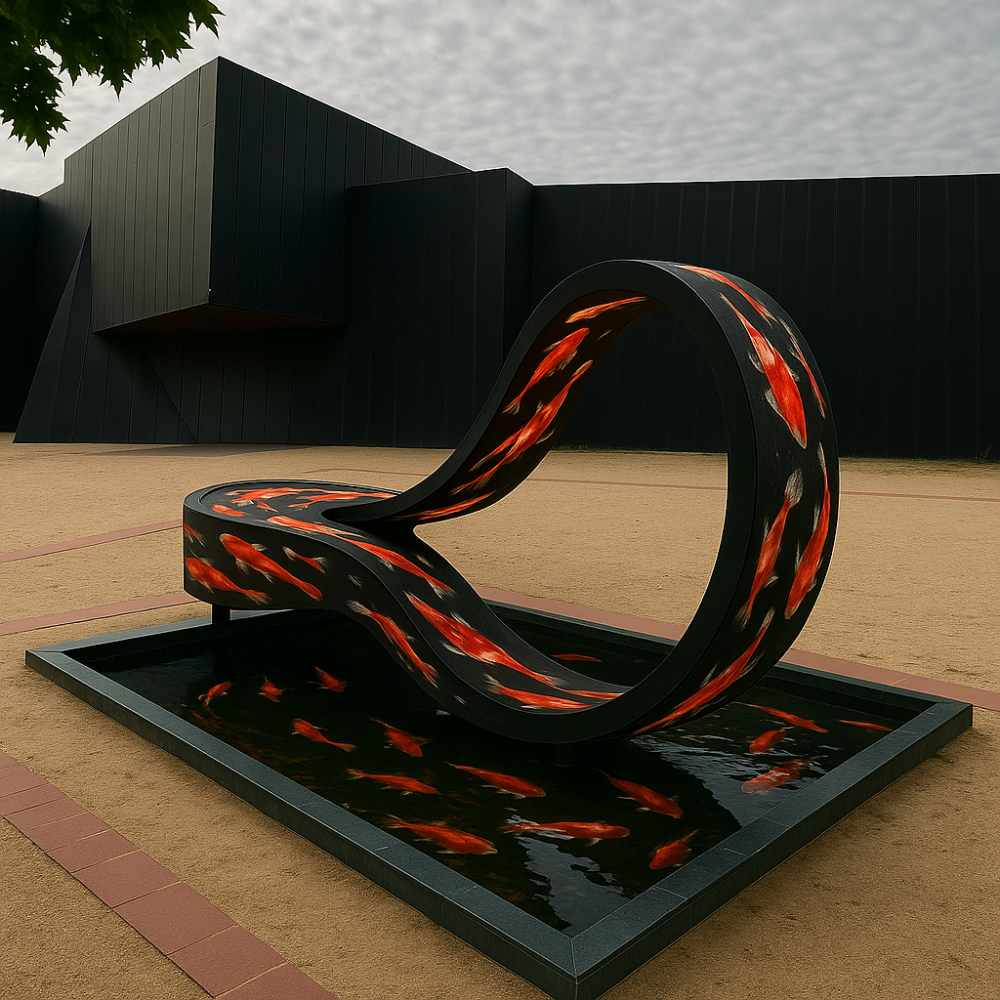
Perhaps that is why the koi and the dragon continue to resonate. They are not opposites. They are phases of one continuum. One contains the possibility of the other. That idea feels especially fitting within a Möbius structure, where distinction folds back into continuity, and where movement reveals what static viewing cannot.
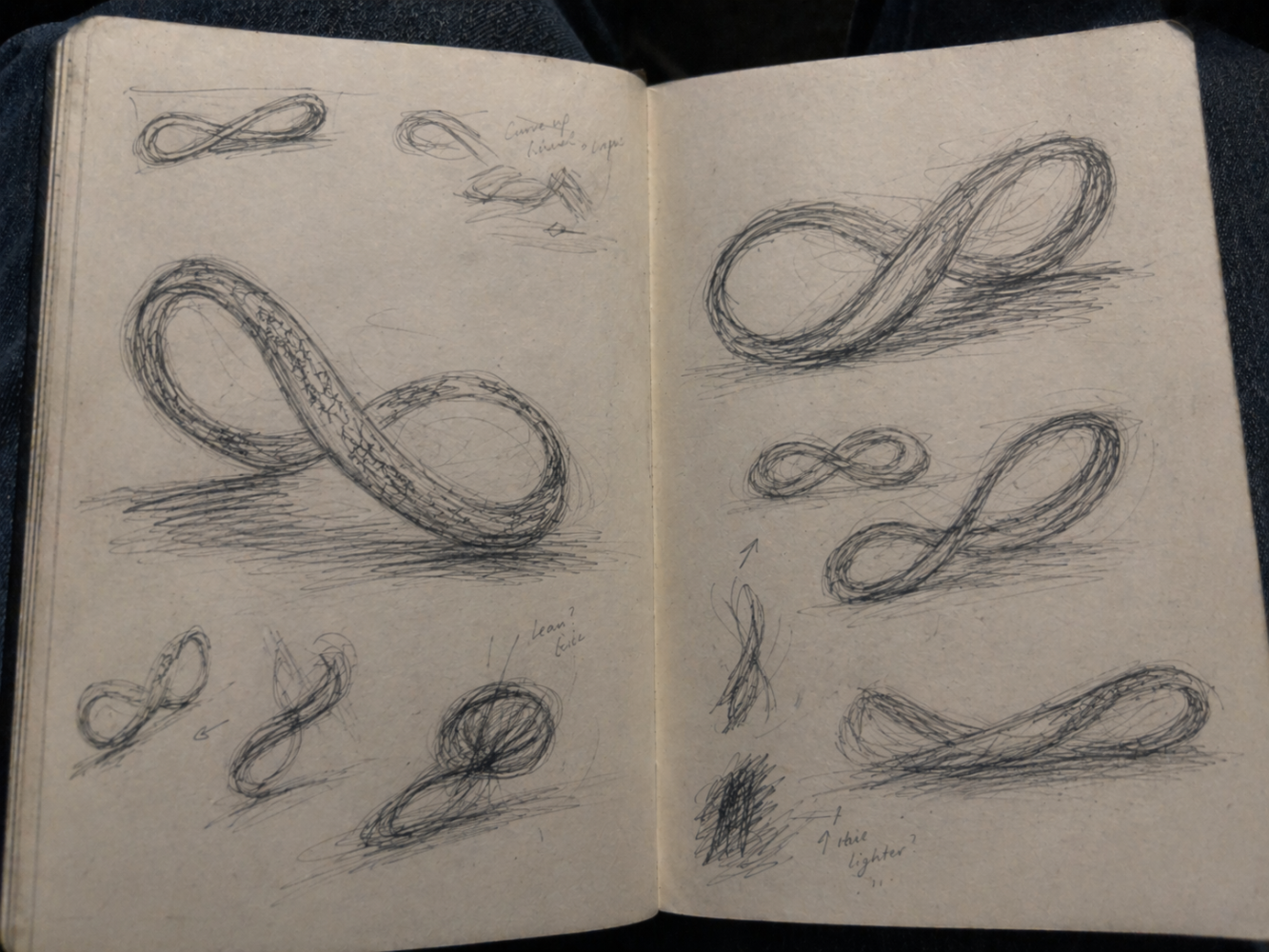
So this project sits somewhere between mythology, photography, sculpture and spatial thinking. It begins in an old Chinese story, but for me it also speaks to artistic process itself: the long upstream push, the uncertainty, the repeated testing, the attempt to move from one state of practice into another. Not every leap clears the gate. But the effort to reach it changes you anyway.
This is still unfolding, but it feels like one of those ideas that has been waiting for the right form to emerge.