
I’m happy to share that I’m starting a new position as Course Advisory Group…
I’m happy to share that I’m starting a new position as Course Advisory Group : Visual Communication Design : University of Canberra at University of Canberra!
I’m happy to share that I’m starting a new position as Course Advisory Group : Visual Communication Design : University of Canberra at University of Canberra!
Appointment to the Course Advisory Group for the Visual Communication Design…
Appointment to the Course Advisory Group for the Visual Communication Design Degree at the University of Canberra I am pleased to announce that I have accepted an invitation to serve on the Course Advisory Group (CAG)…
Appointment to the Course Advisory Group for the Visual Communication Design Degree at the University of Canberra
I am pleased to announce that I have accepted an invitation to serve on the Course Advisory Group (CAG) for the Visual Communication Design Degree at the University of Canberra.
Objectives of the Course Advisory Group:
1. To provide strategic advice to the University of Canberra's Visual Communication Design faculty regarding future directions and industry requirements.
2. To ensure that graduates of the programme are equipped with the requisite skills and knowledge to make substantive contributions to the field.
Significance of the Role and what I hope to contribute;
The imperative for a symbiotic relationship between academia and industry cannot be overstated, particularly in a field as dynamic as visual communication and graphic design. My participation in the CAG aims to incorporate valuable insights from the industry into academic programming, thereby enhancing the quality and relevance of the curriculum.
I anticipate fruitful collaborations with academic staff at the University of Canberra and professionals in the industry, with the overarching aim of contributing to the education of well-prepared graduates in visual communication and graphic design.

This is an fantastic initiative, Marc was an incredible talent
This is an fantastic initiative, Marc was an incredible talent. His work always blew me away, several years I had the pleasure of his company along with Gerard in China, at the Pingyao Festival. The exhibited work spoke…
This is an fantastic initiative, Marc was an incredible talent. His work always blew me away, several years I had the pleasure of his company along with Gerard in China, at the Pingyao Festival. The exhibited work spoke for itself, but the real treat was watching them work, creating an amazing tableau in one of the abandoned factories.
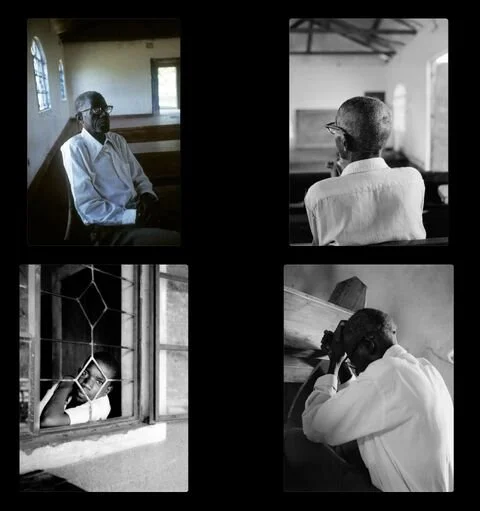
I recently wrote about an RMIT project I led, titled 'Picturing Community: School of Art'
I recently wrote about an RMIT project I led, titled 'Picturing Community: School of Art'. If you happened to read it, you'd see it was inspired by a project I undertook in western Kenya, specifically in the town of…
I recently wrote about an RMIT project I led, titled 'Picturing Community: School of Art'. If you happened to read it, you'd see it was inspired by a project I undertook in western Kenya, specifically in the town of Ugunja.
'Picturing Community: Ugunja, Kenya' was a profoundly meaningful project for me, both in my capacity as a photographer and on a personal note. Looking back at the RMIT piece made me reminisce about the people I connected with and the experiences I cherished. To my surprise, I noticed this significant work wasn't featured on my website! I've now made the necessary updates. Please follow the provided link to delve deeper.
This is an excellent series of doco/interviews, a brilliant collaboration between…
This is an excellent series of doco/interviews, a brilliant collaboration between RMIT Photography and Museum of Australian Photography. The interview gives great inisight into one of this country's most important…
This is an excellent series of doco/interviews, a brilliant collaboration between RMIT Photography and Museum of Australian Photography. The interview gives great inisight into one of this country's most important photographer and it's not just about architectural photography. John's career spans music photography, advertising, his incredible personal series on lost cities and of course architectural photography. I was delighted to see his iconic 1980's 'Get Wrecked on Keppel' campaign feature. This was controversial at the time...and still seems to be in some circles, with accusations the images are, to quote 'sexualised, sexist and demeaning to women' , personally I don't see it, nor did the participants feel that. It's also worth noting that the Rockhampton Museum of Art acquired the Great Keppel campaign images for there permanent collection. #nickybuckley
Picturing Community: School of Art Vol. 1 (2022/23)
Belonging and collaboration have always been central principles in the world of arts and academia. However, in the wake of a global pandemic, these concepts have taken on an even greater importance. The isolating effects of the COVID-19 environment highlighted the deep human need to connect, collaborate, and feel part of something bigger. For many, the post-COVID landscape presented a stark challenge: how to rebuild the sense of community that had been eroded by prolonged periods of separation and remote engagement. Against such a backdrop, the value of shared projects and collective efforts became unmistakably clear, acting as bridges reconnecting individuals to each other and to their mutual passions.

Click on the image above to download the catalogue
Reflecting on my own experiences, I am reminded of a project I undertook in the early 2000s in western Kenya. Immersed within the community, I worked alongside local resource centres and groups to produce images that would be meaningful to them. Through portraits and documentation of group activities, not only did we capture moments, but we also forged lasting relationships and a shared sense of purpose. This effort, titled "Picturing Community: Ugunja, Kenya," was a testament to the power of art and collaboration in building bridges and fostering belonging.

The world of academia is often filled with initiatives aimed at nurturing a sense of belonging among its students. Whilst well-intentioned, these efforts can sometimes feel insincere, overly directed, or too prescriptive, causing them to fall short of their intended impact. In disciplines like the arts, where passion and identity are deeply intertwined, these attempts can feel especially mismatched. Photographers, for instance, often identify deeply with their craft, viewing it not merely as a field of study but as an intrinsic part of their identity.

Artists—whether they're painters, printmakers, sculptors, or photographers—share this deep connection with their discipline. They don't just practise their craft; they live it. Their work is a reflection of their innermost thoughts, emotions, and perspectives. Thus, traditional attempts at fostering belonging can sometimes be off the mark with them. Generic initiatives that aren't discipline-specific can feel out of place, failing to resonate with those who have a strong sense of identity in their craft.
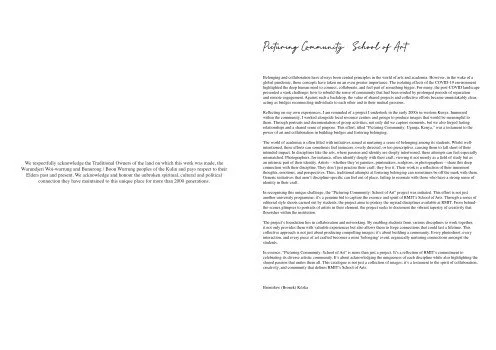
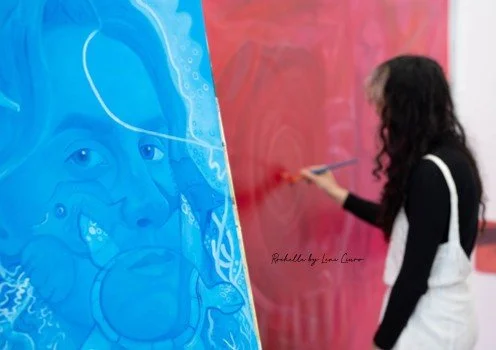
In recognising this unique challenge, the "Picturing Community: School of Art" project was initiated. This effort is not just another university programme; it's a genuine bid to capture the essence and spirit of RMIT's School of Arts. Through a series of editorial style shoots carried out by students, the project aims to portray the myriad disciplines available at RMIT. From behind-the-scenes glimpses to portraits of artists in their element, the project seeks to document the vibrant tapestry of creativity that flourishes within the institution.
The project's foundation lies in collaboration and networking. By enabling students from various disciplines to work together, it not only provides them with valuable experiences but also allows them to forge connections that could last a lifetime. This collective approach is not just about producing compelling images; it's about building a community. Every photoshoot, every interaction, and every piece of art crafted becomes a mini 'belonging' event, organically nurturing connections amongst the students.
In essence, "Picturing Community: School of Art" is more than just a project. It's a reflection of RMIT's commitment to celebrating its diverse artistic community. It's about acknowledging the uniqueness of each discipline while also highlighting the shared passion that unites them all. This catalogue is not just a collection of images; it's a testament to the spirit of collaboration, creativity, and community that defines RMIT's School of Art
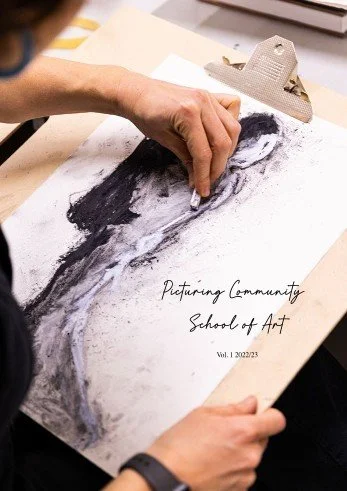
I'm proud to introduce the "Picturing Community: School of Art" Vol
I'm proud to introduce the "Picturing Community: School of Art" Vol. 1 (2022/23). This catalogue brings to life the diverse disciplines within our school, from candid behind-the-scenes moments to evocative portraits of…
I'm proud to introduce the "Picturing Community: School of Art" Vol. 1 (2022/23). This catalogue brings to life the diverse disciplines within our school, from candid behind-the-scenes moments to evocative portraits of artists at work.
A trip to western Kenya in the early 2000s, where I worked closely with local communities to create meaningful images, served as a significant inspiration for this project. The sense of community, connection, and shared purpose I experienced in Kenya echoed in my mind as we embarked on this journey at RMIT.
A heartfelt thank you to the photographers, artists, and studio team for their invaluable contributions. Your dedication and passion have been instrumental in shaping this project.
Your support means the world, through projects such as this, we're dedicated to strengthening student belonging, fostering deeper connections, and promoting collaborative experiences.
--
Experience the essence and inspiration behind RMIT's School of Art through our catalogue.
The Indispensable Role of Photographic Education in Universities
In this age of profound technological leaps, underscored by the emergence of artificial intelligence (AI), some critics suggest that commercial photography is nearing redundancy and that tertiary education in the…
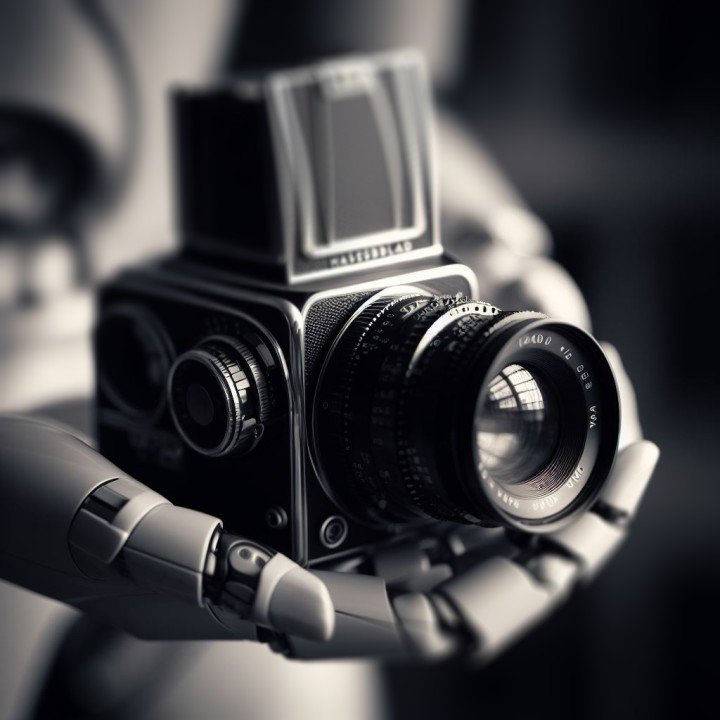
In this age of profound technological leaps, underscored by the emergence of artificial intelligence (AI), some critics suggest that commercial photography is nearing redundancy and that tertiary education in the discipline might be unnecessary. However, this perspective, though seemingly forward-looking, lacks depth. Photographic imagery, irrespective of its creation method, remains central to cross-cultural and multidisciplinary communication. The intricate technicalities, foundational concepts, and visual literacy embedded within photography are unmatched. Such nuances are best nurtured through an education deeply rooted in image creation.
AI Augmented Visual Literacy:
In our digital age, the immense volume of images requires heightened visual literacy. While AI can produce visuals rapidly, its potential is best realised when steered by a visually literate individual. Those educated in photography not only harness AI to enhance communication but also to co-create with audiences, meeting the demands of our visually-driven society. Whilst AI can replicate images, the innate human touch, vision and, some may argue, emotion in photography remain irreplaceable.
Technical Proficiency Enhanced by AI:
AI's capability to improve images and suggest compositions is undeniable. However, its peak performance is witnessed when used by those deeply versed in photographic techniques. Individuals with a solid foundation in photography can innovatively apply AI, marrying human intuition with machine precision.
Conceptual Depth in Imagery:
Images serve as more than mere visuals – they are potent narratives, often conveying profound ideas or critiques. Tertiary education in photography equips students with diverse conceptual frameworks, empowering them to craft images that deeply resonate. While AI is formidable, it lacks the capacity to grasp these conceptual subtleties. Those well-versed in photography can employ AI to enhance the depth and relevance of their images in our digital age.
Enhanced Communication and Engagement:
Images, in our digital era, serve as primary communicative tools. When AI is employed by photographically educated individuals, the resultant images can foster profound engagement and catalyse discussions. Grasping the history, ethics, and socio-cultural implications of photography, as embodied in tertiary educational settings, is pivotal for genuine contributions to this visual realm.
Refined Visual Literacy:
In today's visually inundated world, the ability to create impactful photographs stands paramount. Tertiary photographic education plays a pivotal role in honing this skill, allowing individuals to navigate the vast sea of imagery and spotlight the truly remarkable. This formalised training doesn't merely teach techniques; it fosters a heightened visual literacy essential in today's age. As the general public becomes increasingly visually literate, those equipped with a comprehensive photographic education will lead the way, shaping and defining standards of visual communication.
Collaborative Future Readiness:
Imagine a future where AI functions as a collaborator rather than just a tool. In this symbiosis, the photographer contributes vision and intent, complemented by AI's efficiency. Those rooted in photography are best poised to spearhead this harmonious interplay, guiding it towards uncharted territories.
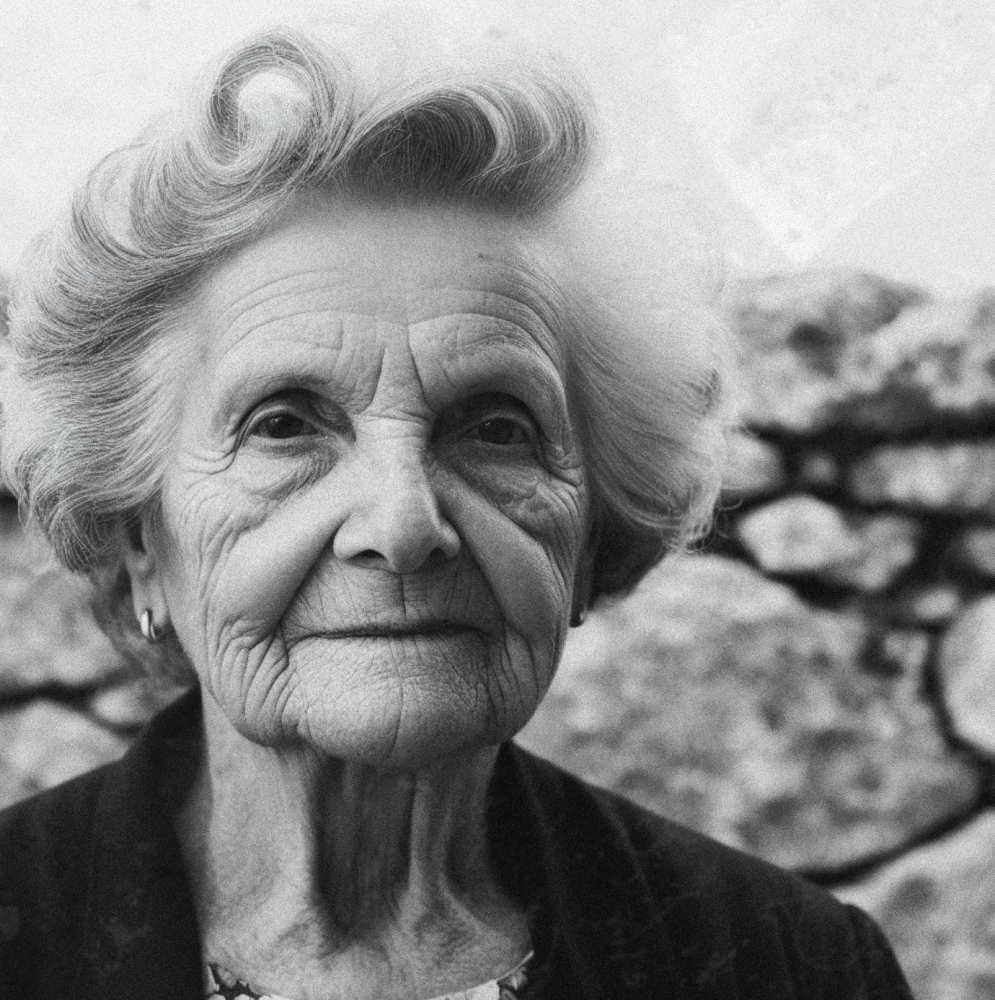
Commercial Acumen and Practical Applications:
Beyond personal artistic expressions, the commercial spectrum of photography holds immense significance. Formal education provides an understanding of this realm, ensuring students can adeptly manoeuvre professional landscapes. In commercial photography, AI can offer data-driven insights, yet the truly impactful images emerge when a knowledgeable photographer employs AI as an enhancement tool.
Significance of Tertiary Photographic Education:
No other academic field offers such an intrinsic connection to the creation of photographic images or photorealistic visuals that a photography education, be it as undergrad or indeed Masters level. As we find ourselves in the age of AI, understanding the confluence of technology and photography becomes even more paramount. It's an intersection teeming with potential, demanding rigorous study.
With the ever-widening horizon of AI and its transformative capabilities, the bond between technology and the ‘art’ of photography presents not just a fleeting curiosity but a lasting frontier of exploration. This is not a realm where photography stands threatened; rather, it's an arena ripe with opportunities, beckoning those with a keen photographic acumen to seize them.
The depth and richness of a photographic education cannot be overstated. Those privileged to undergo such rigorous training are not merely learning to capture images but are being equipped to shape the very fabric of visual communication in our rapidly digitising world. As narratives become increasingly visual, the role of the photographer, enriched by both traditional wisdom and contemporary techniques, becomes even more pivotal.
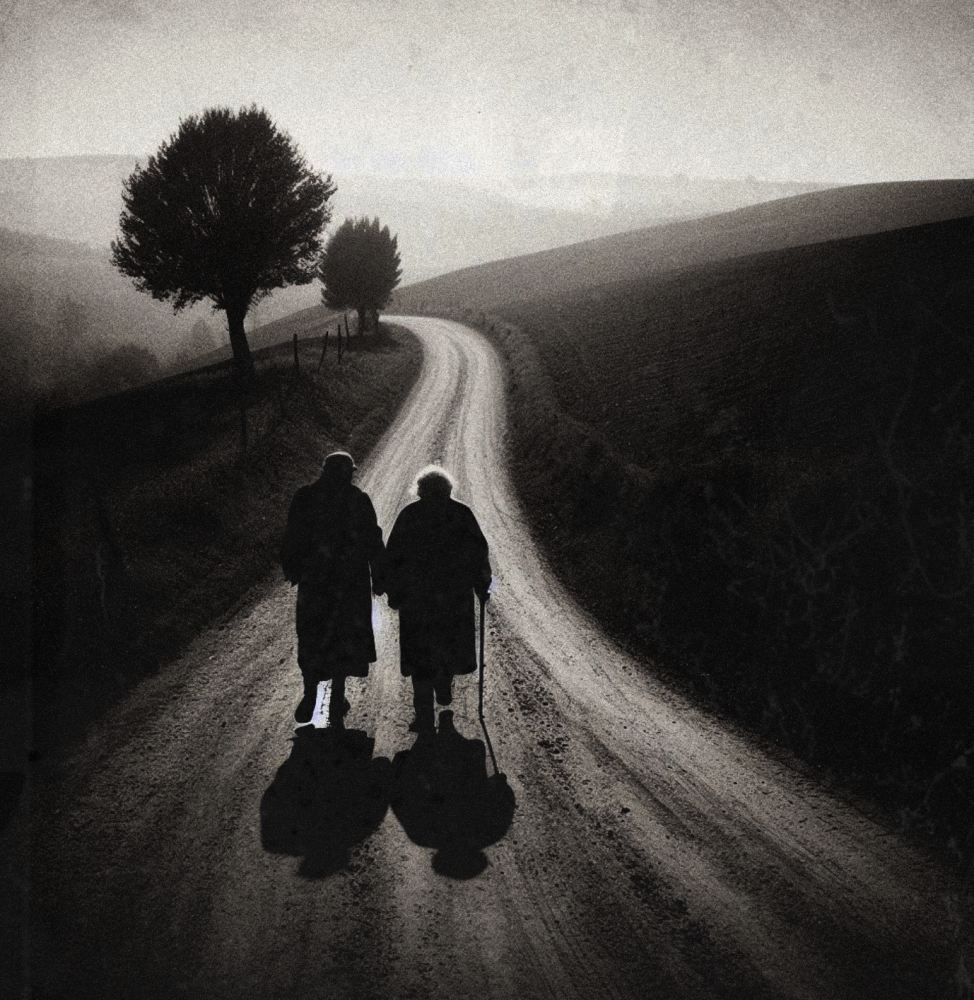
Given the profound significance and wide-ranging applications of photography, there is an undeniable and pressing need to not only preserve but expand the scope of photographic education. Far from being confined to specialised courses, it should be woven into a broader spectrum of academic disciplines. This would ensure a more holistic understanding of its potential and applications across various fields.
In essence, universities, as bastions of knowledge and innovation, have the onus to recognise and champion the role of photographic education. As the digital age surges forward, it will be those armed with a deep understanding of photography, coupled with the tools of AI, who will sculpt the narratives, dialogues, and visual symphonies of the future.