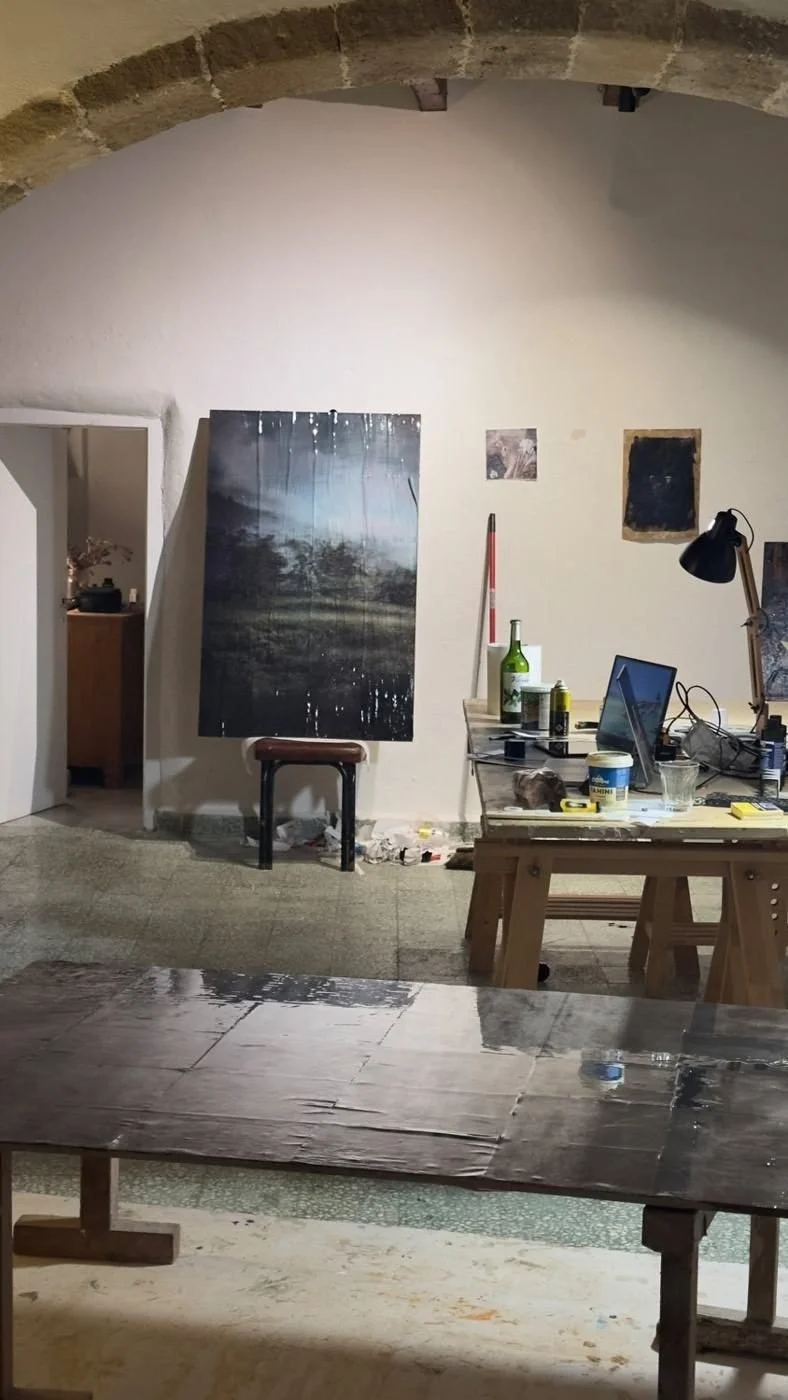
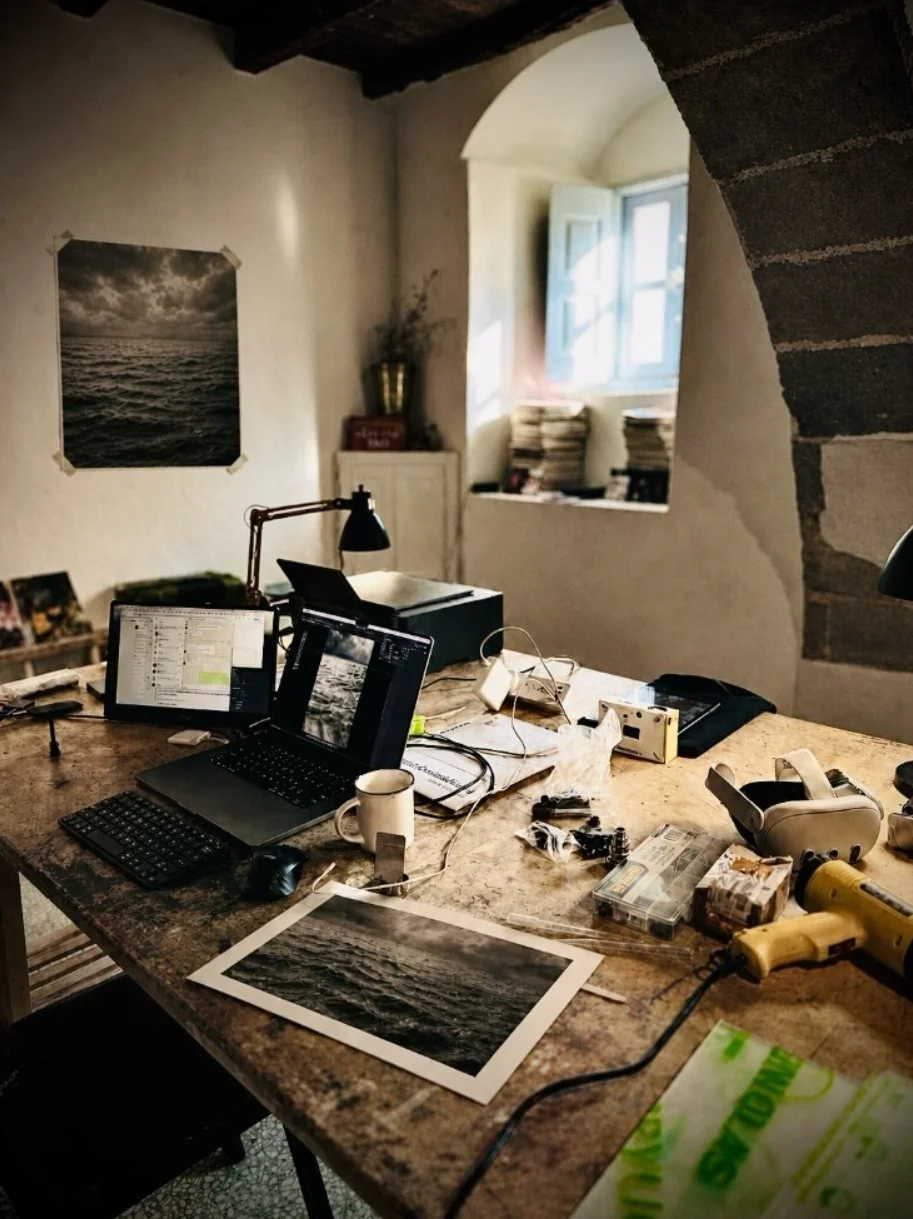
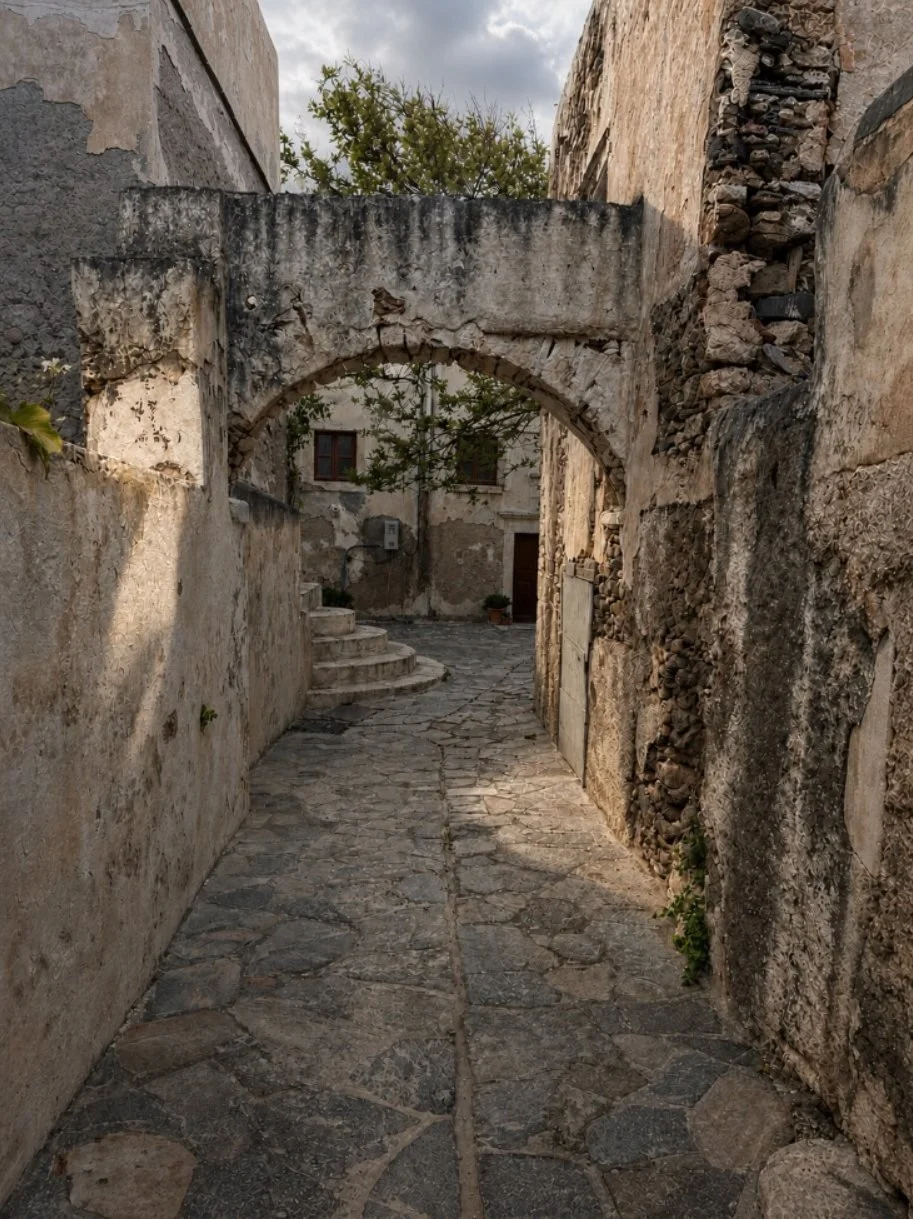
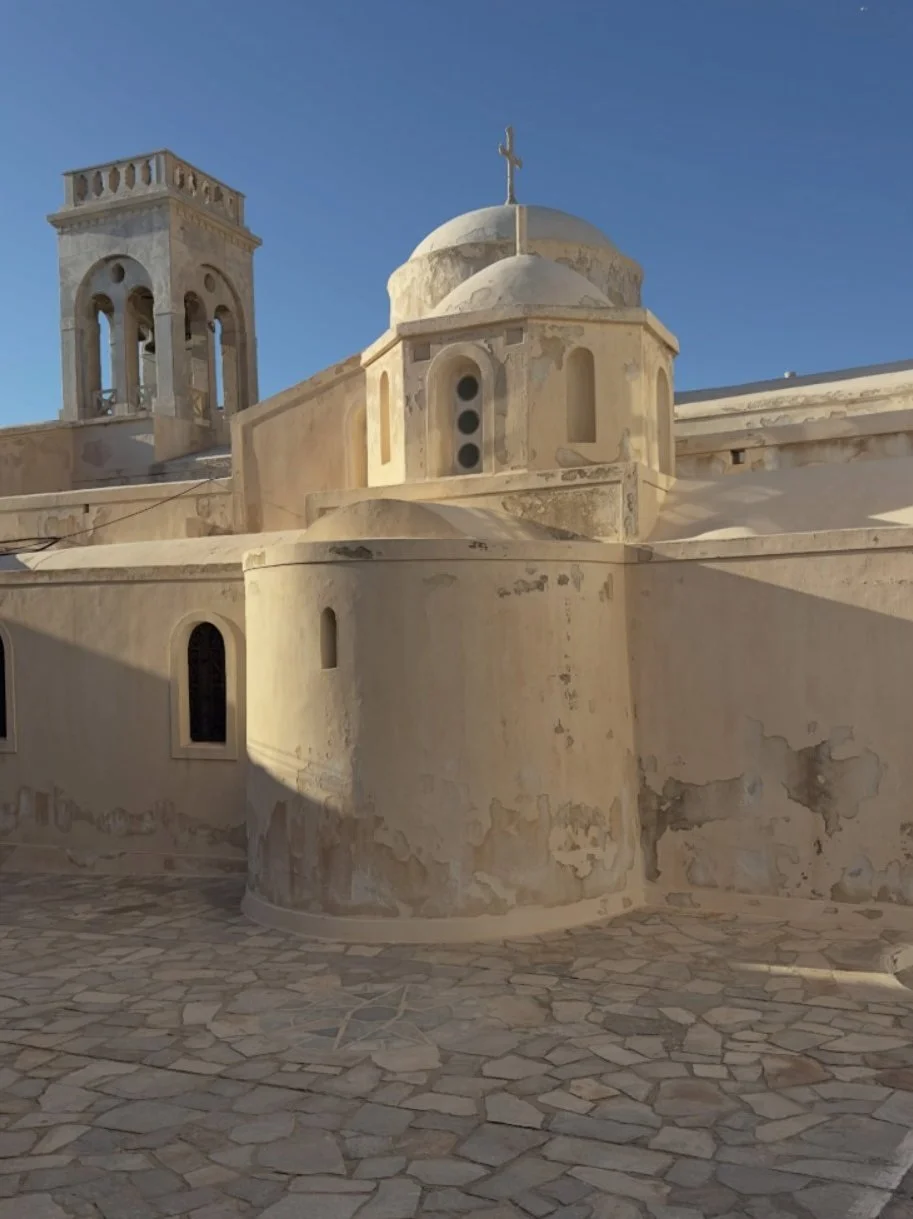
A former monastery in the old Venetian quarter of Naxos town. I flew in with sheets of acrylic, resin kits and a VR headset in my bags. What I didn't have was a UV printer, because there isn't one on the island.
So: no printer, one month, a suitcase of plastic.
That is how I got to resin. It wasn't inspiration, it was necessity. Resin is not a forgiving material. It goes where it wants, sets when it wants, and keeps a permanent record of every mistake you made on the way. I liked it immediately.
Where
La Chapelle Saint-Antoine, the Kastro, Chora, Naxos, Greece
When
May 2026
Hosts
Ariële and Jean-Bernard
Fellow resident
El-ham Tabsoba, painter, Accra
The building
A monastery from the early 17th century to the early 20th, beside the chapel of Agios Antonios
My article Residencies as Infrastructure is out now in European Photography 119. The essay reflects on residencies as working systems and not romantic retreats, drawing on my experiences at Eyes on Main Street, the Swatch Art Peace Hotel and other programmes that have shaped my practice.
It feels apt to see this text published just as I head to La Chapelle Saint-Antoine. One chapter in print, another just beginning.
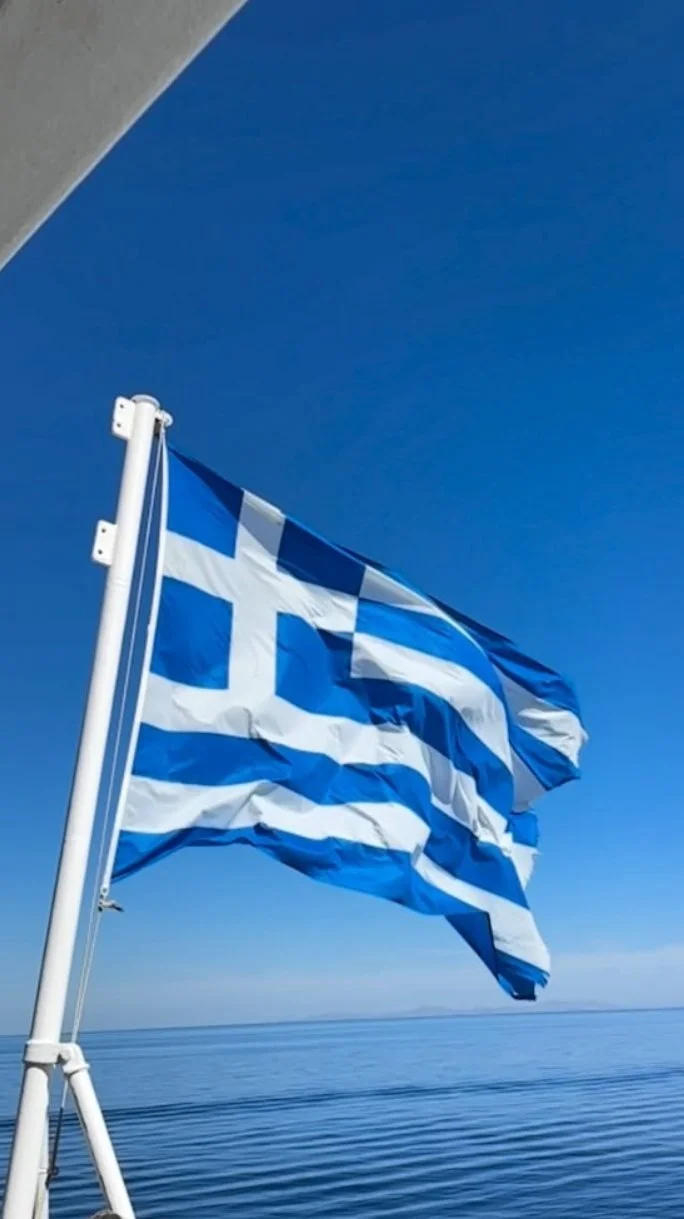
I arrived yesterday after the long haul from Melbourne to Abu Dhabi to Athens, then the ferry across. My recent travel has mostly been to China and I had forgotten how long the flights to Europe are. A good meal in Athens before boarding was a useful reset. The crossing itself was rough, the boat pitching about in heavy seas all the way to the island.
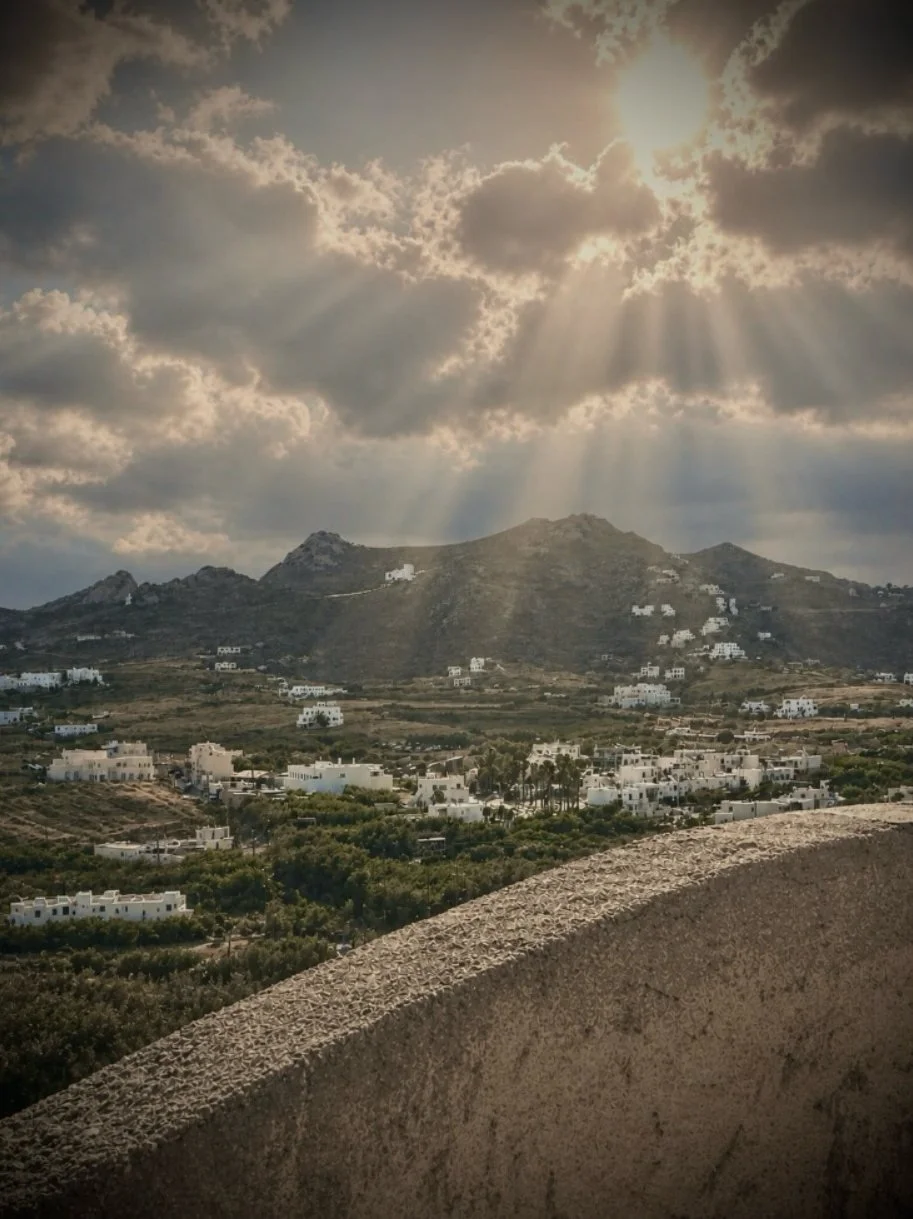
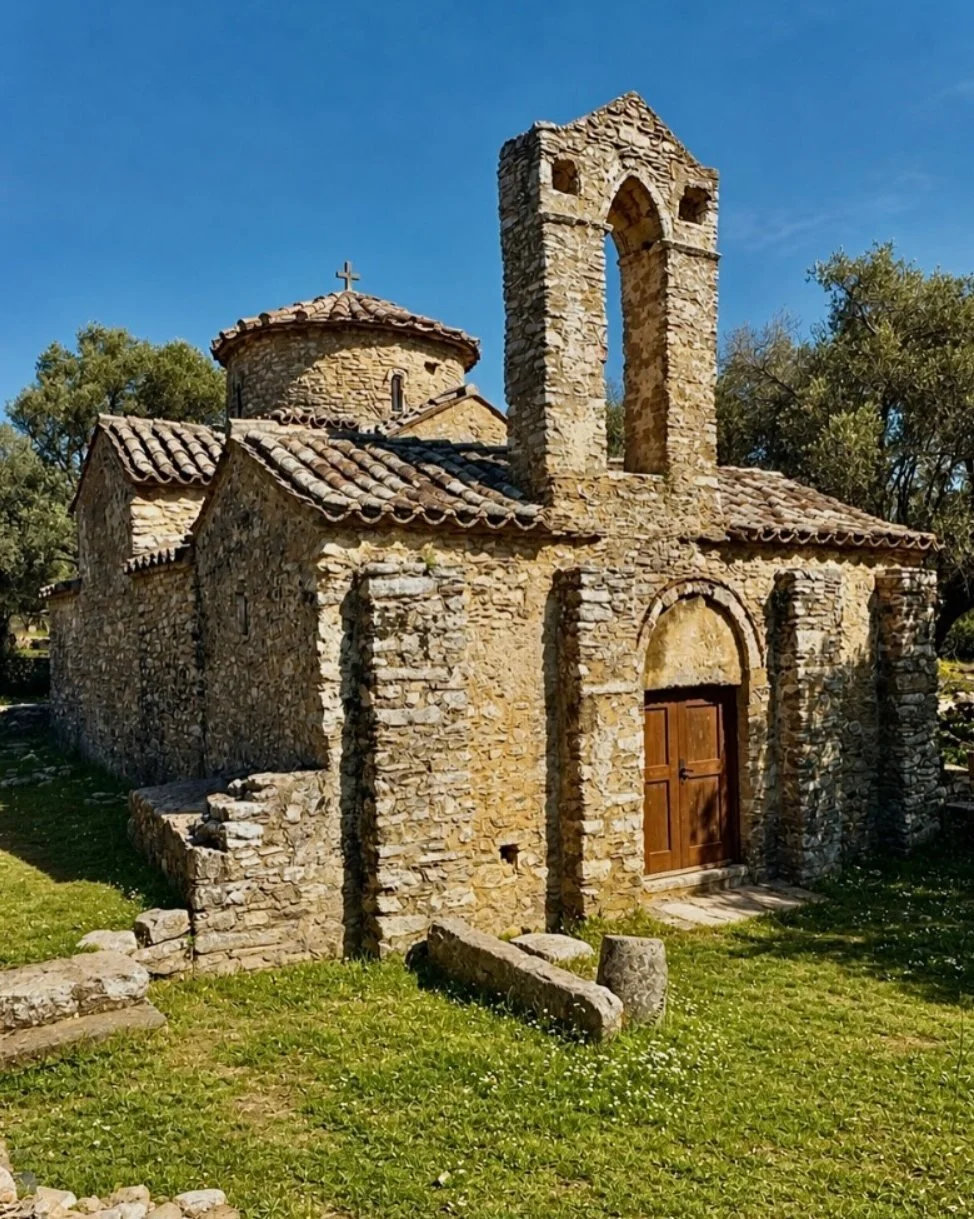
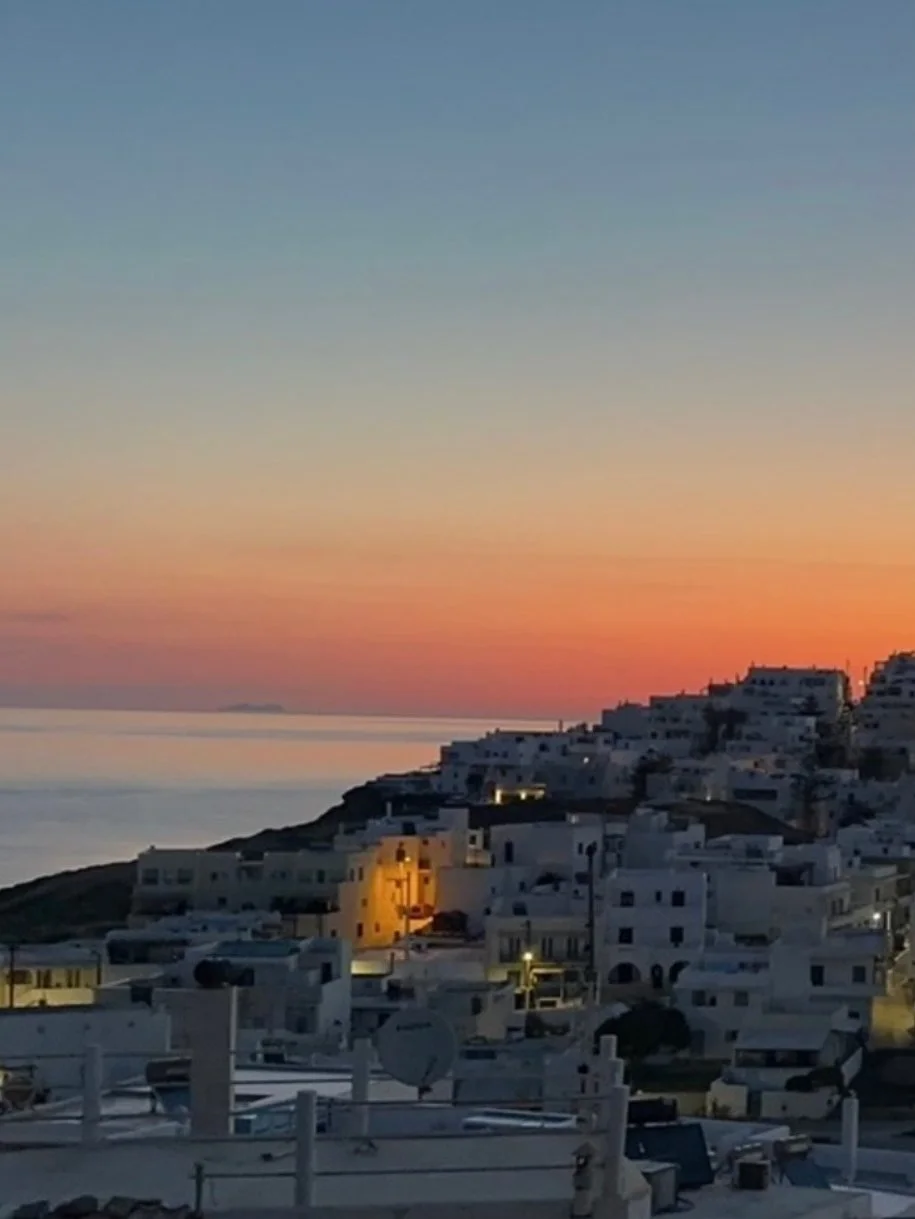
Ariële met me at the port with the warmest welcome and took me straight to the family home, where I met her husband Jean-Bernard and their youngest daughter. The residency sits in the Kastro, the old Venetian quarter at the heart of Chora, in a building that served as a monastery from the early 17th century until the early 20th. The small chapel of Agios Antonios that adjoins it gives the residency its name. The terrace looks out across Chora and up to a convent on the hillside that I plan to walk to later in the month.
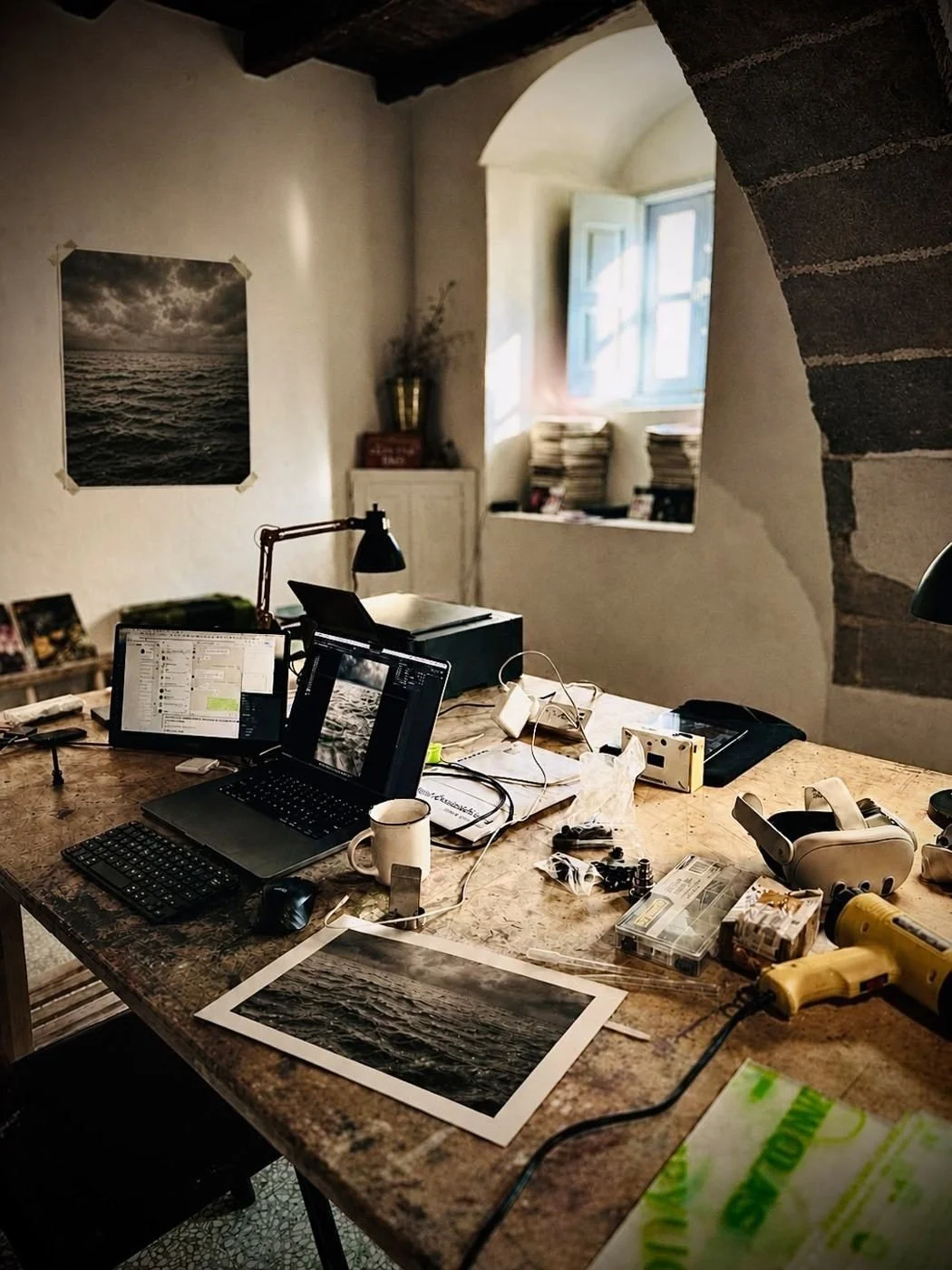
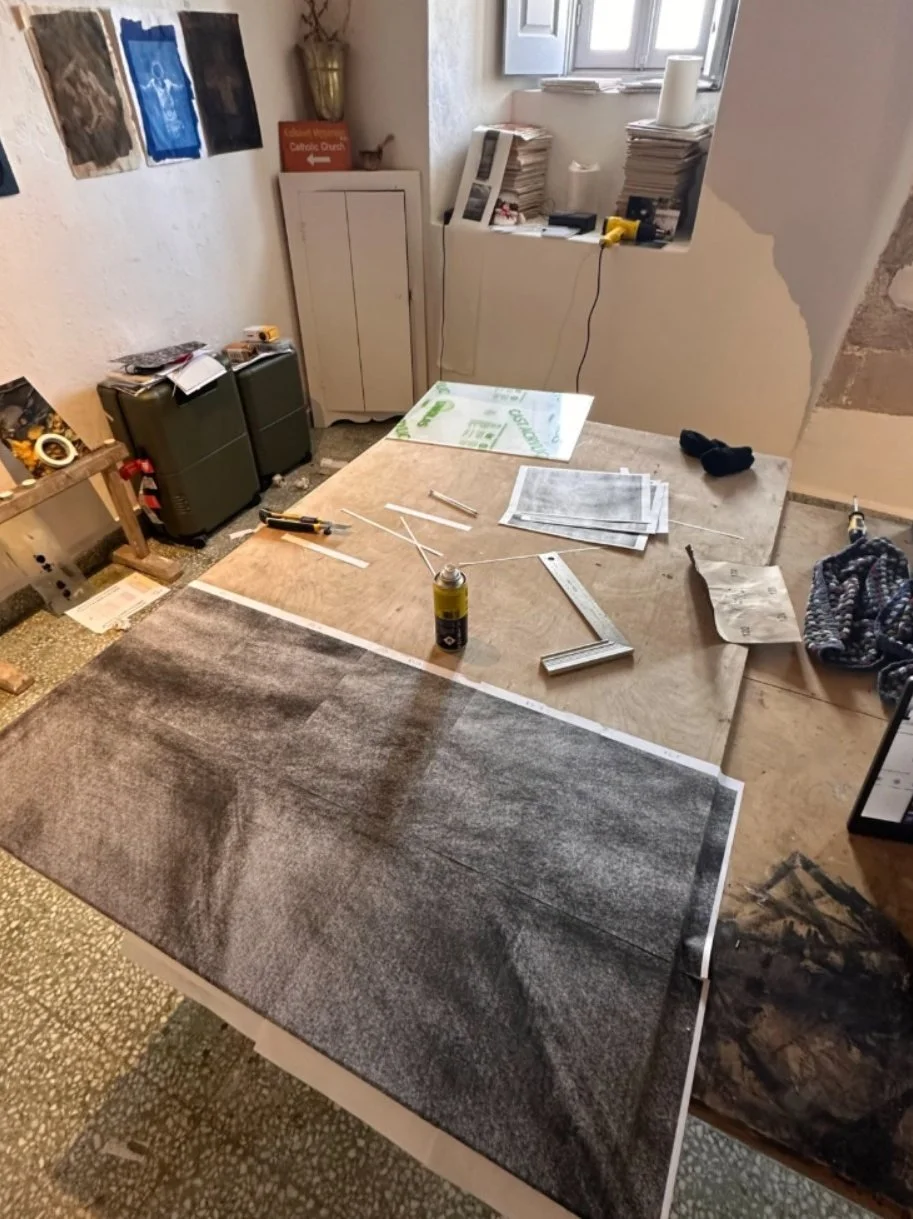
Tired or not, I wanted the studio operational on day one, so I unpacked and got it set up. I have brought a roll of acrylic from Australia and some small resin kits to experiment with. I have not been able to find anyone in this part of the world who does UV printing onto acrylic, so part of the month will be testing different ways of working with the material. The studio has a printer for test prints, and I brought my Meta Quest 3 along for some 3D scanning experiments.
I applied with a plan, as you do, but I want to hold it loosely. Today is about getting the lay of the land and walking the Kastro.
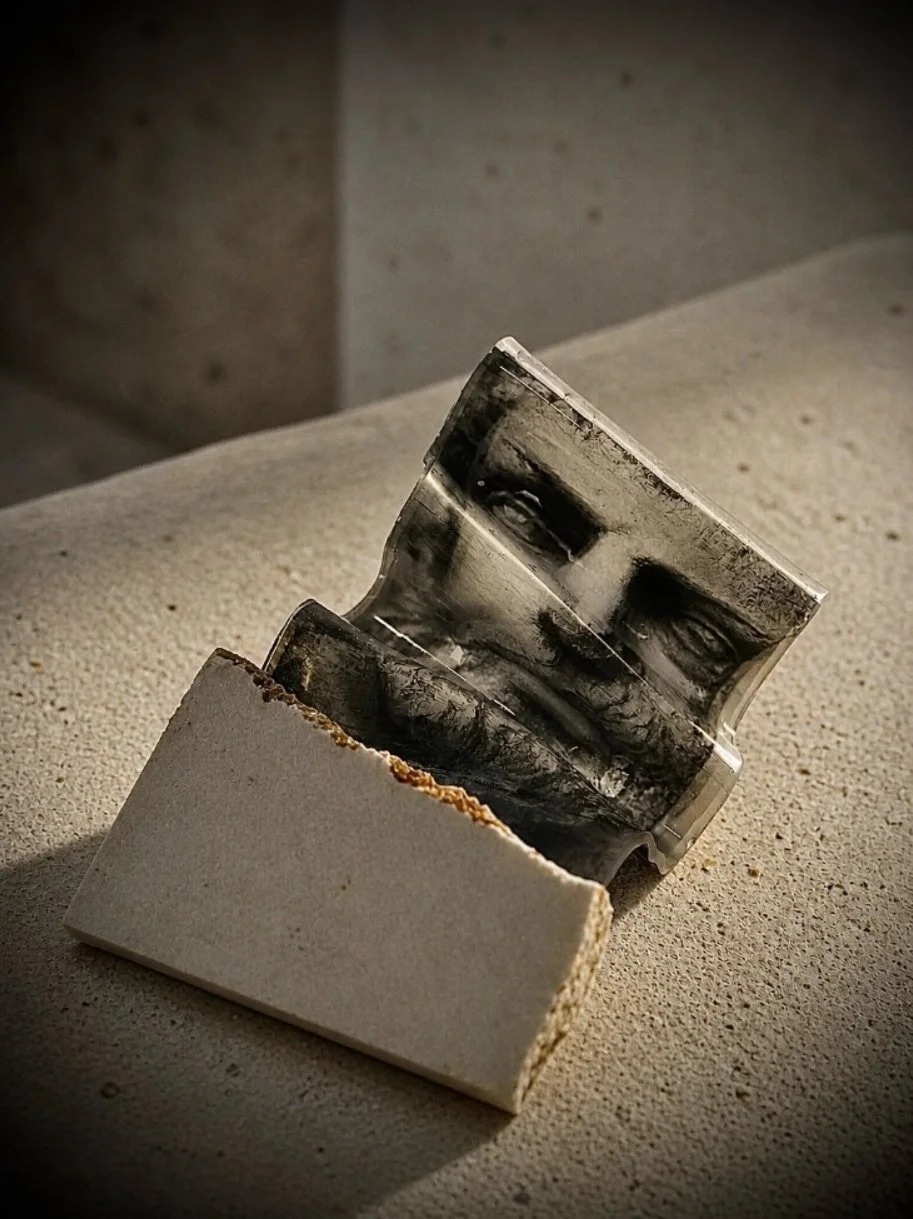
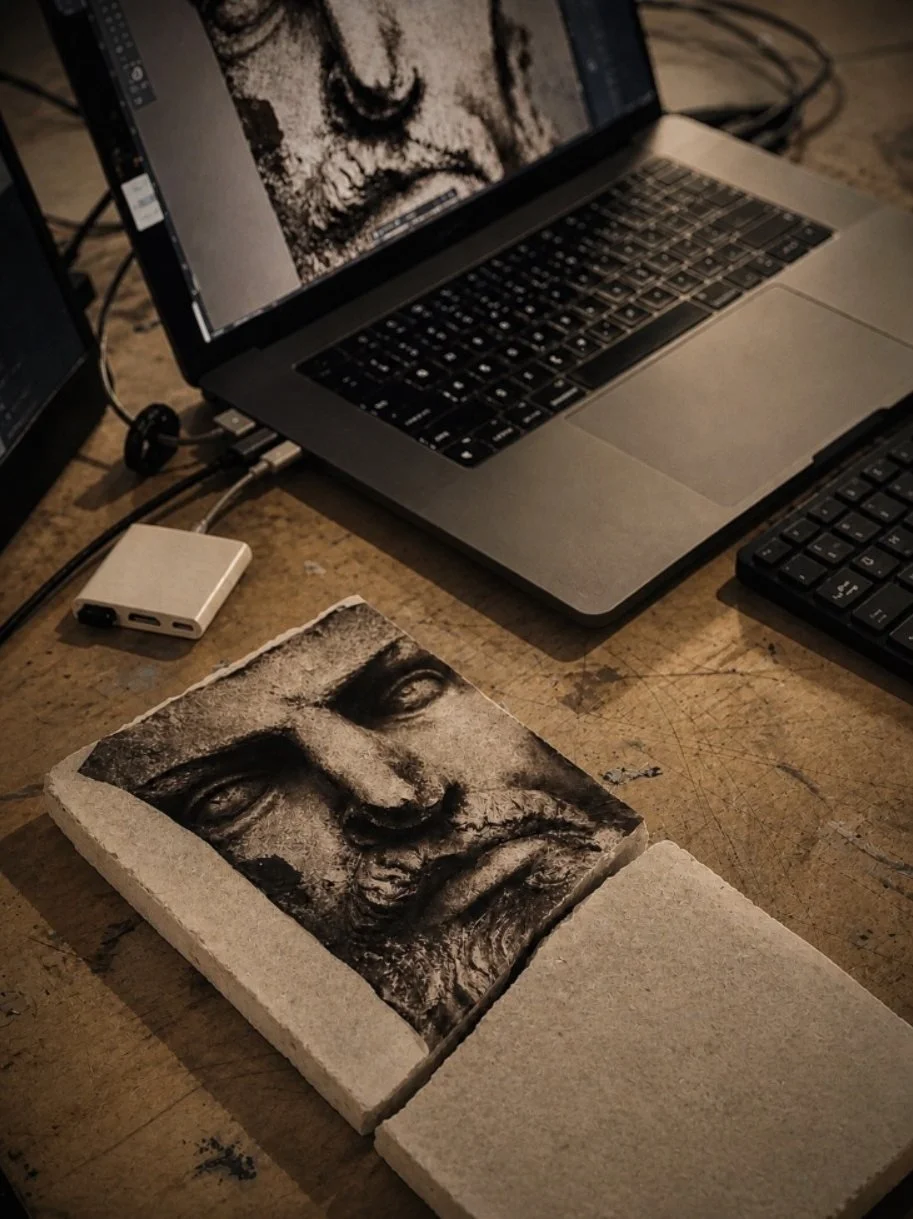
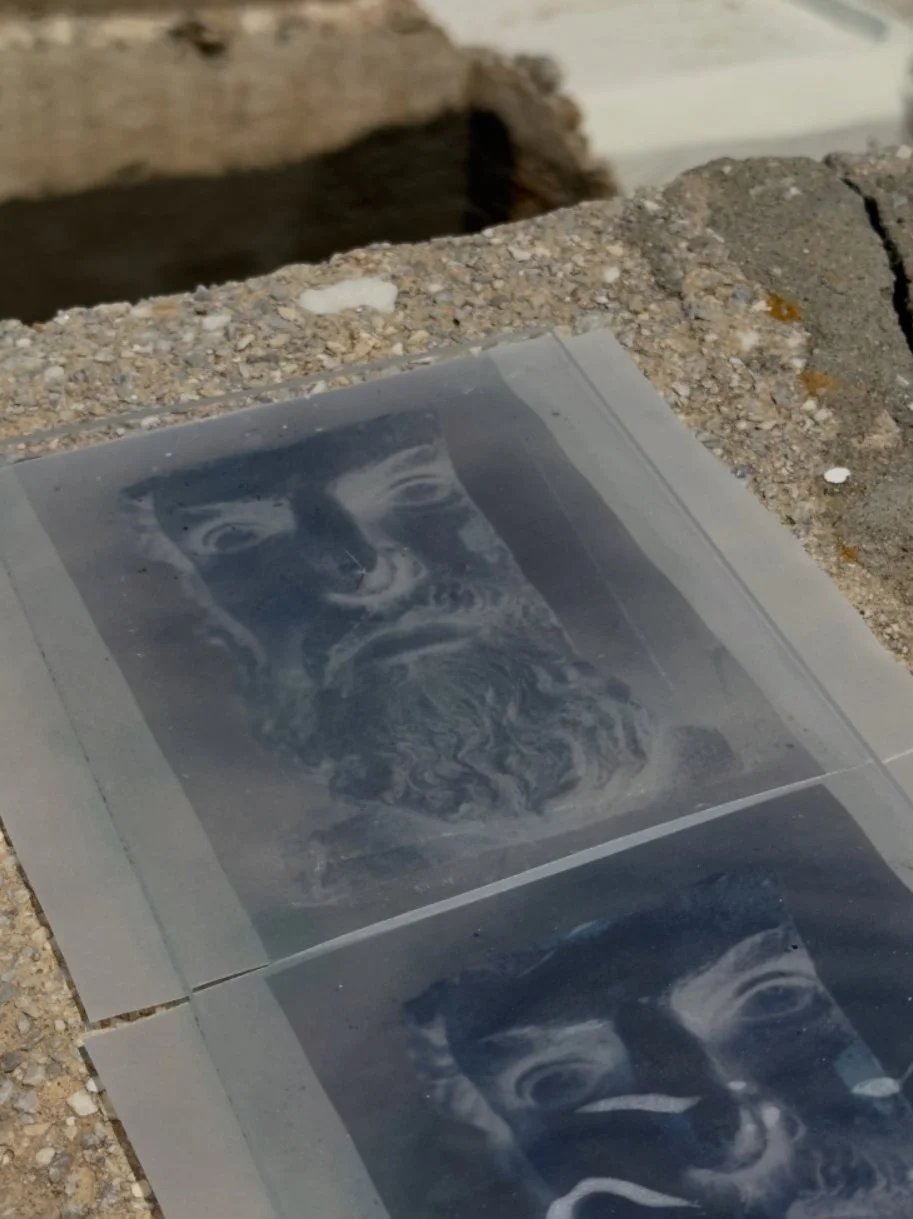
Into the studio. There is a life-size plaster head in there and I decided to use it as a starting point, less because the subject matters and more because I needed something to push against. Day one of any residency is really about getting the hands moving, breaking the inertia of travel and unpacking, and committing to making something, however rough.
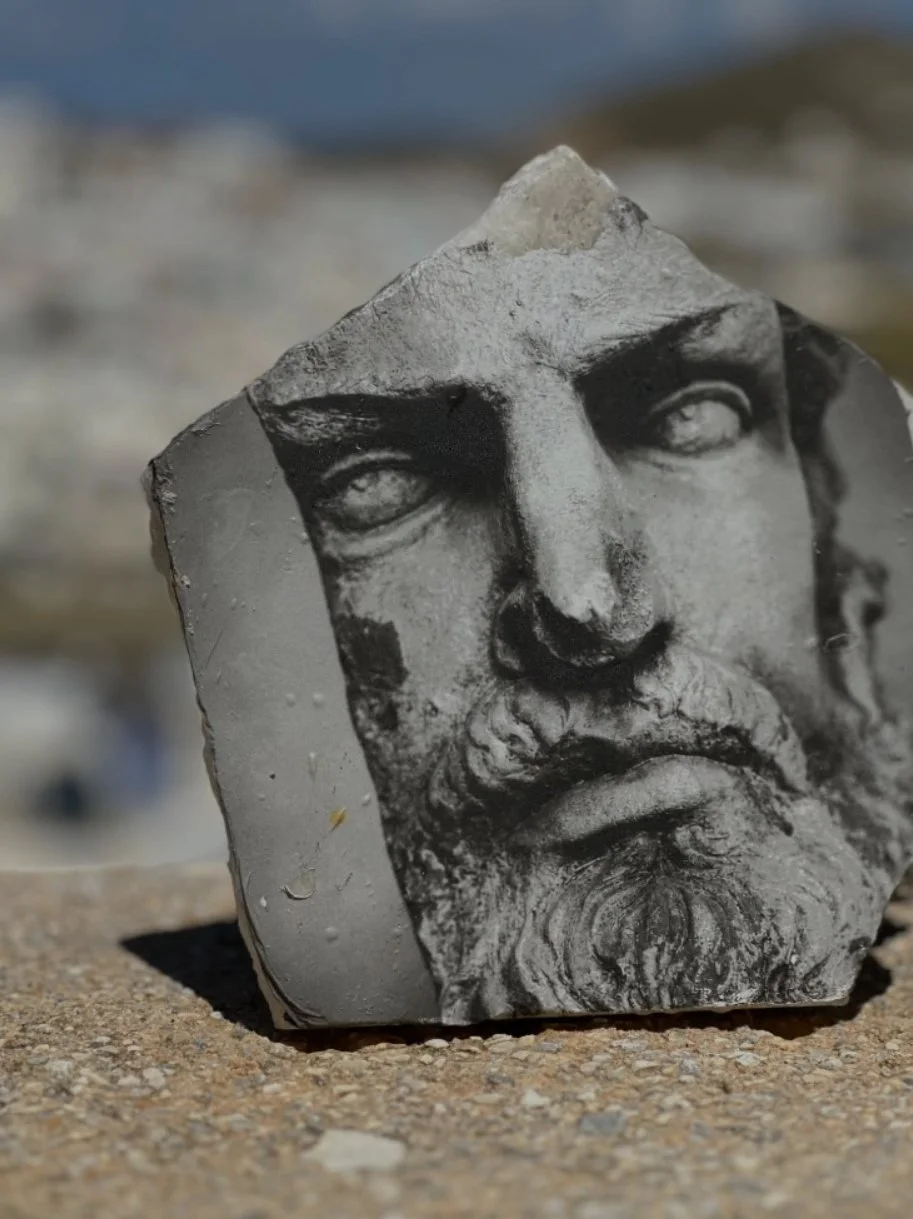
I have been experimenting with applying the image to different surfaces and working the acrylic in ways I have not tried before, including some heat-forming. The little sculpture with a marble offcut as a base and a curved acrylic piece sitting on top is the result. I am not convinced it works, but that is not really the point today. I have been thinking for a while about pairing the acrylic with concrete or marble bases, not fully fused but in conversation, and this is a first step in that direction. Something will come out of it.
The jetlag is catching up with me now. Pushing through for a bit longer, then calling it.
Marble offcut and curved acrylic, day oneTest print on the desk
Today felt different. Settling in, finding a rhythm, less the disorientation of arrival and more the quiet sense of actually being here. Having another artist in the residency makes a real difference. El-ham Tabsoba arrived from Ghana, set up her studio and went straight into painting. Watching her work begin to take shape has been a pleasure, and we have already had some good conversations about art, the scene in Accra and the processes we each use.
In the studio I have been experimenting with different image transfer methods, working across surfaces and trying to find something I am happy with. The plan is to keep experimenting before settling on a process, then return to the figures and sculpted heads that have been driving this thread of work.
The piece on the marble offcut is a step on from yesterday, but I am still searching for the right relationship between image and stone. I want it to feel as if the image is part of the marble, not sitting on top or wrapping around it. The current piece still reads as surface to me, so the exploration continues. Photographing the work is becoming useful in its own right, not just as documentation. Looking through the lens shifts how I see what I have made and starts to suggest how a viewer might encounter it.
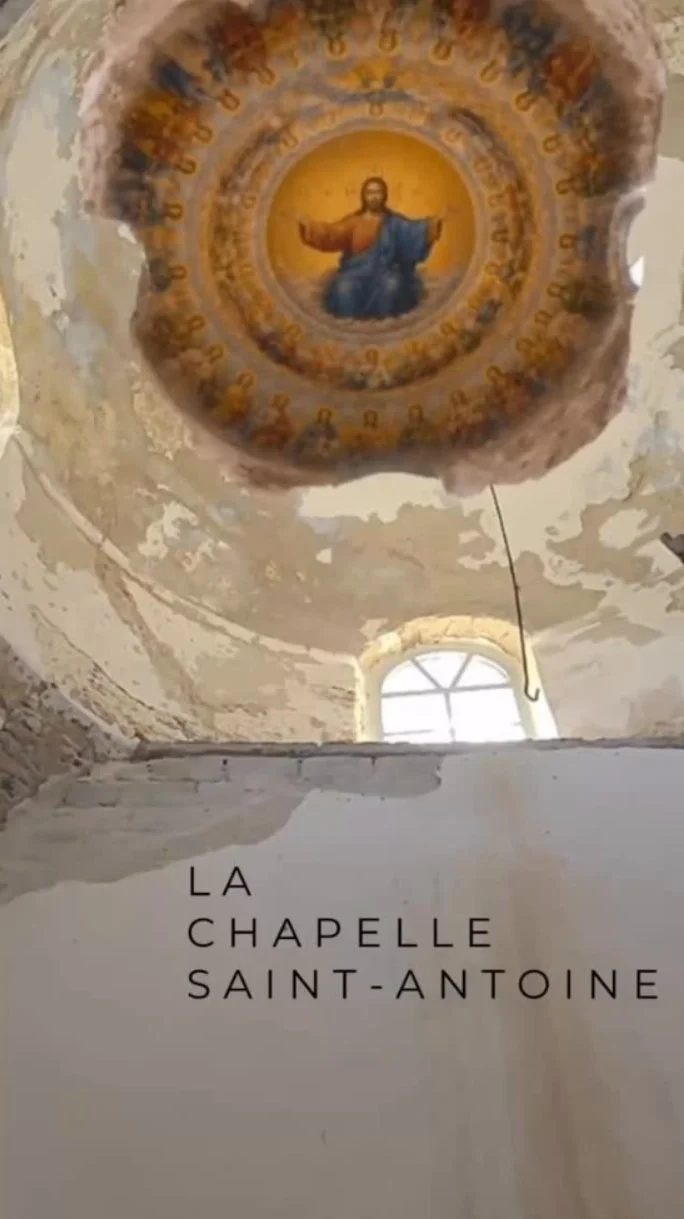
I also spent some time in the chapel that gives the residency its name. It is unrenovated, raw and quietly extraordinary. I gather it will eventually become an exhibition space, but for now it is simply a space to be in. I want to take the laptop up there and play some music through the dome, just to hear how it sits in that acoustic.
I woke this morning to the smell of oil paint drifting in from El-ham's studio. There is something quietly wonderful about sharing a residency with a painter, that particular smell at the start of the day. The day itself was perfect. Blue sky, sun, almost no wind, a real shift from the overcast and unseasonably cold days before it.
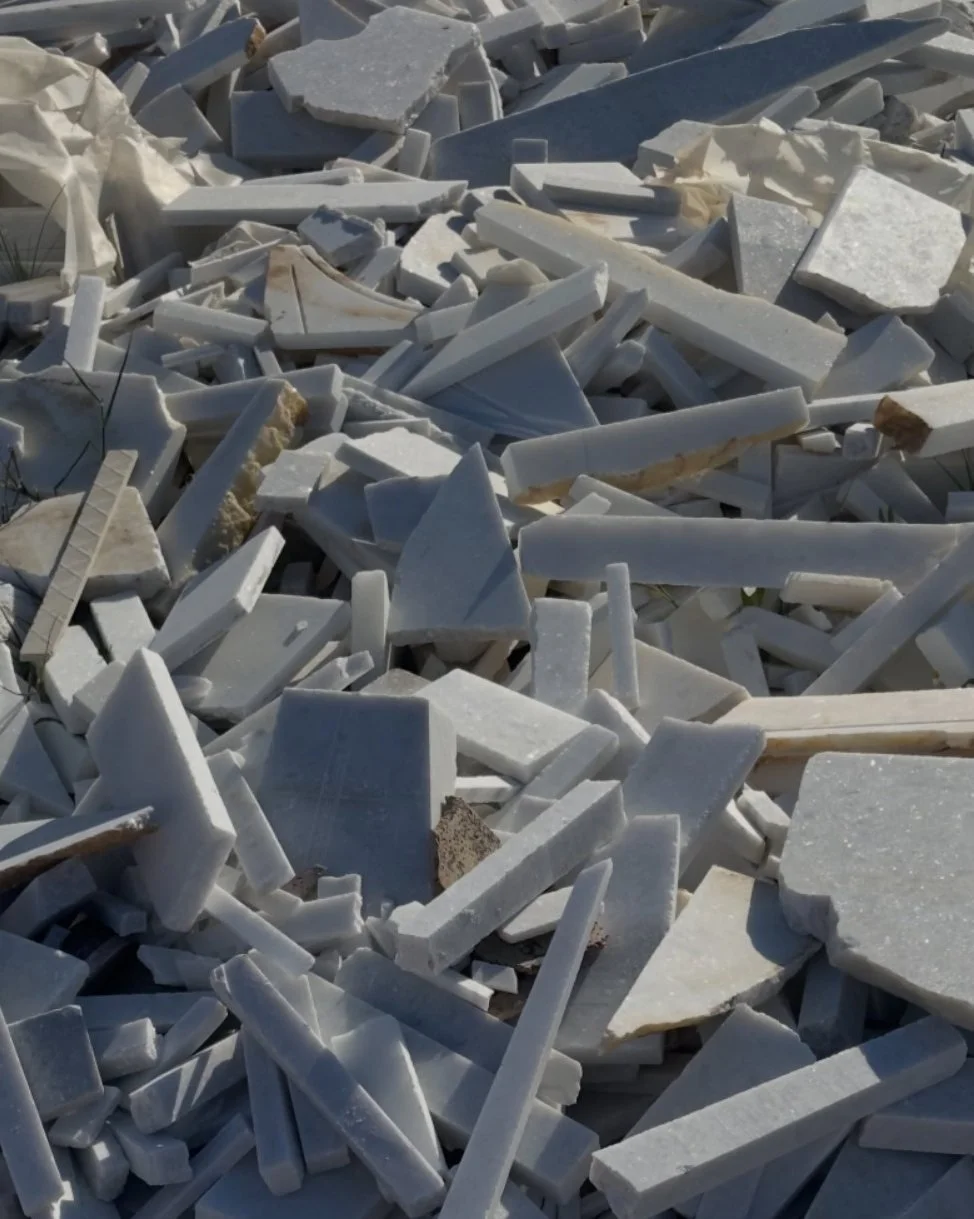
The morning was given over to more transfer experiments onto marble, and the technique is starting to click. Jean-Bernard collected me around midday for a tour of the island. We began with a lunch of grilled octopus, calamari, tzatziki and of course a Greek salad, then wound our way inland through small villages, stopped at a Byzantine chapel not far from Filoti, and finally went up to one of the marble quarries. The scale of the cutting walls and the sheer volume of offcut piled around the site is hard to convey. I selected a number of pieces to take back to the studio.
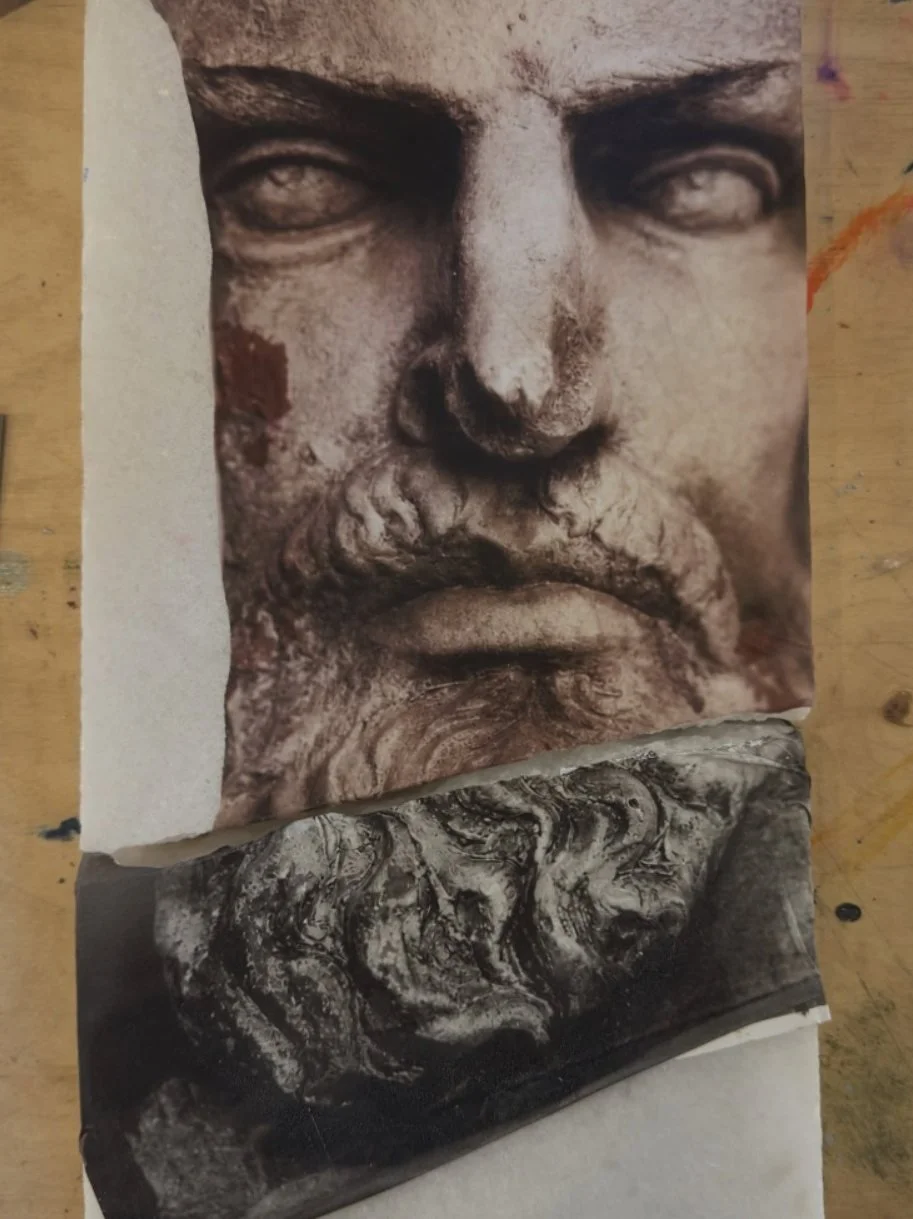
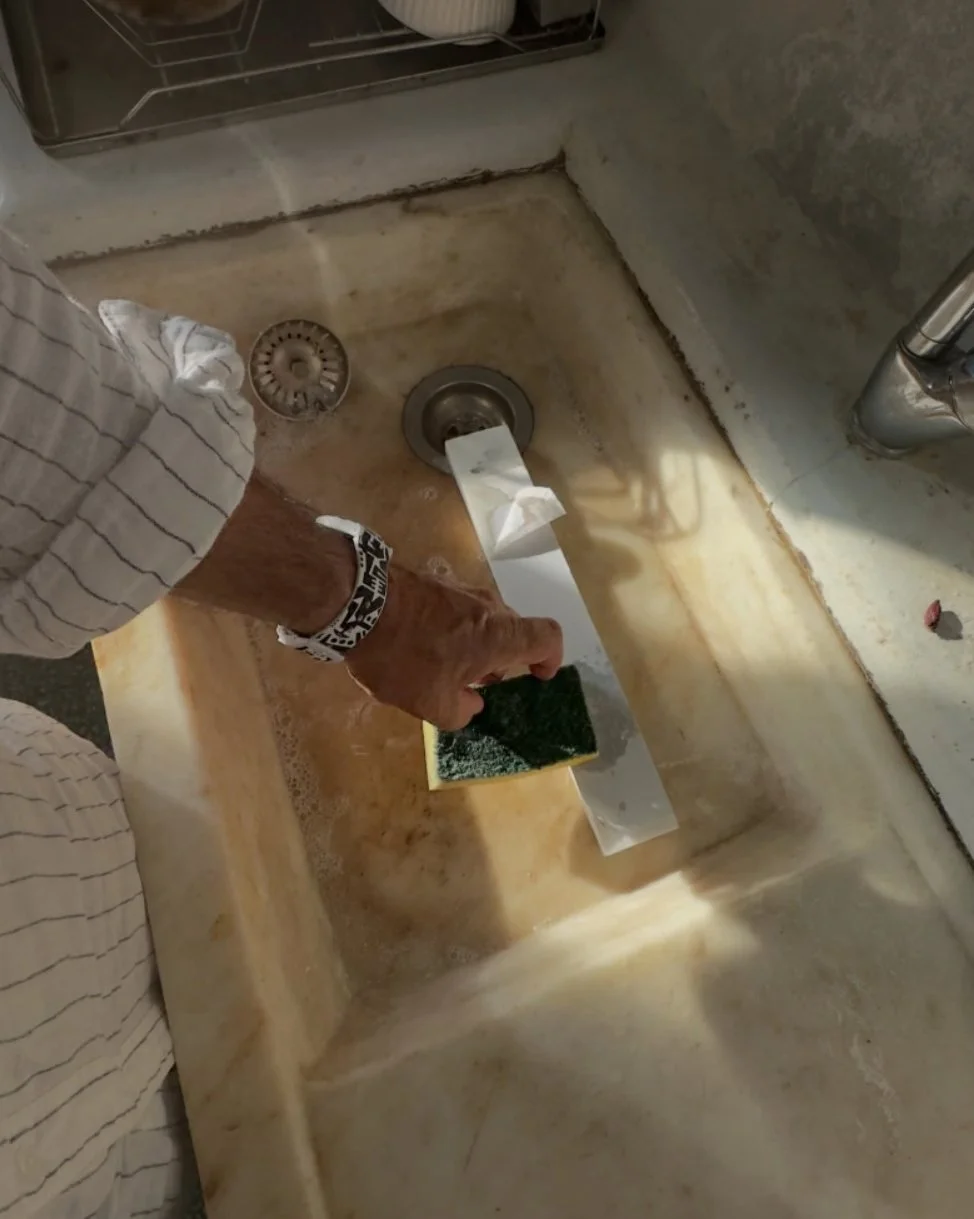
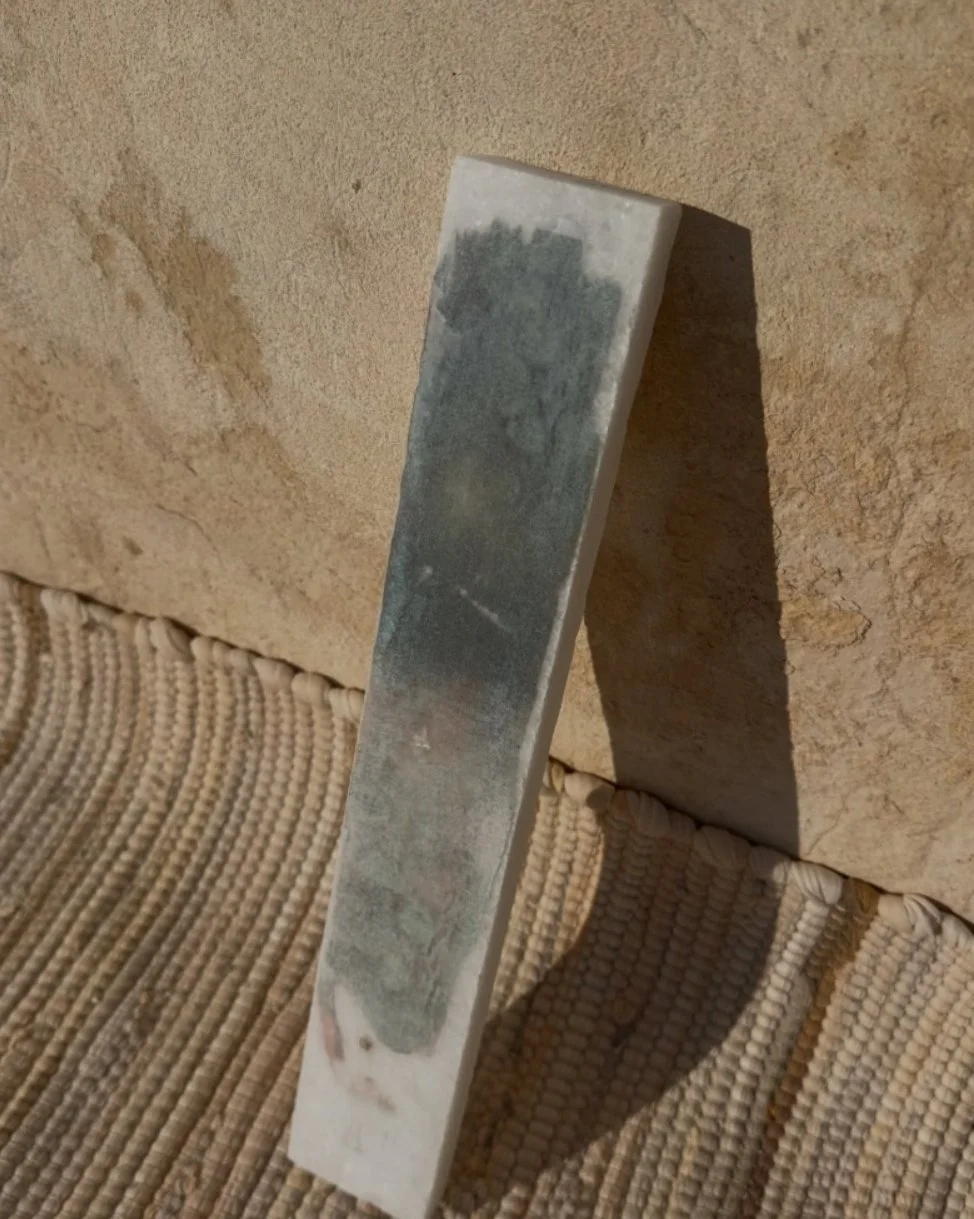
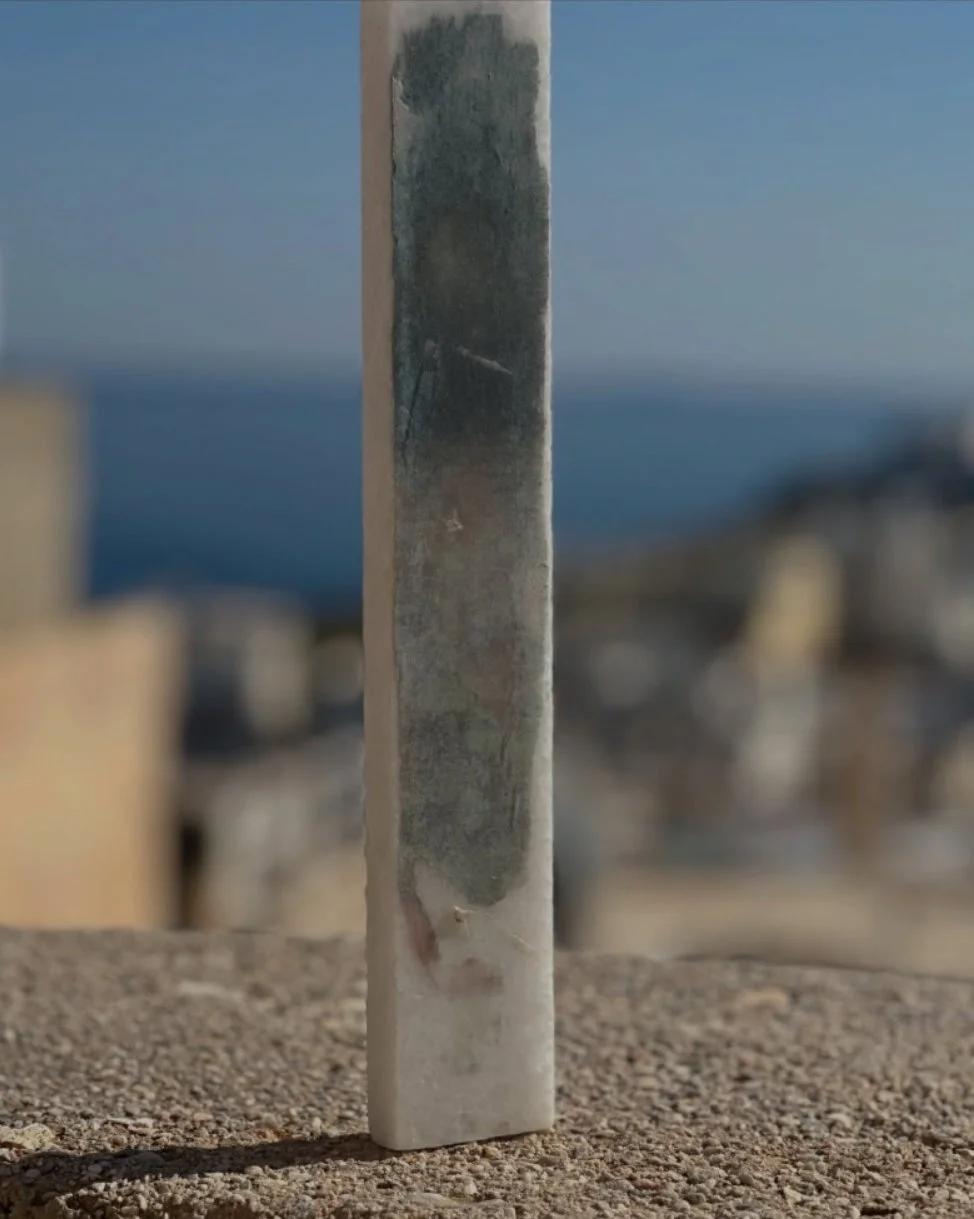
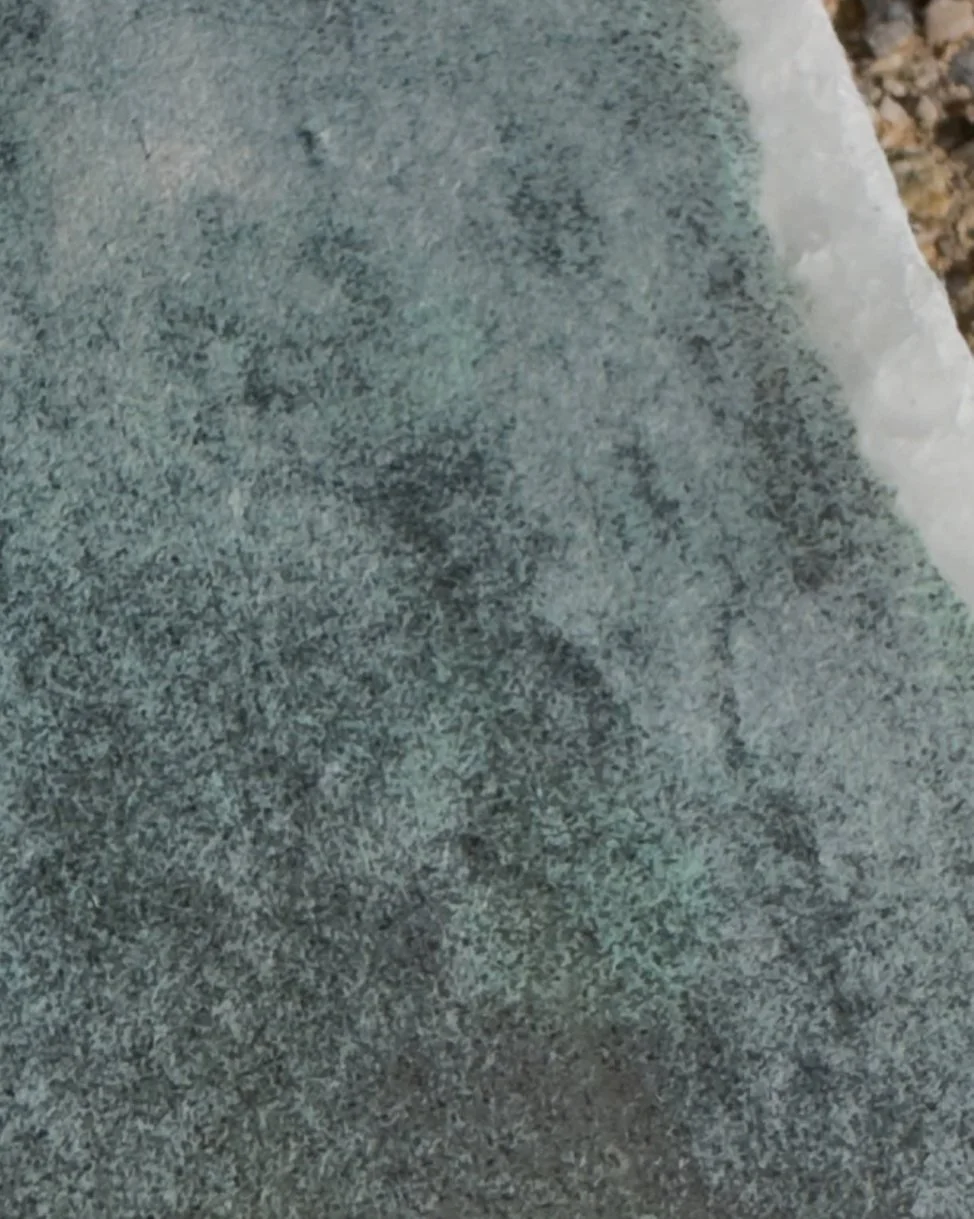
Back at the bench in the late afternoon I finished a piece I had begun in the morning, submerging and rubbing back the paper to reveal the image embedded in the marble. The surprise was the colour. The original image is very warm, almost sepia in places, and it came across in cool greens. A lovely shift, and one I want to push further.
I am also keen to find out from the quarry just how thinly a piece can be cut. Naxian marble is famously translucent when sliced fine, and the idea of a backlit piece, with the image transferred into stone that light can actually pass through, feels like a real direction.
The day began with one of those sunrises that makes you stop on the terrace before doing anything else. Breakfast in that light, then into the studio.
Today was largely a research day. I have been reading into the Dionysus story and the deeper mythological history of Naxos, where the god is variously said to have been born and raised, and where he is said to have found Ariadne after Theseus abandoned her on the island. I am not yet sure where this will lead, but it is starting to feel like a possible direction for the work that comes out of this residency.
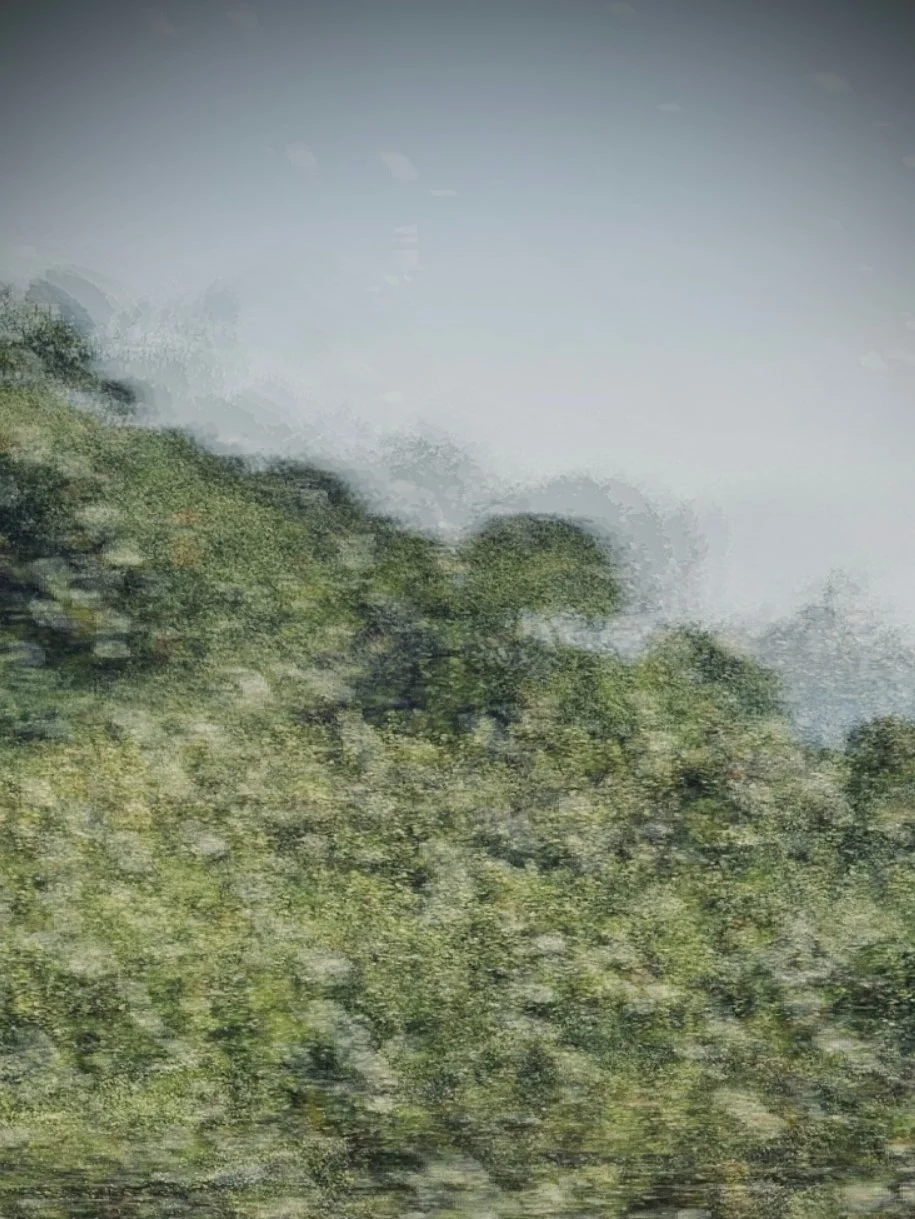
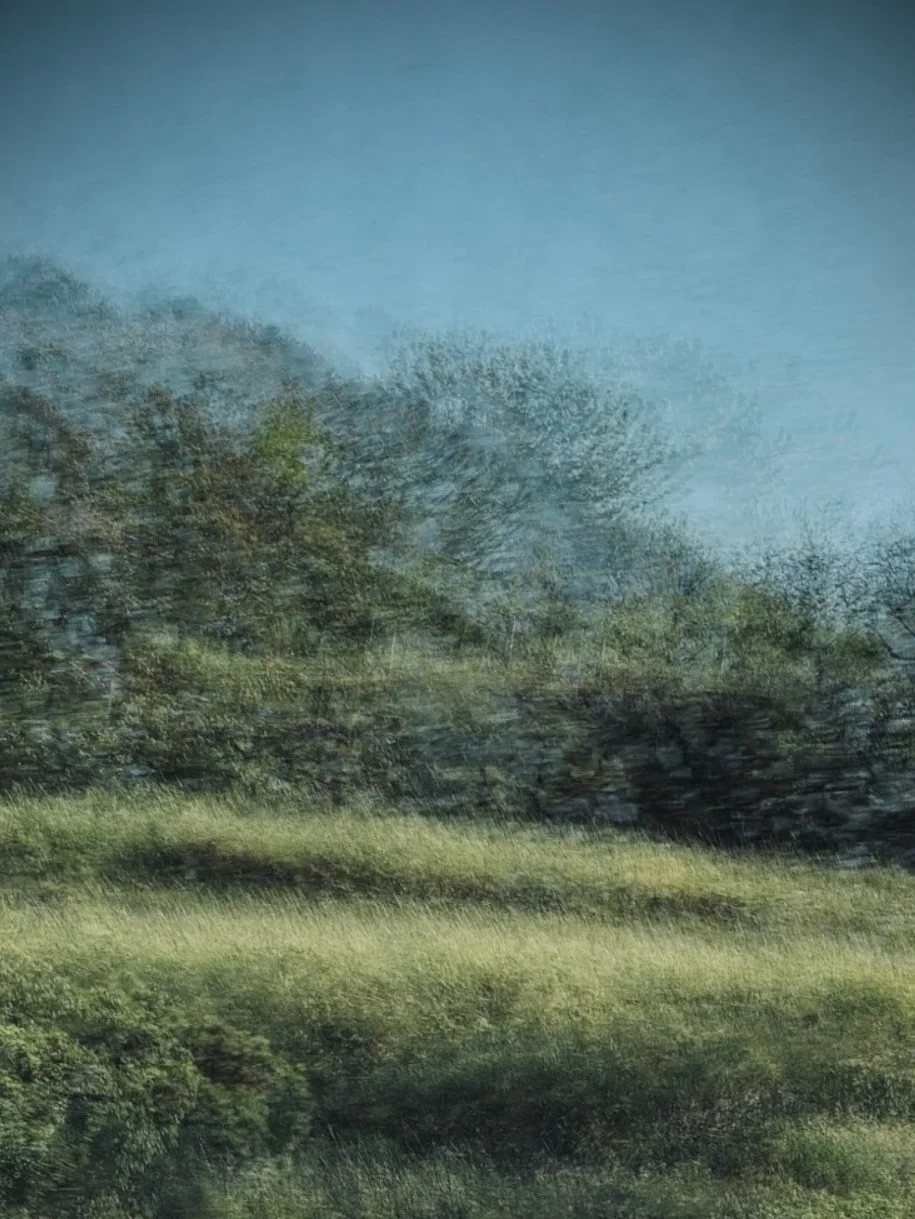
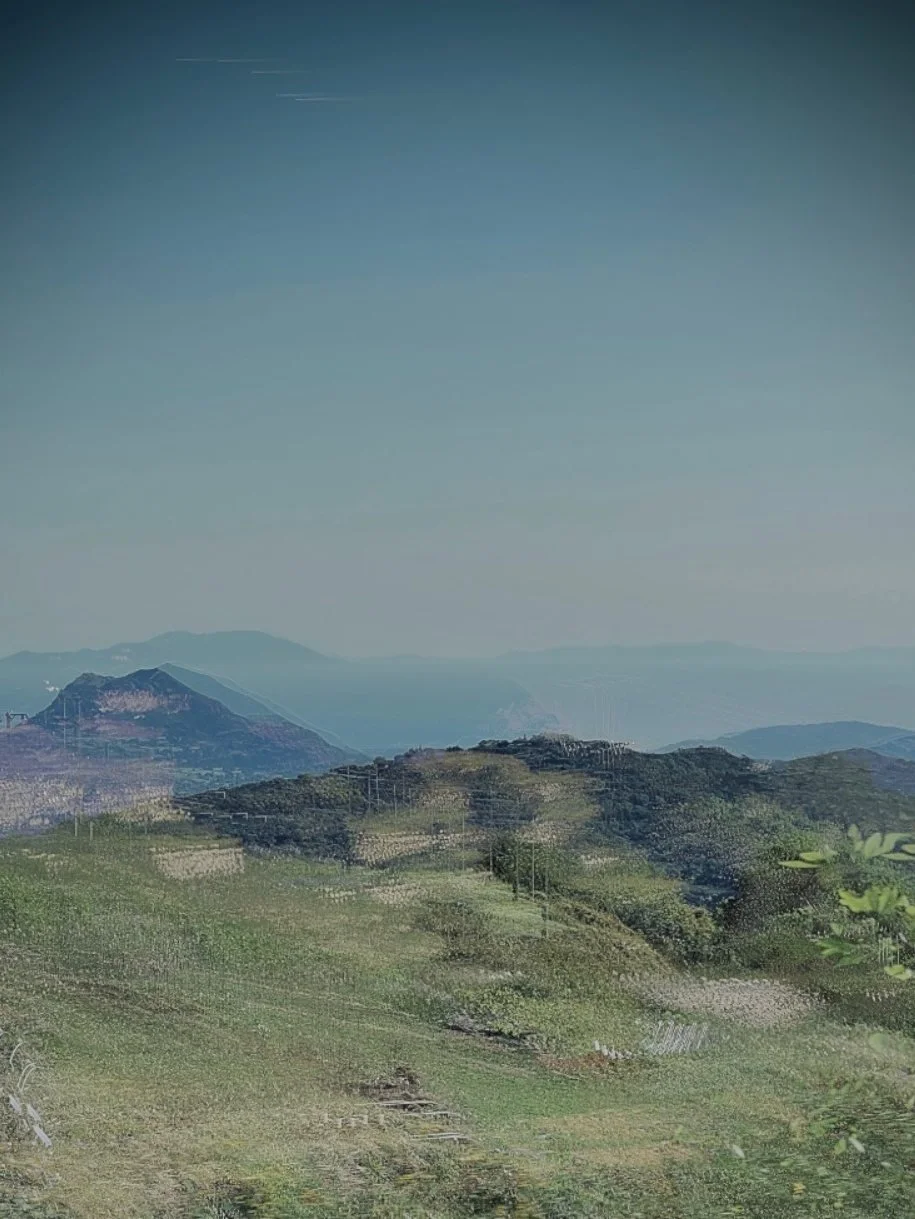
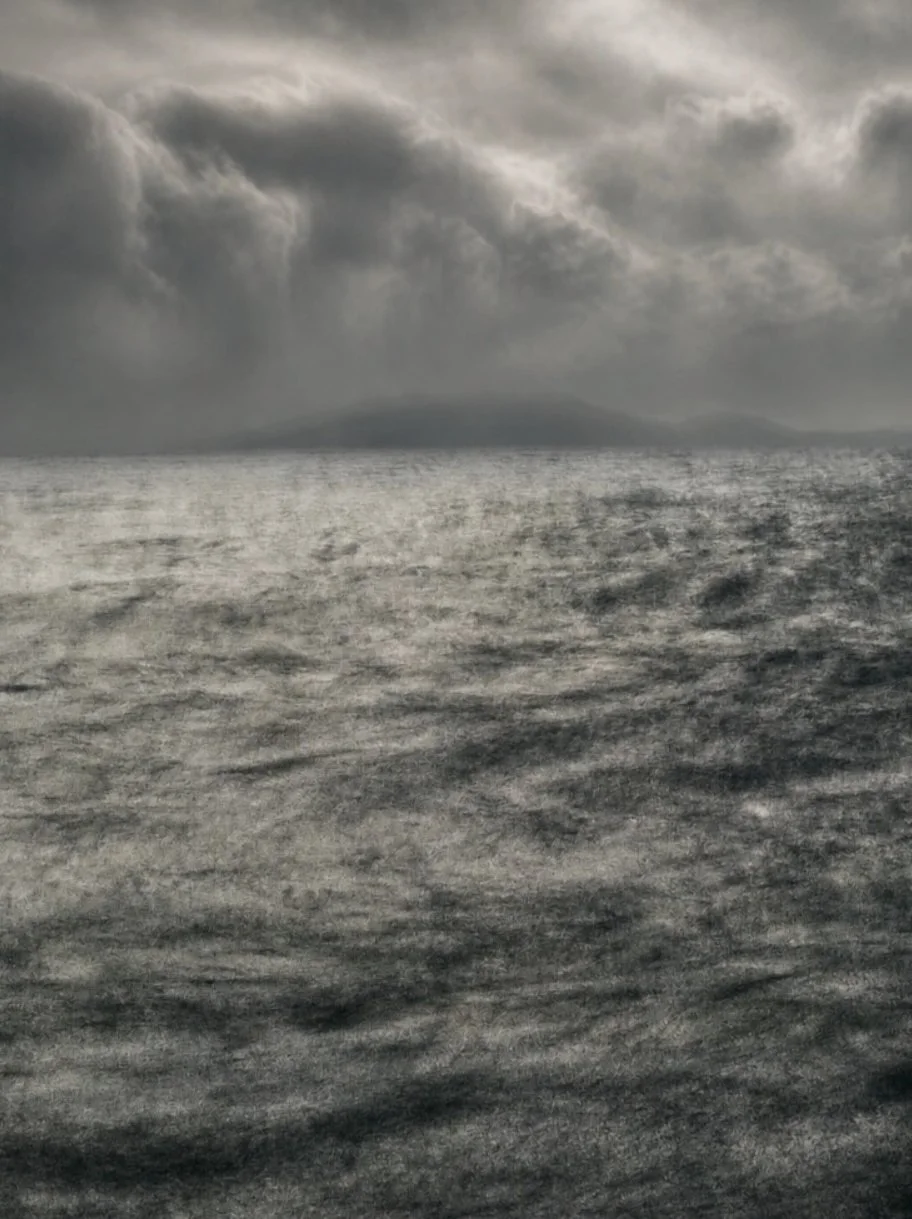
Alongside the reading, I made some Origin Image work in the landscape, partly responding to those threads but mostly just my way of connecting to the place I find myself in, which is how that methodology has always worked for me.
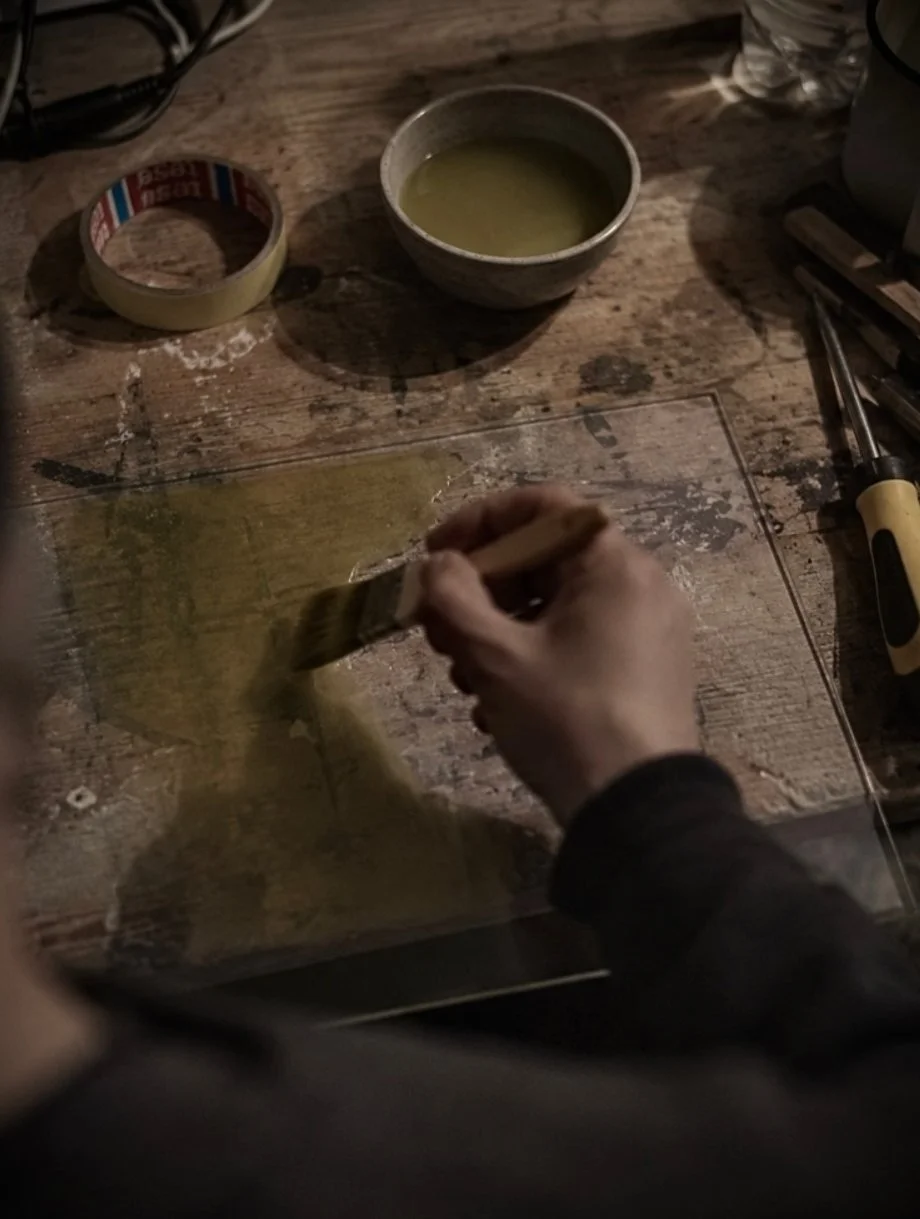
I also started preparing some materials to experiment with cyanotypes, sanding back acrylic to give it some bite and see whether the chemistry will hold. First time using the process in the practice.
El-ham cooked a beautiful rice dish for lunch, served with shito, a Ghanaian chilli and dried fish paste she had brought with her. Spicy and wonderful. I forgot to photograph it. Too hungry, and it was too good. Ended the day with gyros, a cold beer and the sunset. Hard to argue with that.
Origin Image, Naxos
Chora, 6 May 2026Preparing a sheet for the cyanotype tests
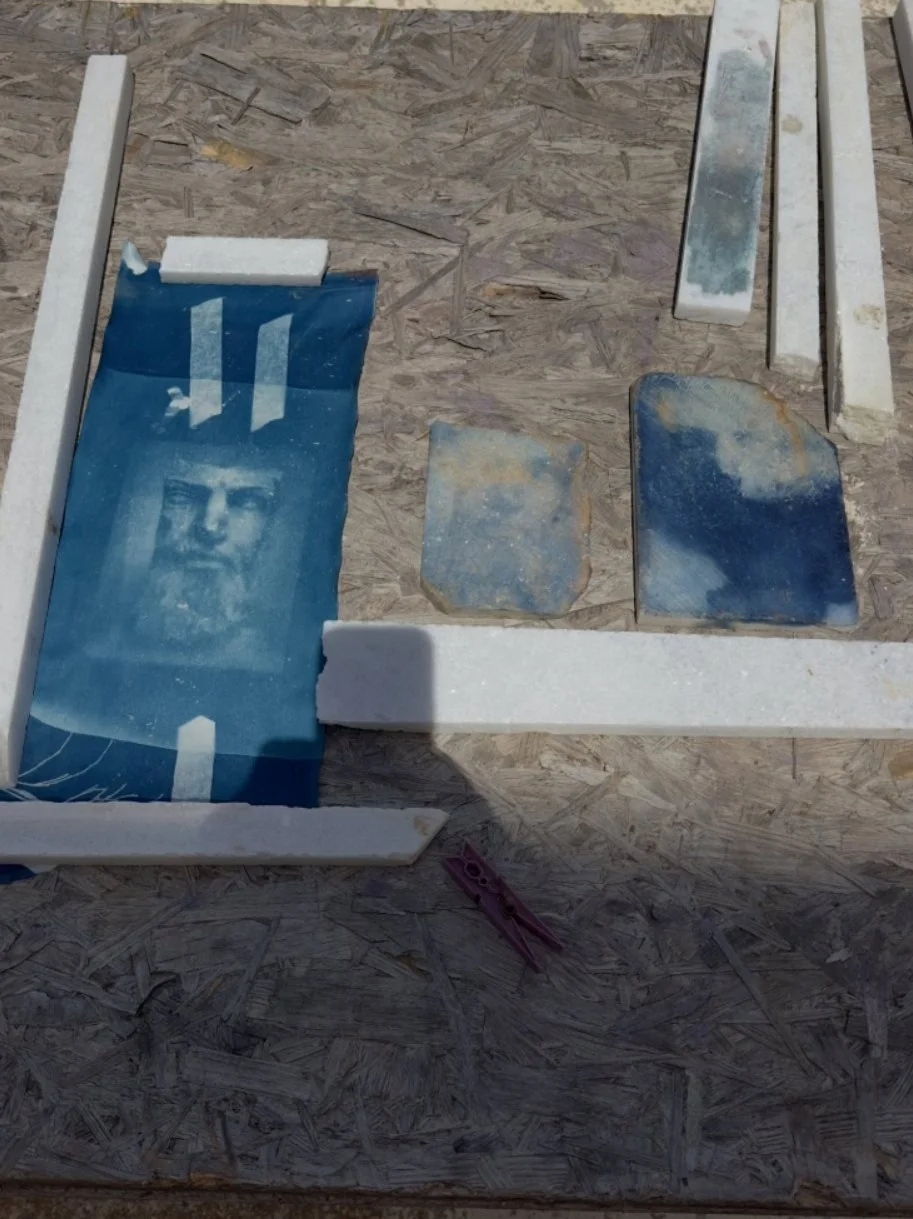
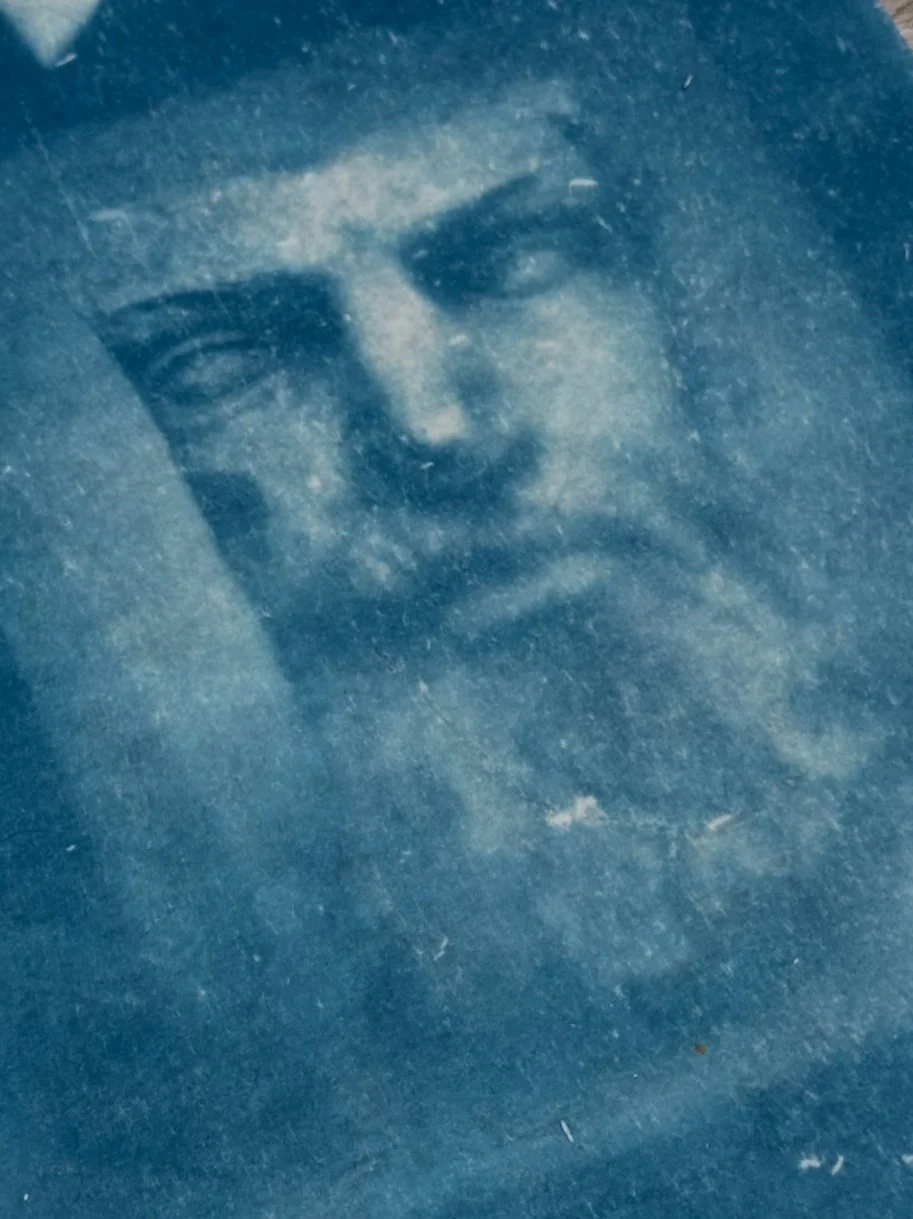
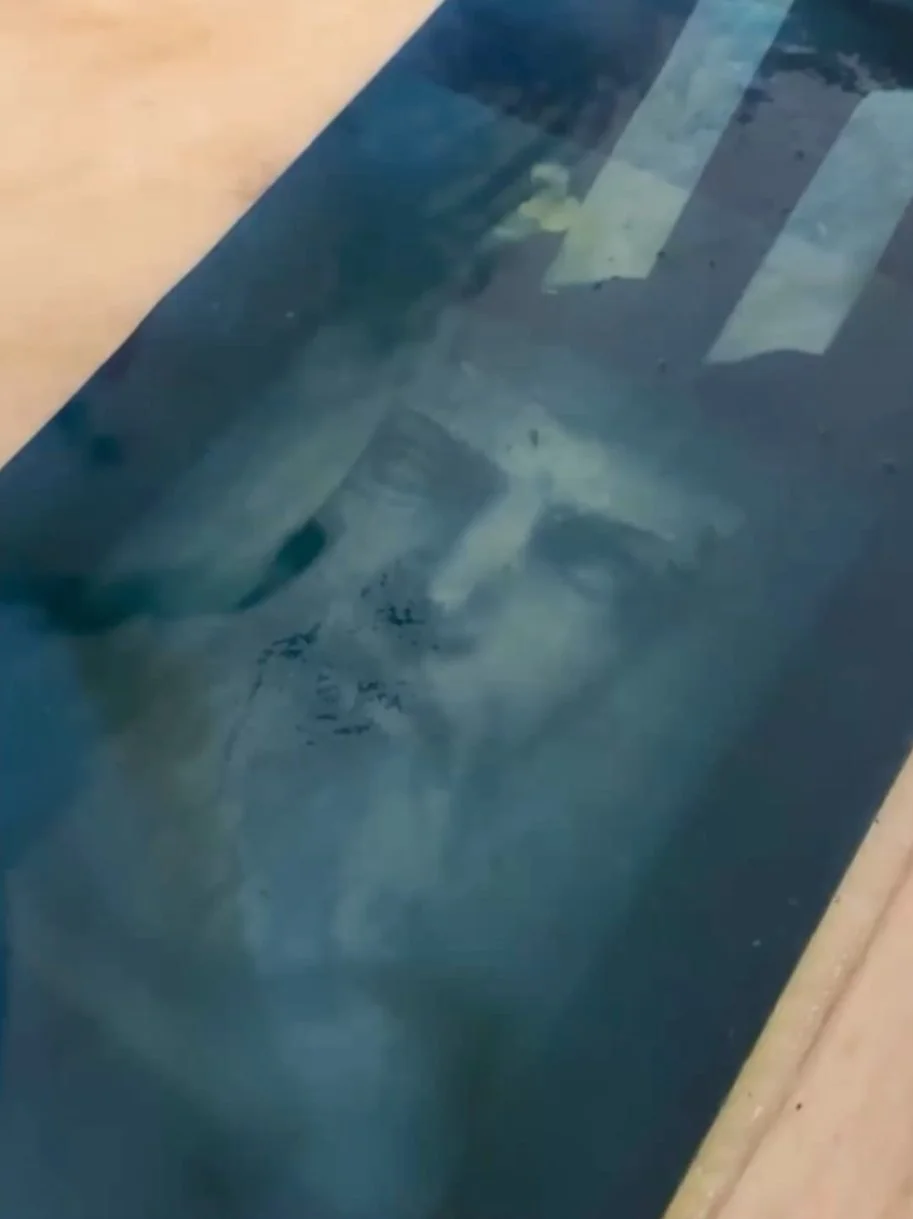
A full day in the studio working with cyanotype, on both paper and the prepared marble. The weather has been ideal for it, clear sky and strong consistent sun, which is exactly what the process needs.
For anyone unfamiliar, cyanotype is one of the oldest photographic printing processes, developed in the 1840s. The surface is coated with an iron-based solution, a negative is laid on top, and the whole thing is exposed to UV light. Where the light hits, the chemistry oxidises into a deep Prussian blue. After exposure the print is washed in water to reveal the image. A slow, hands-on, weather-dependent process, which is part of why it appealed today. There is no UV printing available on this island, but there is plenty of sun.
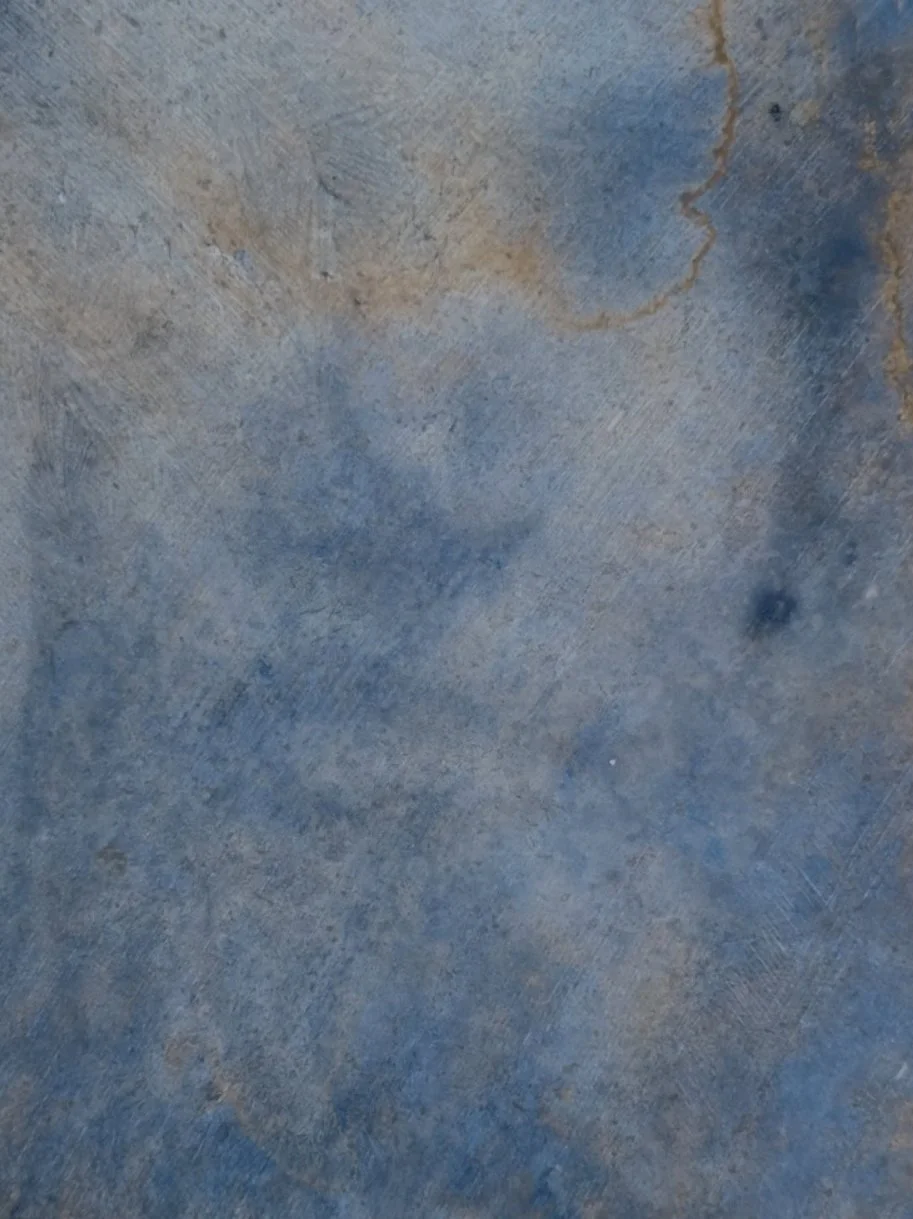
The results on paper came out as expected, which is reassuring. The marble is another matter. The chemistry is soaking too deep into the stone and the prints, while I quite like them as objects, are not yielding enough detail to do what I ultimately want. The next test will involve laying down a thin coat of a varnish I have on hand, normally sprayed on the surface of finished oil paintings, used here as an improvised sealant to hold the chemistry closer to the surface.
One of the constraints of working on a small island is making do with whatever materials are available, and while that is a limitation it is also part of what makes the experience what it is. The work shifts to meet the place.
Today was less about producing finished pieces and more about narrowing down the techniques I want to use for this body of work. I am trying to let the materials and the experiments inform the concept, and not the other way round. That feels right for a residency, where the time is precious and best spent at the bench.
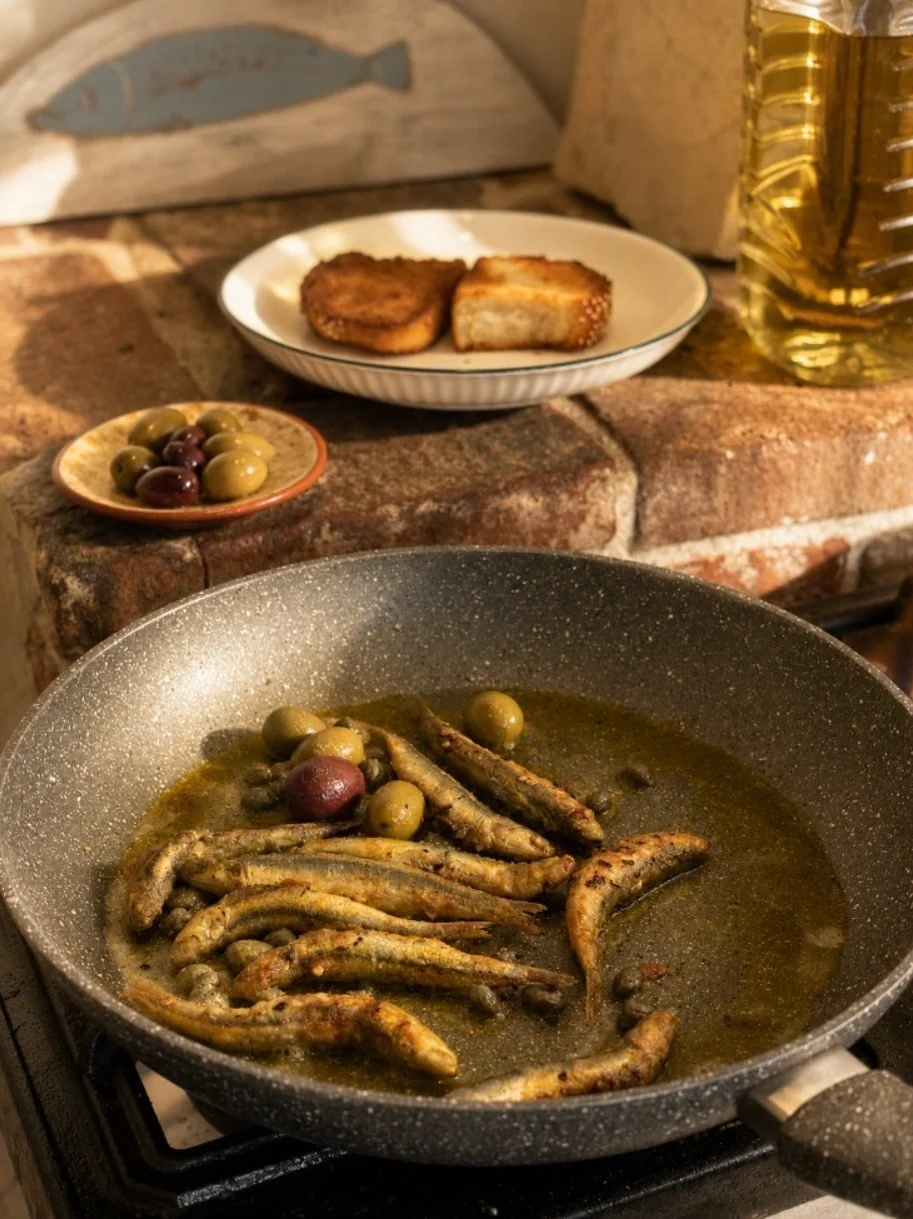
Lunch was small sardines, simply floured and fried with herbs, served with lemon and olives. Quietly perfect.
Exposing in the sun on the terraceNegatives over coated marble
I came to Naxos expecting the food to be excellent, the way you do when you are heading to a Greek island. What I had not really thought about was what it would be like to cook for myself here, in a simple kitchen, with whatever I could pick up walking five minutes from the residency.
The eggs come individually, not in a carton. You take what you want from a tray. The sardines are from the fishmonger, caught that morning. The olives are scooped from open barrels in one of the small shops in the Kastro, oily and warm from the room. The bread is from the bakery, still hot enough that the bag goes soft on the walk back.
It is not the food itself that is the surprise, it is how little distance there is between the source and the plate. Everything is local because there is no other option. You eat better here without trying, simply because nothing has been processed.
Installing the VR component of the work into the chapel through Figmin XR became an unexpectedly physical and spatial process. The virtual objects have to respond carefully to the architecture, scale and atmosphere of the site.
The software is surprisingly capable once you are inside the workflow. The interface is frankly quite awful, clunky, unintuitive and often frustrating to navigate, particularly when managing scene mapping and spatial placement. Yet it remains a powerful tool for embedding virtual sculptural and photographic elements directly into the lived environment of the chapel, so that the digital and physical spaces coexist in a strangely convincing way.
Because I don't currently have access to large-format printing on Naxos, the work has had to pivot and adapt to the conditions around me.
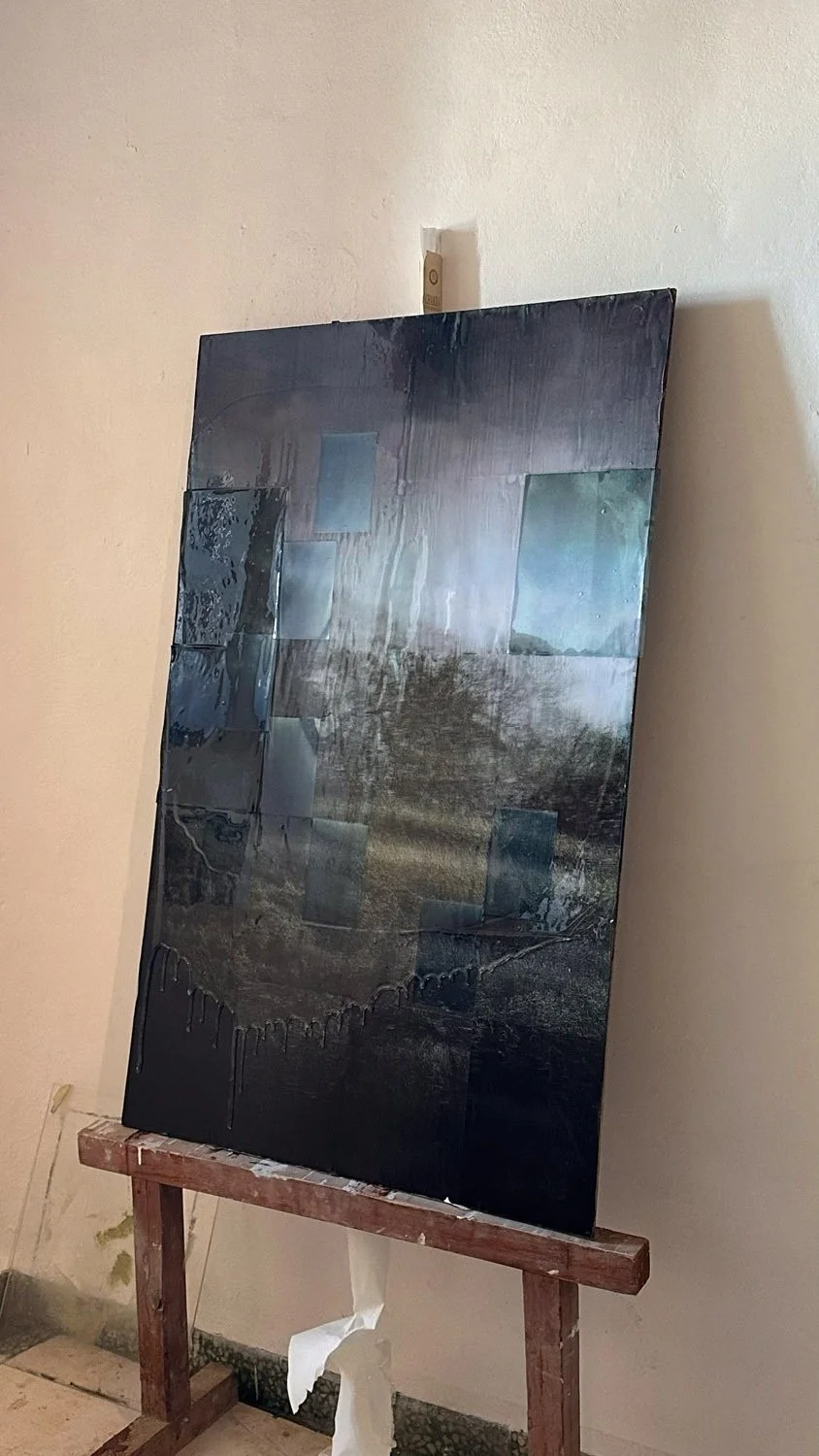
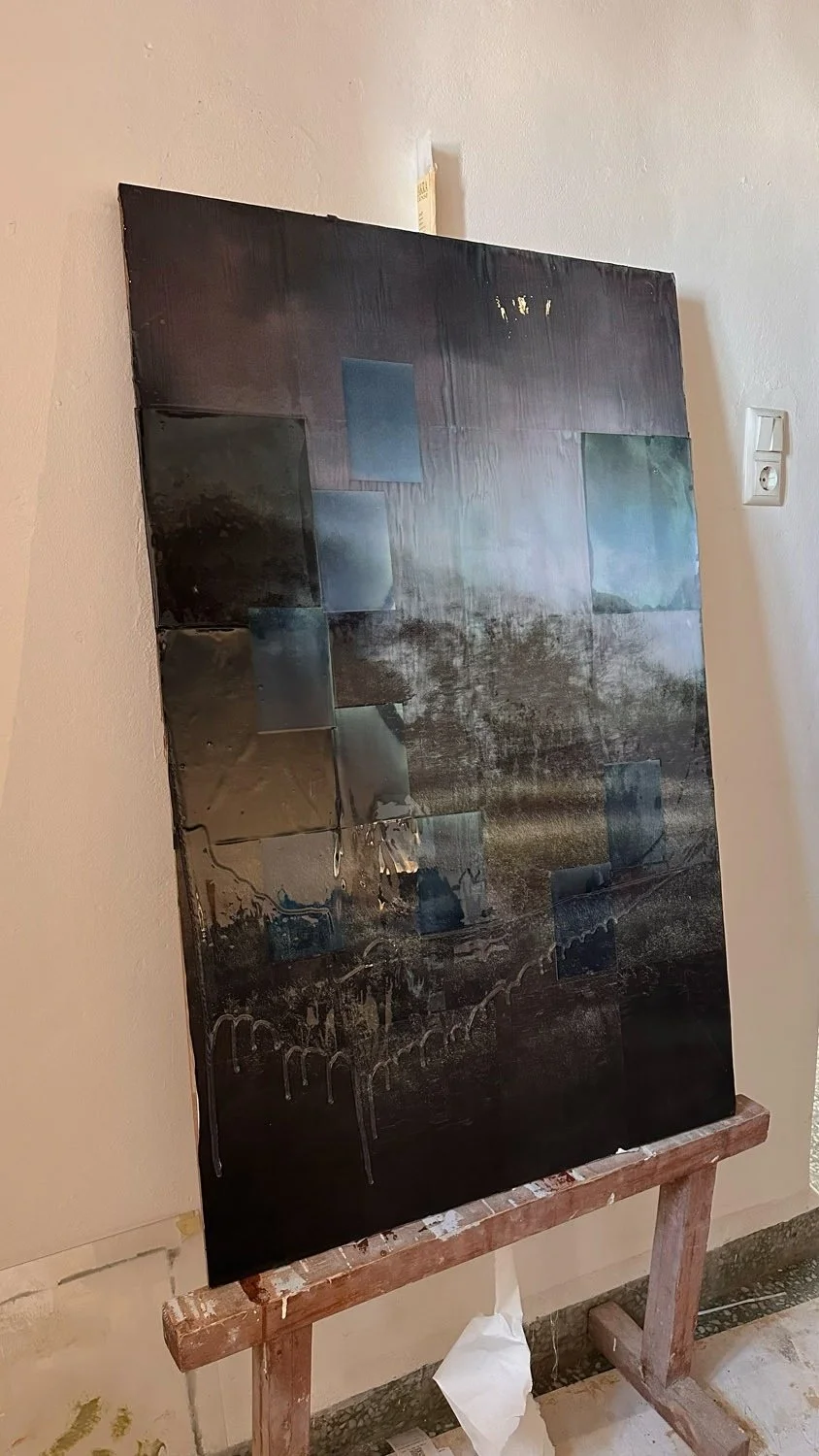
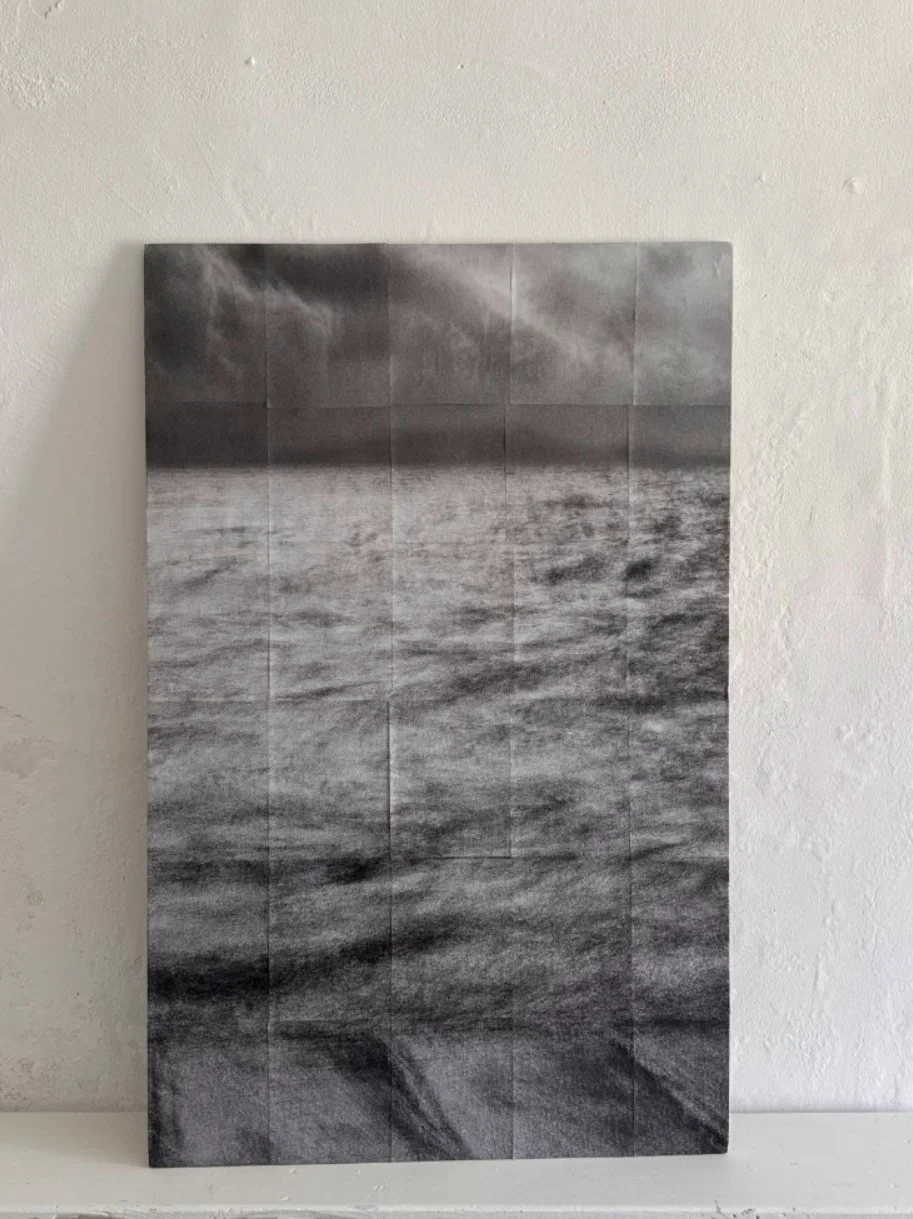
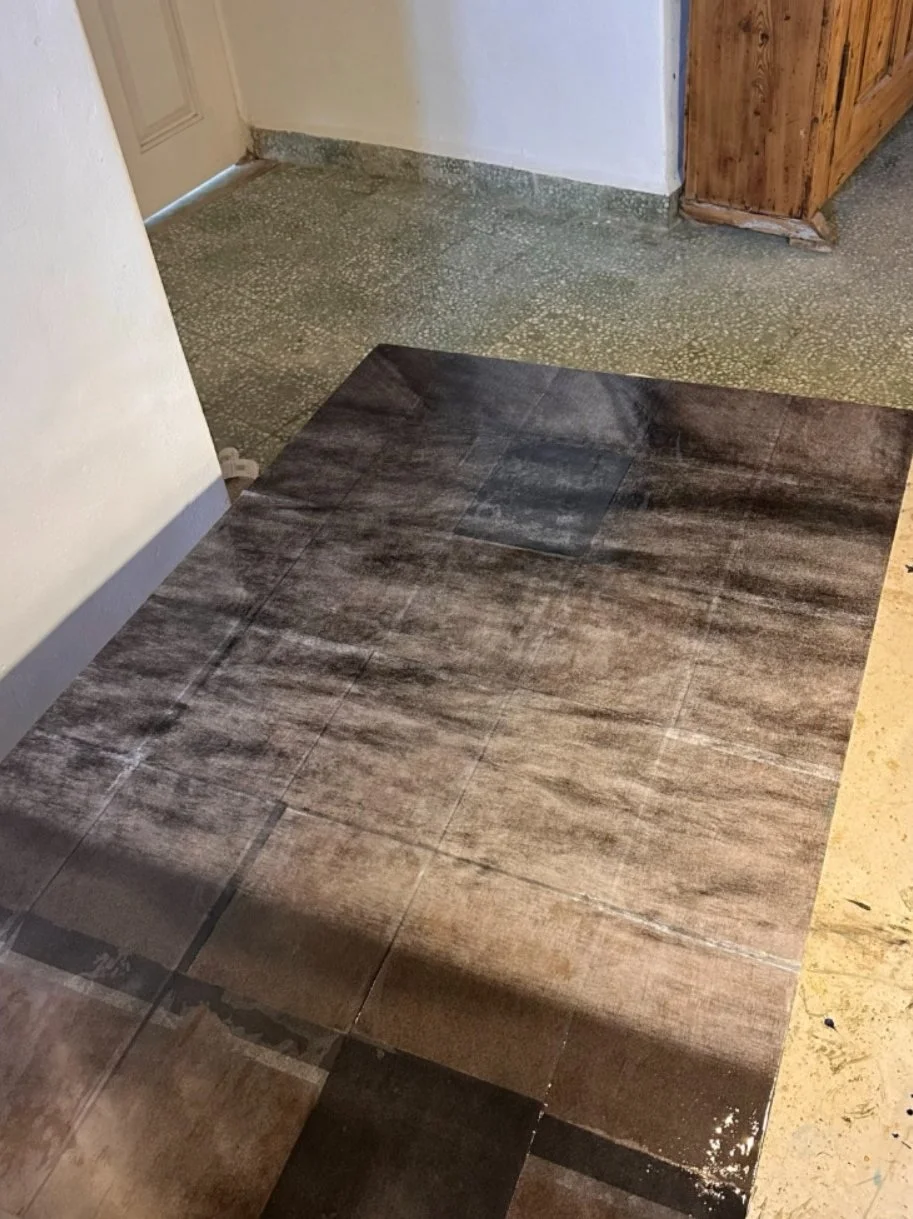
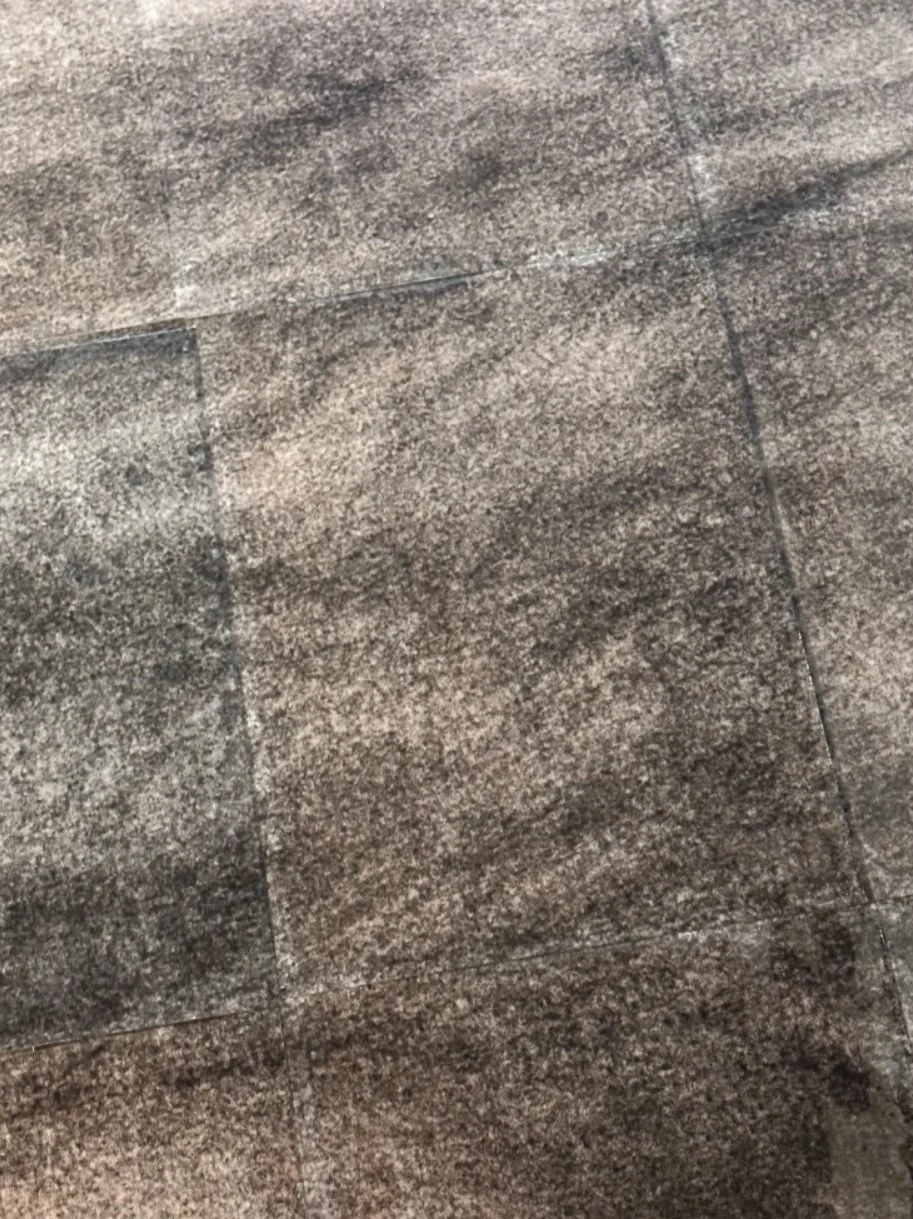
These pieces are being constructed from A4 office inkjet prints on A4 paper. Each sheet is individually assembled, mounted onto wood, and then sealed beneath layers of two-part resin. What began as a technical limitation has started to open up a different visual and material language altogether.
The seams remain visible. The grid is not hidden. The image fractures slightly through its own construction, carrying traces of process, labour, repetition and assembly. The work sits somewhere between photograph, object and surface.
There is something important to me in using ordinary materials in this way. A4 paper, adhesive, resin. Nothing precious at the beginning. Yet through accumulation and transformation the image gains weight, density and presence.
In some ways, the work feels closer to sediment or skin than a conventional photographic print. The surface holds the memory of its own making.
As I leave Naxos, I find myself reflecting on what an extraordinary few weeks this has been. My sincere thanks to the family behind La Chapelle Saint-Antoine for their generosity, kindness and support. They have made a place where artists can slow down, experiment and allow new ideas to emerge.
The work I leave with is not the work I expected to make, and that is perhaps the greatest gift of all. Naxos will stay with me for a long time.
Leaving Naxos, 31 May 2026
The other studio
El-ham Tabsoba
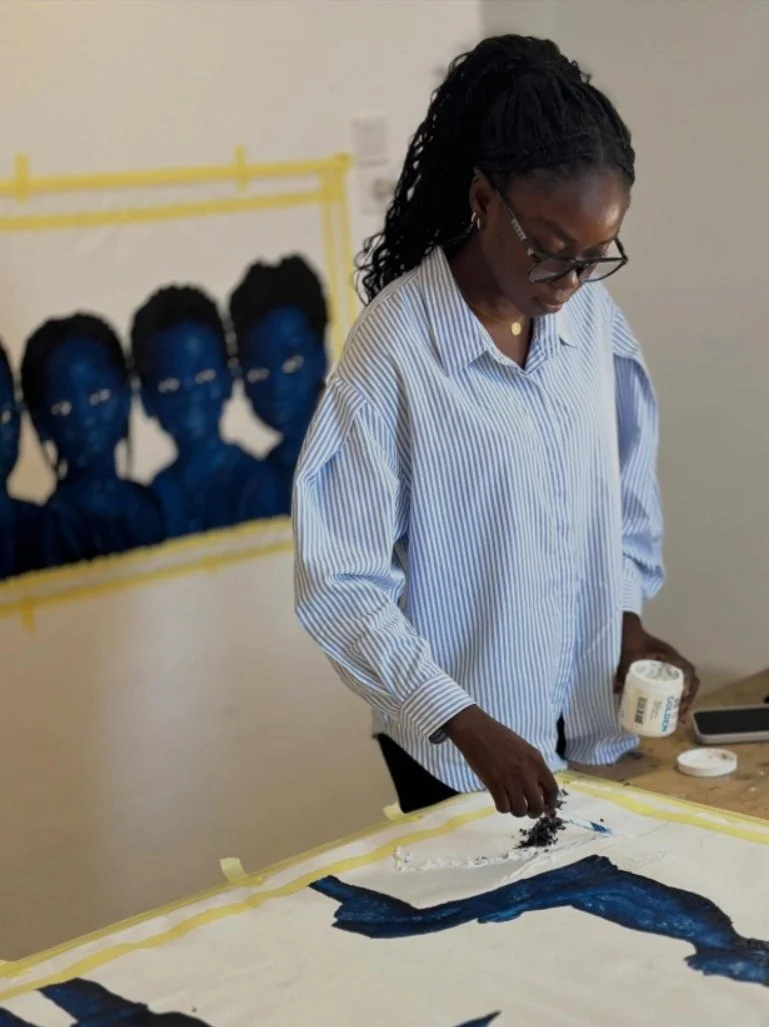
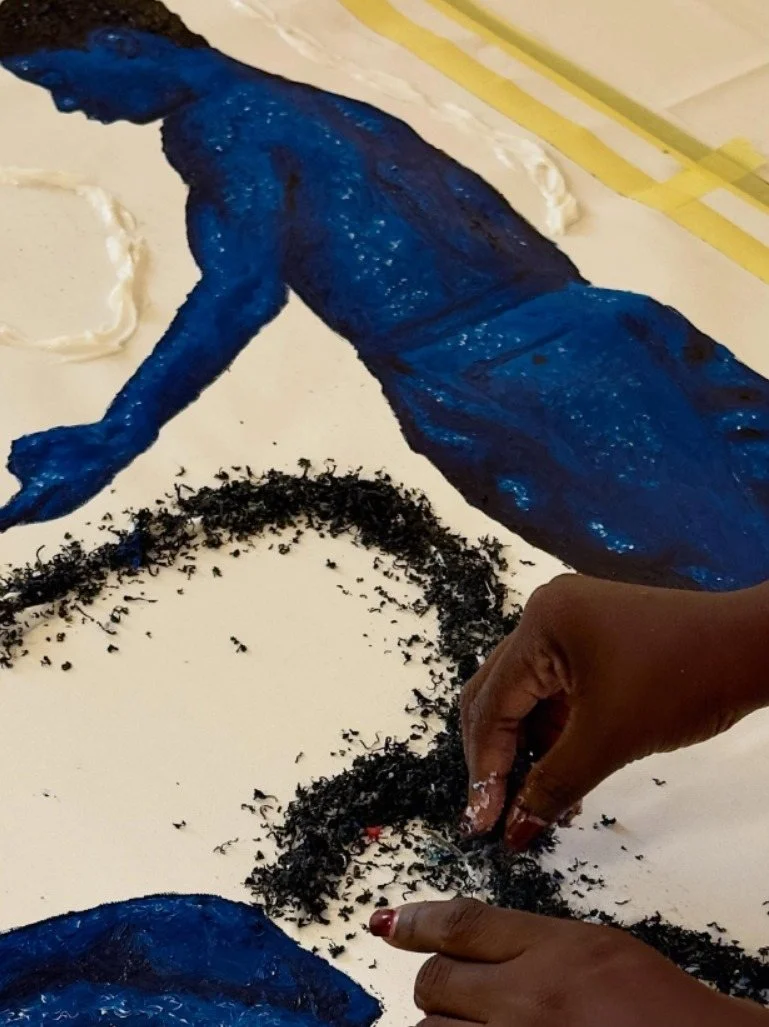
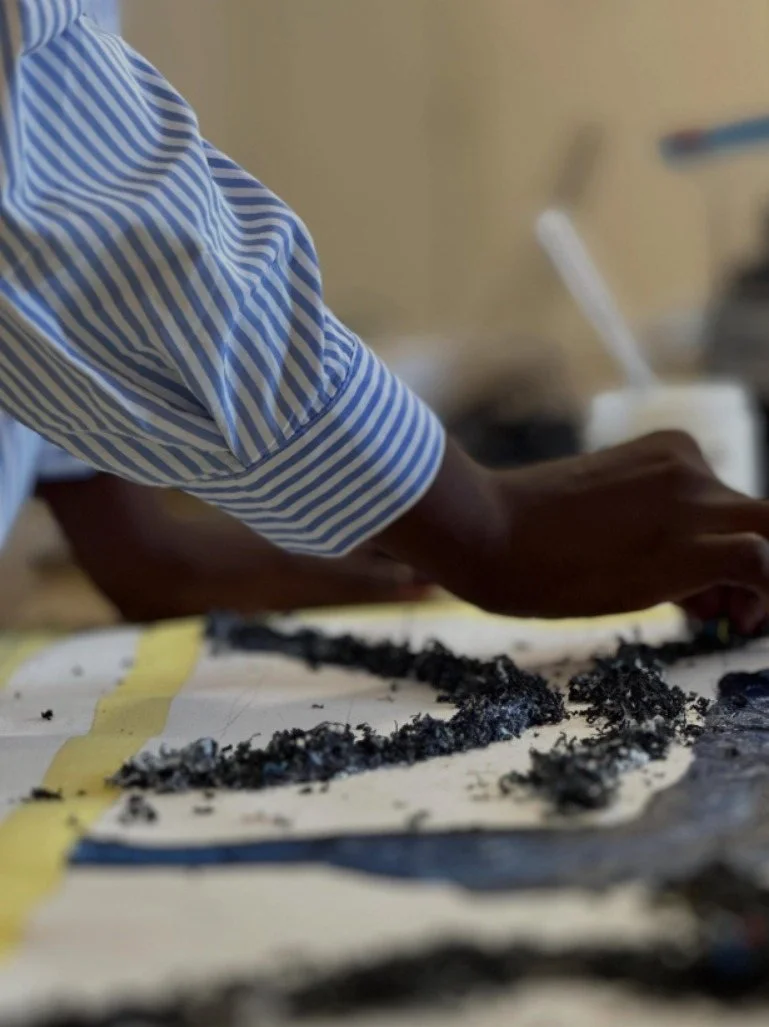
On Naxos there were two of us: El-ham Tabsoba, a painter from Accra, and me. One house, two studios side by side, one month. You can't hide in a place like that. Whatever you made that day, good or bad, the other person walked past it.
She inspired me. She builds her paintings in layers, and I was next door learning to do the same thing with photographs. We're still in touch.
I photographed her at work in her studio. La Chapelle Saint-Antoine posted the pictures on 20 May 2026.
El-ham Tabsoba in her studio at La Chapelle Saint-Antoine, May 2026
What came next
The A4 grid and the resin went north with me. First on foot through northern Italy, then to a barn in Dampierre-sur-Boutonne, and home to the studio in Melbourne, where the sketches are being built at full size.