The Auckland Festival of Photography is New Zealand’s leading international…
The Auckland Festival of Photography is New Zealand’s leading international photography festival, bringing together artists, curators and audiences through exhibitions, public installations, talks and events presented…
The Auckland Festival of Photography is New Zealand’s leading international photography festival, bringing together artists, curators and audiences through exhibitions, public installations, talks and events presented across galleries, urban spaces and cultural venues throughout the city.
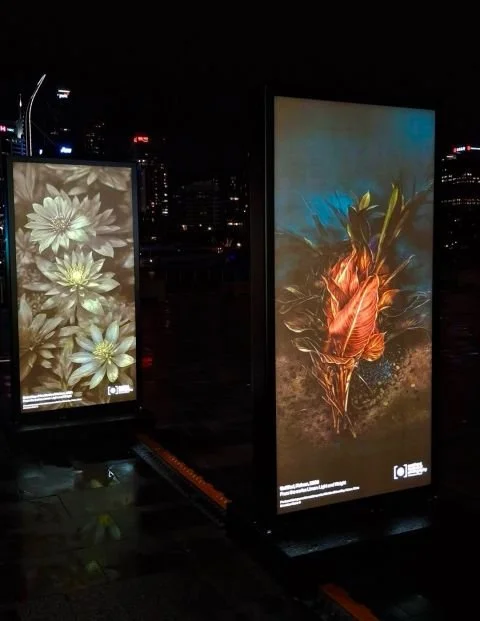
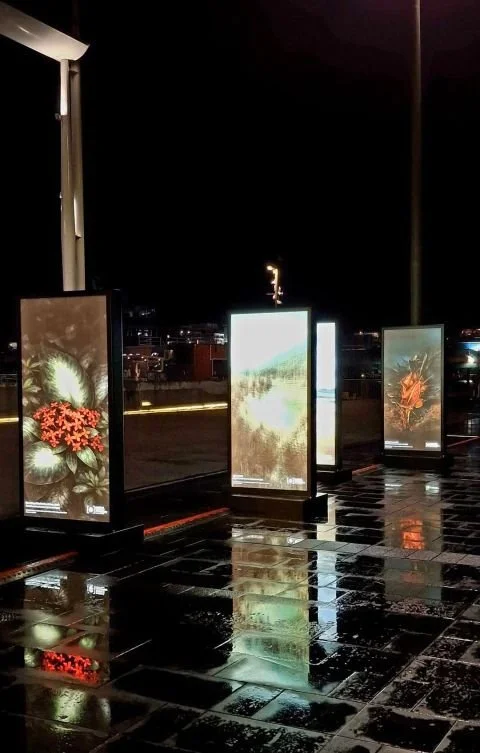
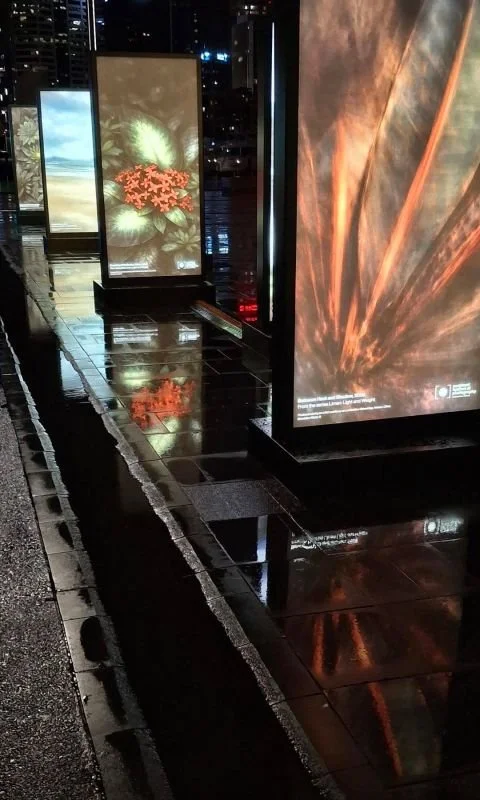
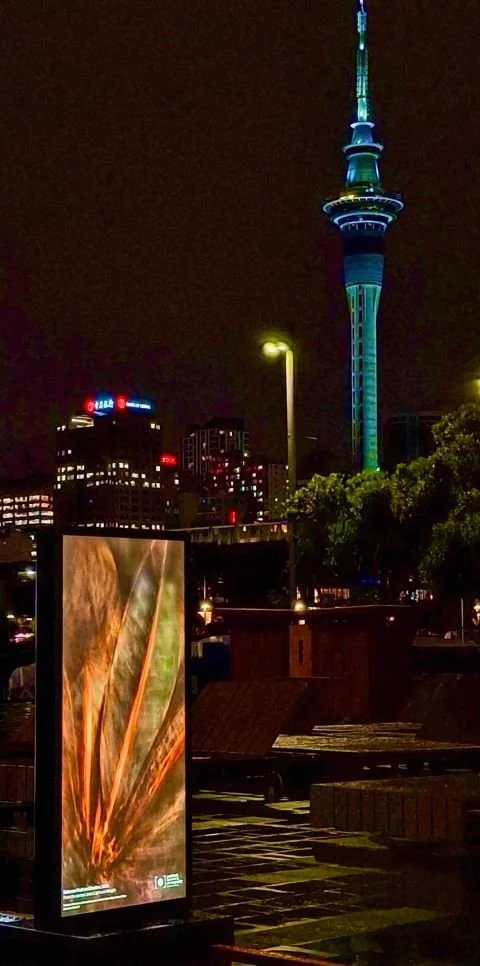
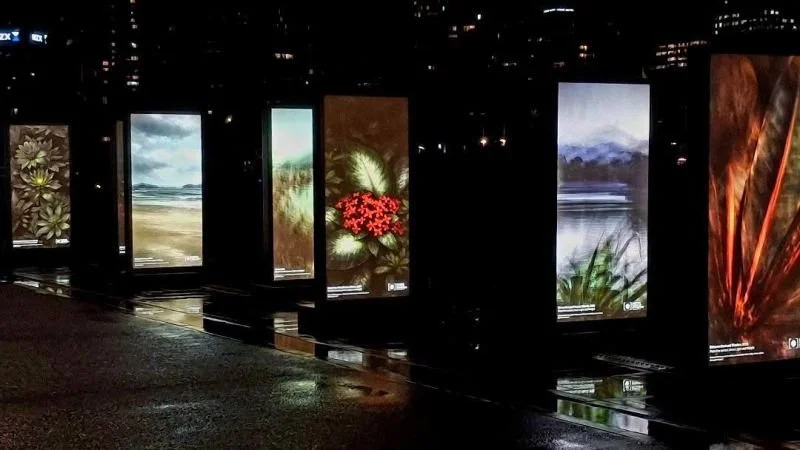
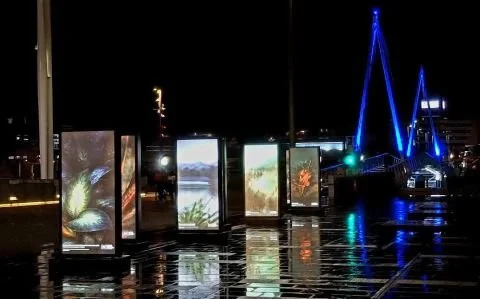
Recently I received documentation of works from my Limen series installed as part of the Festival at Karanga Plaza on Auckland’s waterfront.
The images were developed from research undertaken in Hainan, China, where tropical vegetation, shifting light, humidity and atmosphere became the starting point for an exploration of threshold states. The title Limen refers to a boundary or point of transition — a space between one condition and another.
Rather than describing specific places, the works explore the space between observation and memory, representation and transformation. Plants, water, landscape and organic forms become carriers of sensation and atmosphere, moving between recognition and abstraction.
The series is grounded in my ongoing interest in photography as an experience rather than a record. The images seek to evoke the feeling of being within an environment — its light, weight, temperature and presence — while allowing space for uncertainty, imagination and personal interpretation.
Seeing the photographs translated into large-scale illuminated public works is a reminder that images continue to evolve beyond the moment of their making. Set against the night skyline and reflected across rain-soaked surfaces, the installation creates an unexpected dialogue between the work, the city and the environment around it.
Public installations offer a different way of encountering photography. Removed from the gallery and placed within the everyday rhythms of the city, the works become part of a larger visual conversation, experienced by audiences who may encounter them by chance rather than intention.
Thank you to the Auckland Festival of Photography for including Limen: Light and Weight in this year's programme.
Selenge / 色楞格 is coming to Dali, China — 13–17 June 2026
Selenge / 色楞格 is coming to Dali, China — 13–17 June 2026. Dali is an ancient city in Yunnan province, in the southwest of China. Situated between Erhai Lake and the Cangshan mountain range, close to the Tibetan plateau,…
Dali is an ancient city in Yunnan province, in the southwest of China. Situated between Erhai Lake and the Cangshan mountain range, close to the Tibetan plateau, it is one of the most visually and culturally distinctive cities in the country. Each June it hosts the Dali International Photography Festival — one of China's most significant international photography events, drawing artists and audiences from across the world.
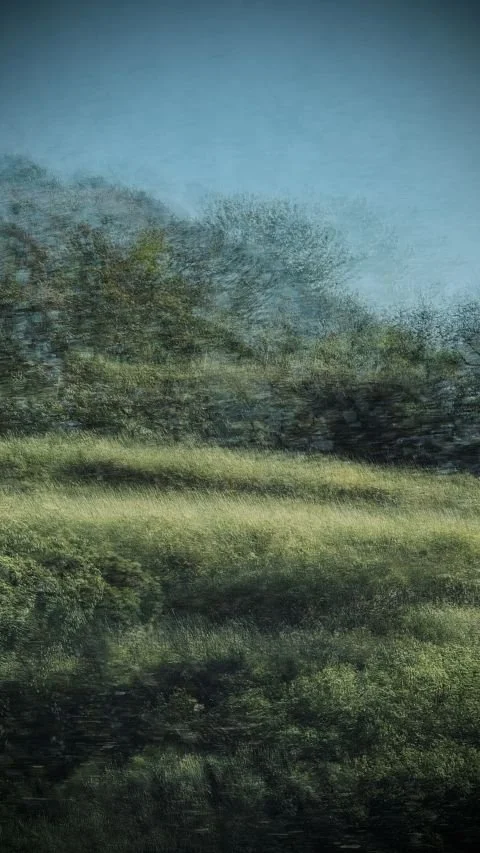
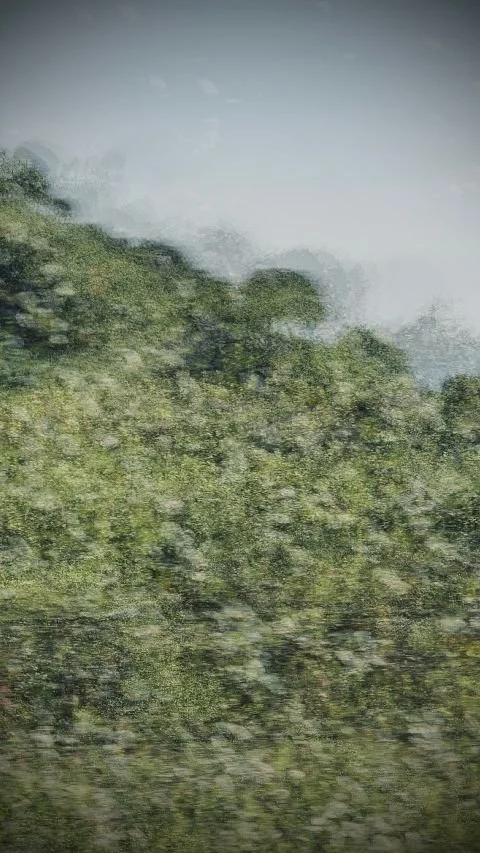
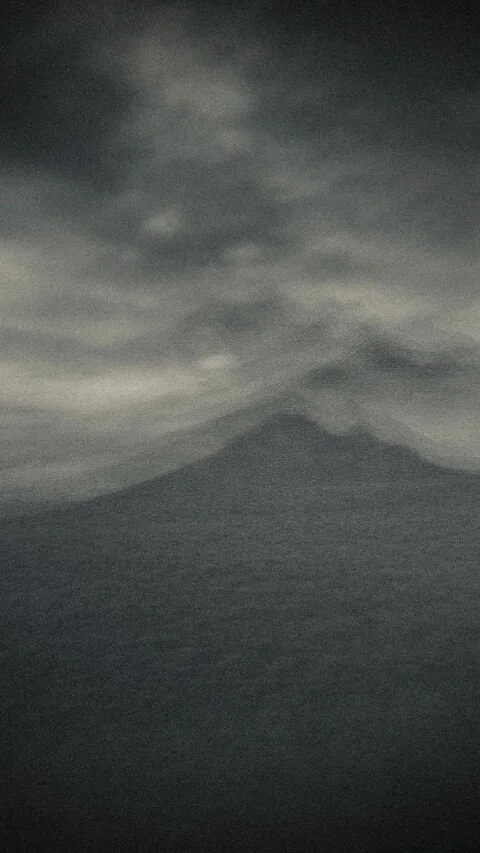
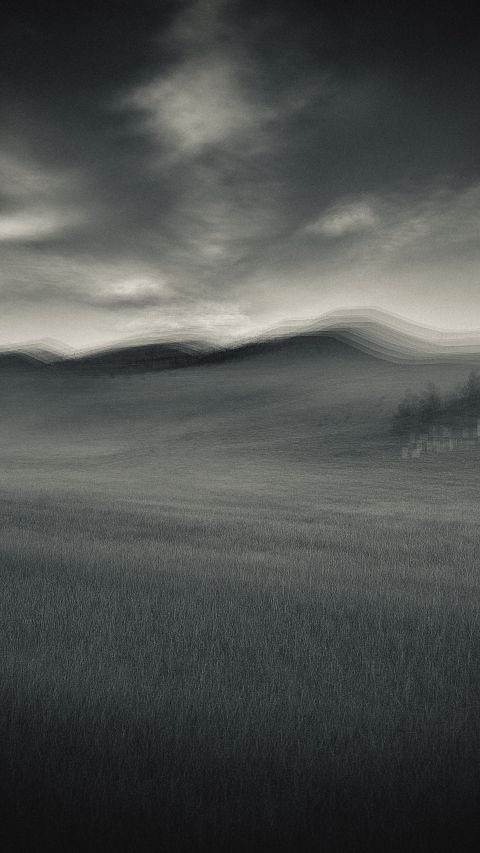
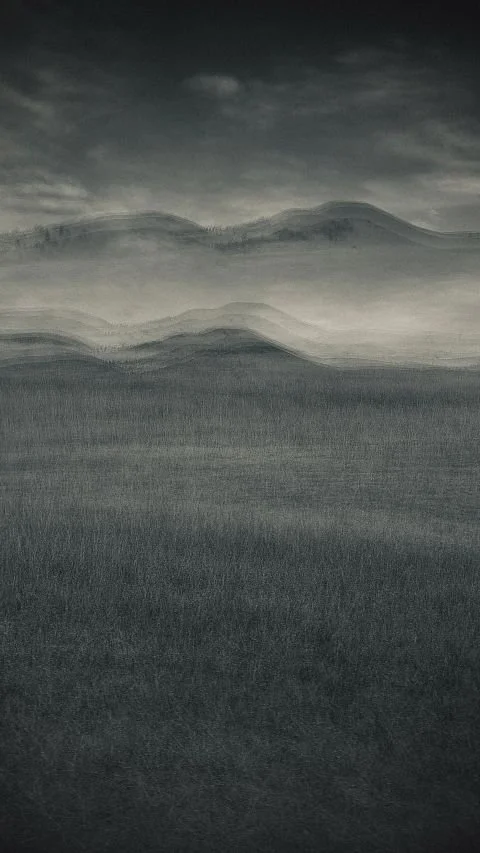
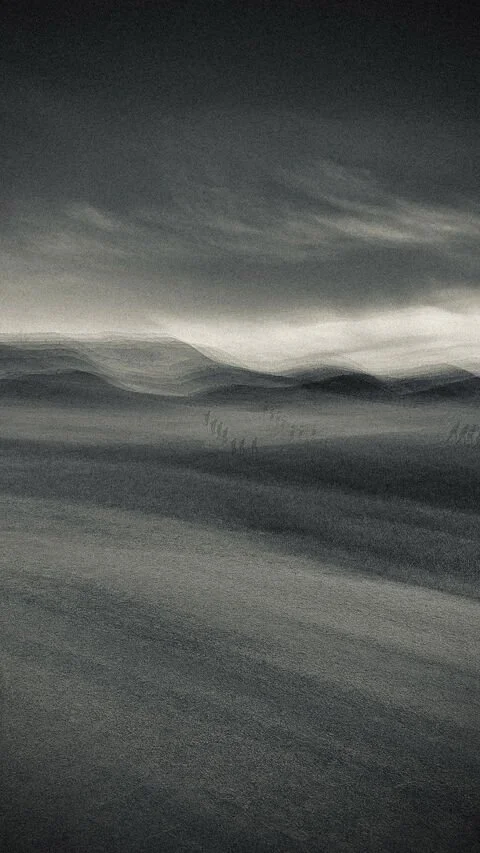
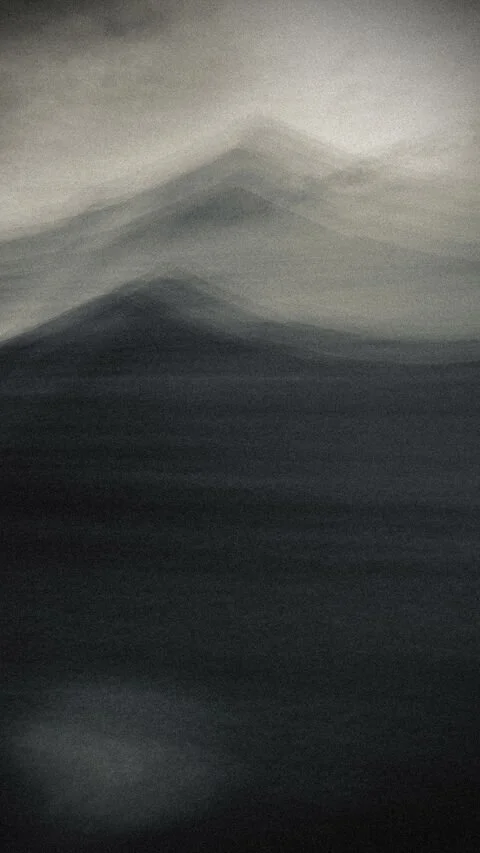
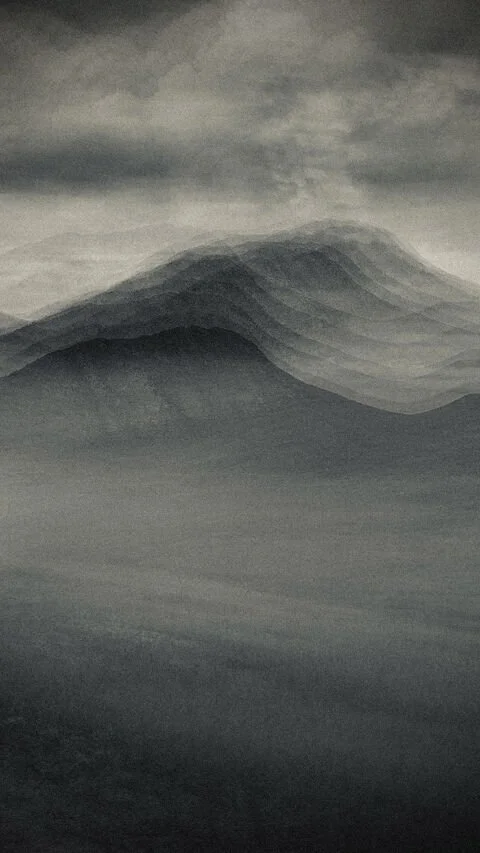
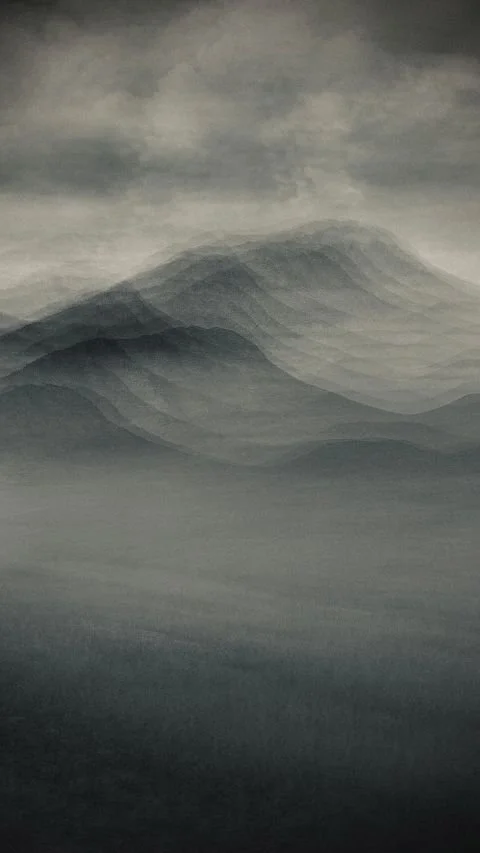
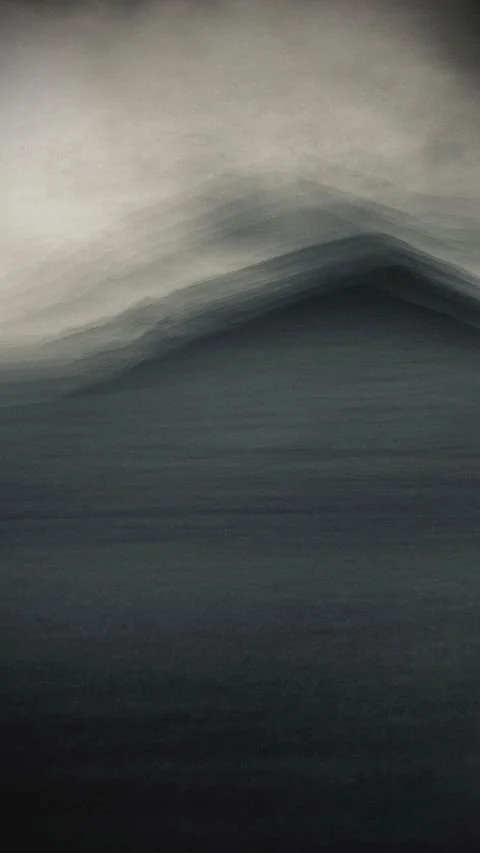
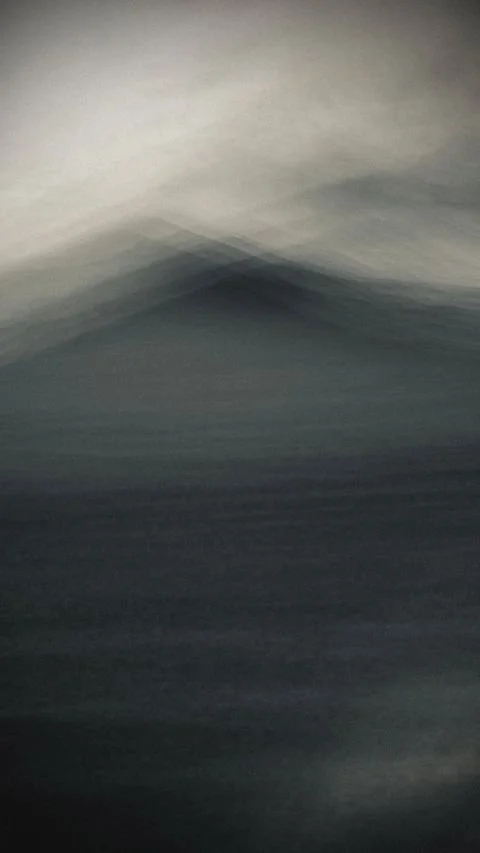
Selenge is a series of nine vertical works made in the landscape of northern Mongolia. The images draw on the open grassland, mountain forms, mist, weather and vast spatial distance of the Selenge river basin. Working across digital photography and the visual language of Chinese ink painting, the series reconstructs the sensation and atmosphere of place rather than simply describing it.
The work will be presented as part of the Australian exhibition at Dali 2026, where I am participating as both artist and curator.
南博(大理)国际影会 · 13–17 June 2026
—
Because I don’t currently have access to large-format printing on Naxos, the work…
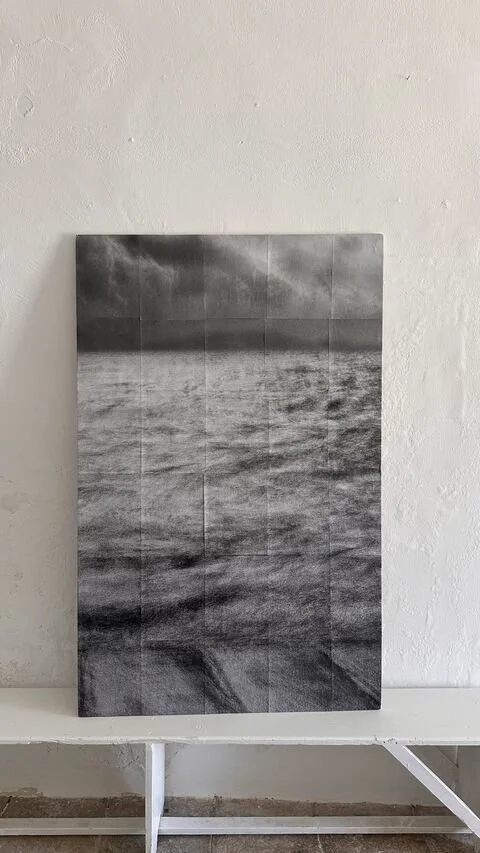
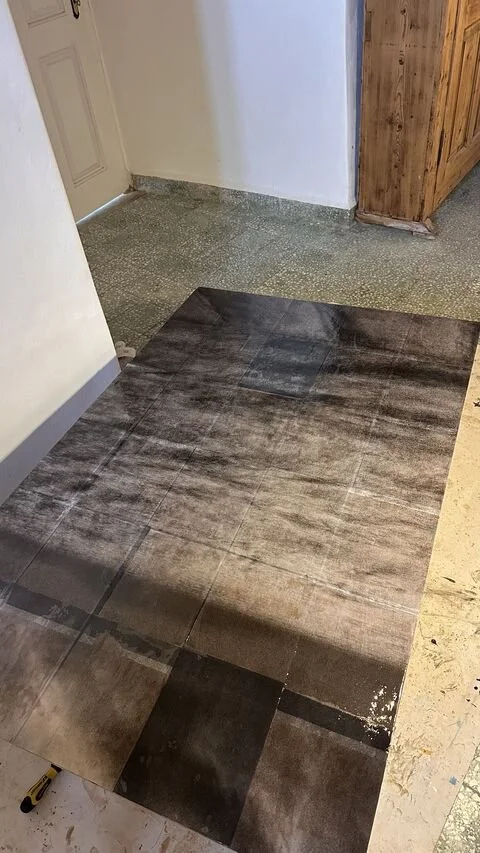
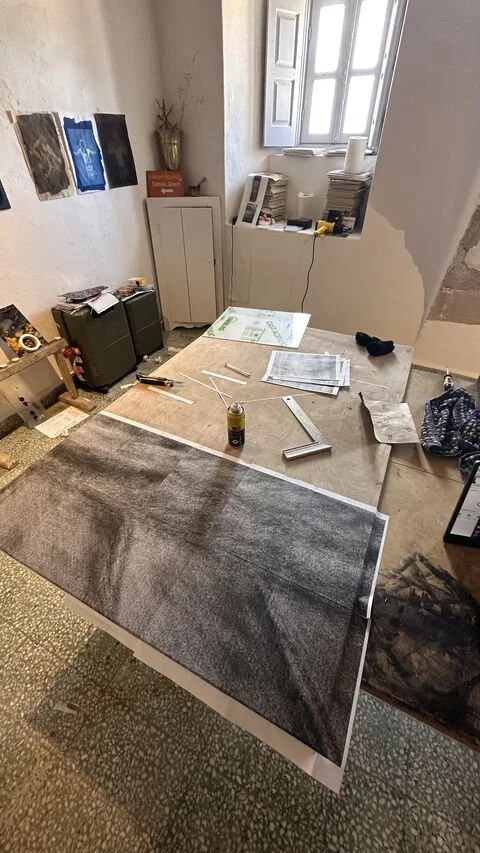
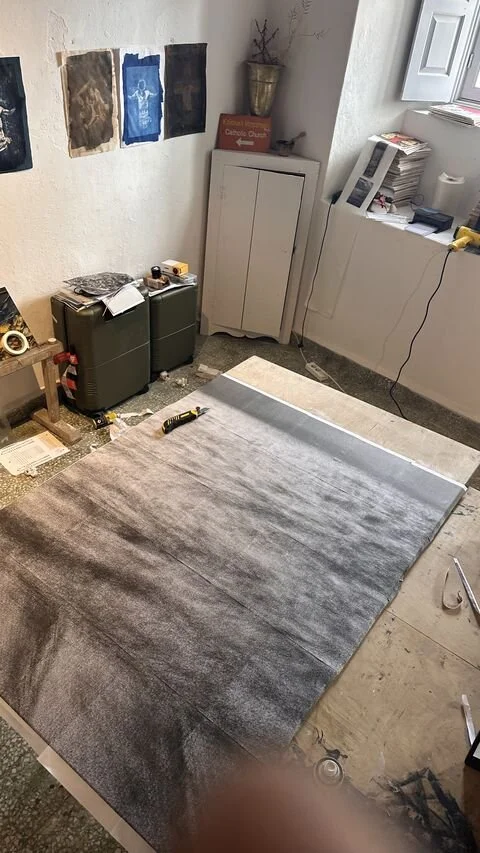
Because I don’t currently have access to large-format printing on Naxos, the work has had to pivot and adapt to the conditions around me. These pieces are being constructed from A4 office inkjet prints on A4 paper. Each…
Because I don’t currently have access to large-format printing on Naxos, the work has had to pivot and adapt to the conditions around me.
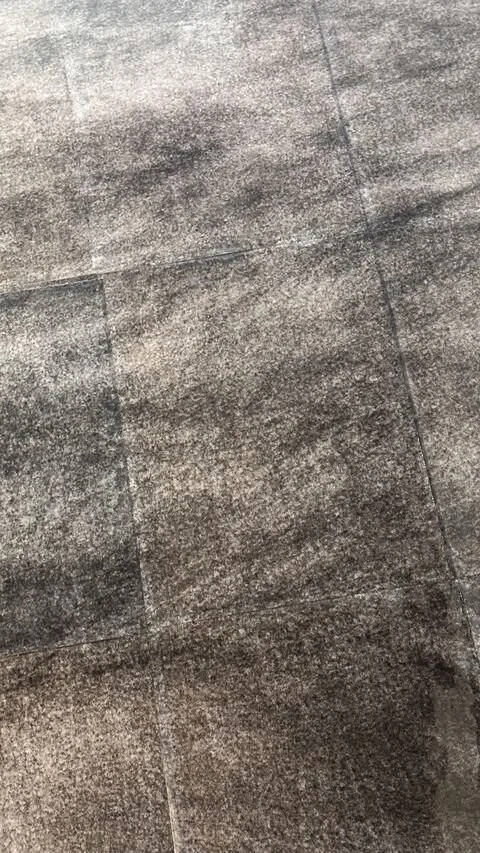
These pieces are being constructed from A4 office inkjet prints on A4 paper. Each sheet is individually assembled, mounted onto wood, and then sealed beneath layers of 2-pack resin. What began as a technical limitation has started to open up a different visual and material language altogether.
The seams remain visible. The grid is not hidden. The image fractures slightly through its own construction, carrying traces of process, labour, repetition, and assembly. The work sits somewhere between photograph, object, and surface.
There is something important to me in using ordinary materials in this way. A4 paper, adhesive, resin. Nothing precious at the beginning. Yet through accumulation and transformation the image gains weight, density, and presence.
The limitations of the residency environment have become part of the methodology itself. No large printers. No fabrication workshop. Just whatever can be built slowly by hand inside the studio.
In some ways, the work feels closer to sediment or skin than a conventional photographic print. The surface holds the memory of its own making.
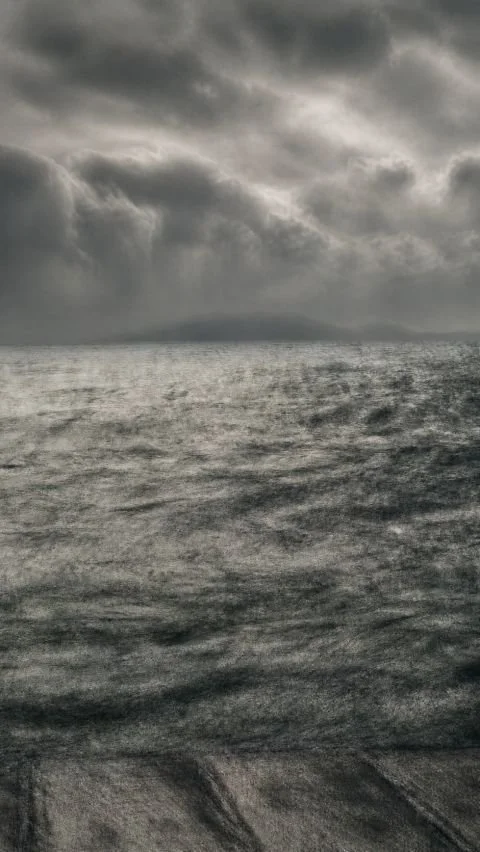
Chora, Naxos
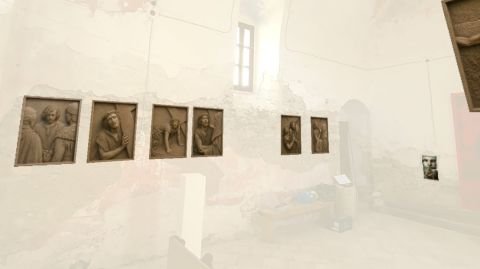
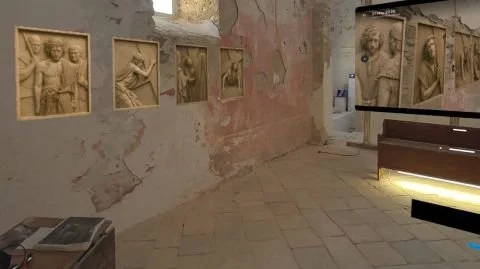
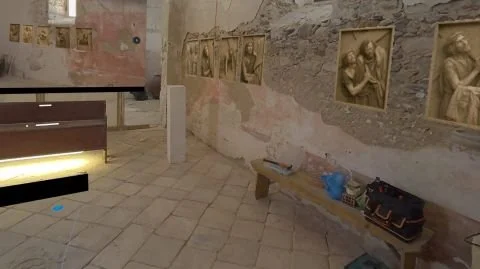
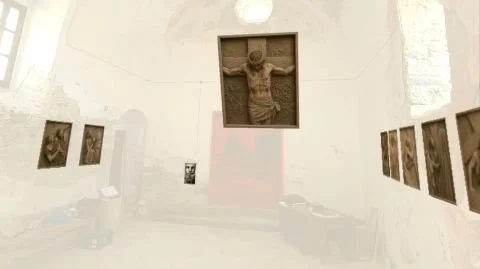
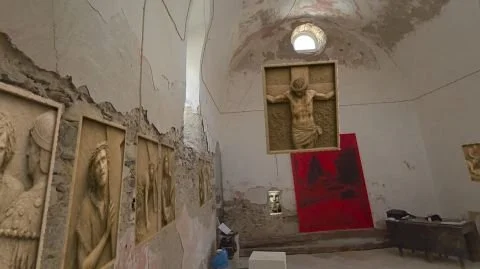
Chora, Naxos. Installing the VR component of the work into the chapel through Figmin XR has turned into an unexpectedly physical process. Rather than simply placing virtual objects into a room, the work needs to respond…
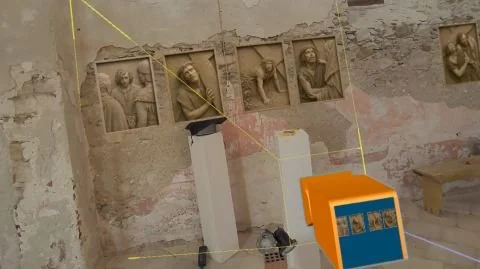
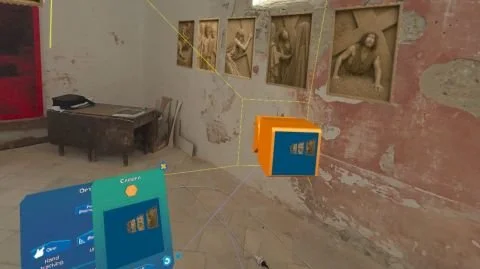
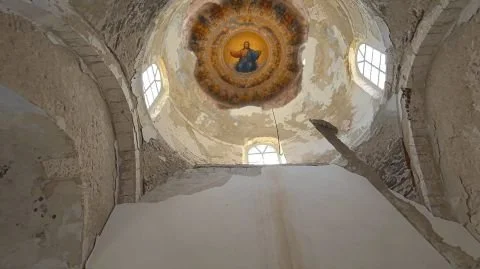
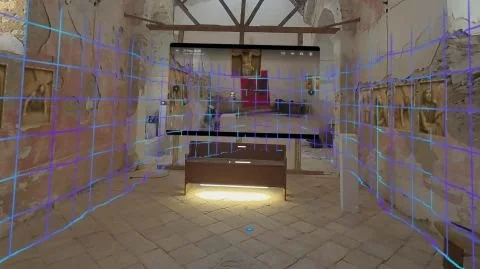
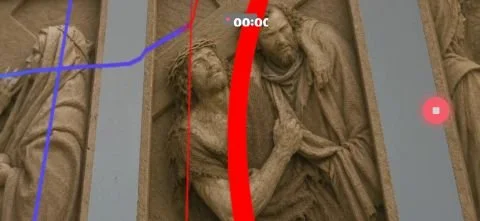
Installing the VR component of the work into the chapel through Figmin XR has turned into an unexpectedly physical process. Rather than simply placing virtual objects into a room, the work needs to respond to the architecture, scale, light, and atmosphere of the chapel itself. The installation becomes a process of walking, adjusting, testing, and negotiating with the existing fabric of the building.
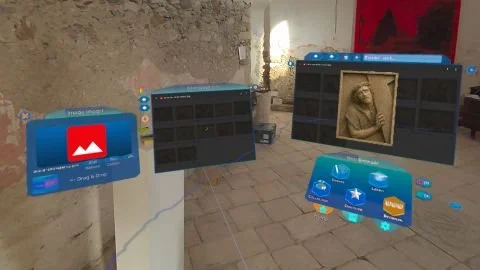
The software is surprisingly capable once you are inside the workflow. The interface, however, is frankly quite awful. Clunky, unintuitive, and often frustrating to navigate, particularly around scene mapping and object placement. Several supposedly simple adjustments became extended negotiations with the tool itself.
Despite that, Figmin XR remains a genuinely powerful platform for embedding virtual sculptural and photographic elements into a lived architectural environment. The digital and physical begin to coexist in a strangely convincing way. The work no longer feels projected onto the chapel, but situated within it, responding to the textures, surfaces, and history already present.
What interests me most is how this extends the Origin Image methodology beyond the photographic surface and into spatial experience. The chapel is not acting as a neutral container. Its age, atmosphere, and presence actively shape how the virtual elements are read.
There is still something quietly uncanny about standing inside a centuries-old stone chapel while positioning immaterial objects that only fully exist through a headset. That tension between the physical and the virtual is precisely where the work begins to open up.
Bronisław Kózka
Following on from my earlier residency post, I’ve been reflecting on something…
Following on from my earlier residency post, I’ve been reflecting on something that sits underneath much of the work currently unfolding on Naxos. None of this has happened through a neat or linear process. The chapel…
Following on from my earlier residency post, I’ve been reflecting on something that sits underneath much of the work currently unfolding on Naxos.
None of this has happened through a neat or linear process.
The chapel project, the immersive sound work Via Dolorosa, the experiments with cyanotype, plaster reliefs, virtual overlays, AI image systems, spatial installation, upcoming China exhibitions and curatorial projects have all been developing simultaneously, often pulling in completely different directions at once.
For a long time, I saw this kind of multidirectional thinking as something I needed to control more effectively. Like many neurodivergent creatives, I could move rapidly between concepts, materials, systems and associations, but sustaining coherence across them was often the difficult part.
What has genuinely shifted my practice recently is not AI as image generation alone, but AI as a structural and conceptual tool that allows complexity to remain active without everything collapsing into fragmentation.
There is increasing research around the relationship between neurodiversity and creative cognition: pattern recognition, associative thinking, nonlinear problem solving, hyperfocus, rapid conceptual linking and the ability to move between systems and disciplines. In creative practice, those qualities can become incredibly generative, but they can also produce overload when too many unresolved threads are operating simultaneously.
What interests me is that AI has started functioning less as a replacement for creativity and more as an external cognitive framework surrounding the creative process itself.
For me, it has become a way of:
holding conceptual threads together,
mapping relationships,
testing speculative directions,
tracking continuity across projects,
and allowing intuitive or associative leaps to remain active long enough to become meaningful.
Ironically, many of the things that once felt like distractions inside my process are now becoming some of the most productive parts of it.
The chapel itself has become a reflection of this way of thinking:
real architecture mixed with simulated objects,
physical relief sculptures alongside virtual interventions,
music operating spatially through the environment,
historical residue intersecting with computational image systems.
The result sits somewhere between photography, sculpture, installation, sound work and immersive simulation.
Increasingly, I’m less interested in producing single resolved images and more interested in constructing layered environments where perception itself becomes unstable, embodied and experiential.
Perhaps that is the real work emerging here.
Sense Worldwide Jeremy Brown (JB)
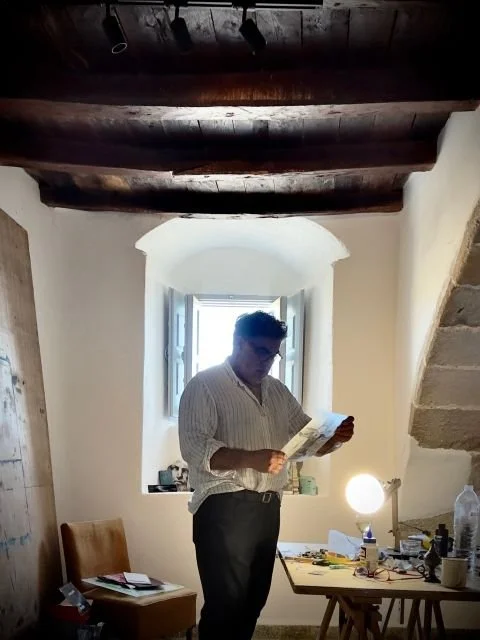
During my residency on Naxos, I had originally intended to continue posting daily…
During my residency on Naxos, I had originally intended to continue posting daily updates from the studio and chapel. The reality, however, was that the work expanded very quickly and became far more immersive and…
During my residency on Naxos, I had originally intended to continue posting daily updates from the studio and chapel. The reality, however, was that the work expanded very quickly and became far more immersive and interconnected than I had anticipated.
What began as experiments with cyanotypes, image transfers, marble, plaster and photographic objects has gradually evolved into something much closer to a total environment.
The chapel itself has become central to the work.
Rather than thinking about photography purely as a final image, I’ve been exploring the idea of the image becoming an environment: a space where physical objects, virtual insertions, sound, memory, architecture and simulation coexist.
Many of the ideas from my PhD research around constructed realities, immersive image-spaces and unstable perceptions of what is “real” have suddenly found a very direct form here.
Inside the chapel, aged relief sculptures derived from photographic imagery sit alongside projected and virtual elements viewed through Meta Quest passthrough technologies. Physical devotional-style objects begin to blur with simulated artefacts. AI-generated and digitally mediated forms exist within a very real historical structure carrying centuries of material presence, damage and memory.
The experience is no longer simply about viewing an image.
The viewer moves through the image-space itself.
One of the most unexpected developments has been the integration of sound and music into the project. Alongside the visual work, we have also been developing Via Dolorosa, an album of atmospheric sacred and liturgical-inspired compositions designed specifically as part of the immersive environment. Rather than functioning as background audio, the music operates architecturally within the chapel, activating space, duration and emotional presence.
What interests me most is that none of this sits cleanly between the categories of photography, sculpture, installation, sound or virtual experience. Instead, the project exists in the unstable territory between them.
The chapel has effectively become a living composite image made from real objects, digital interventions, sound, memory and bodily experience.
It feels like an important shift in my practice:
from tableau as constructed world → environment as lived world.
And perhaps more importantly:
from the viewer standing outside the image → to existing within it.
Here is the link to Spotify
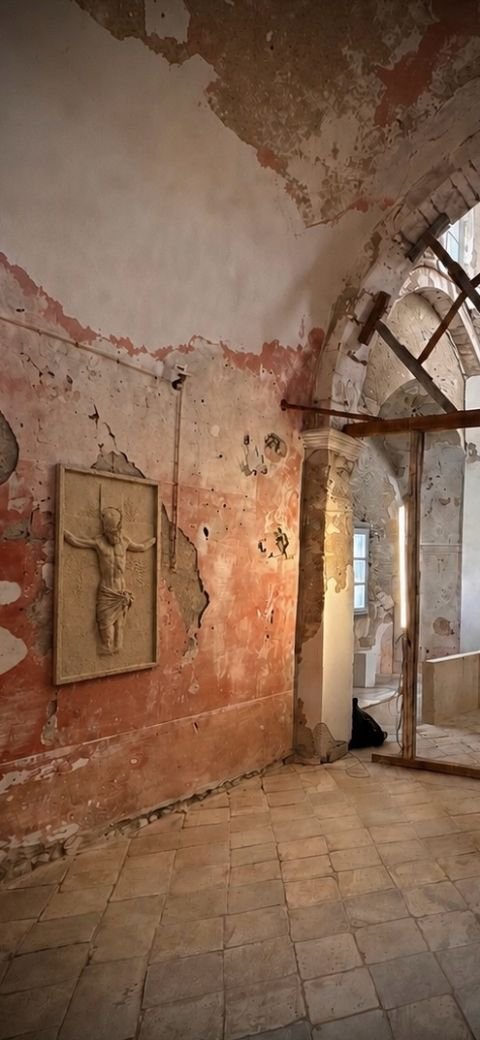
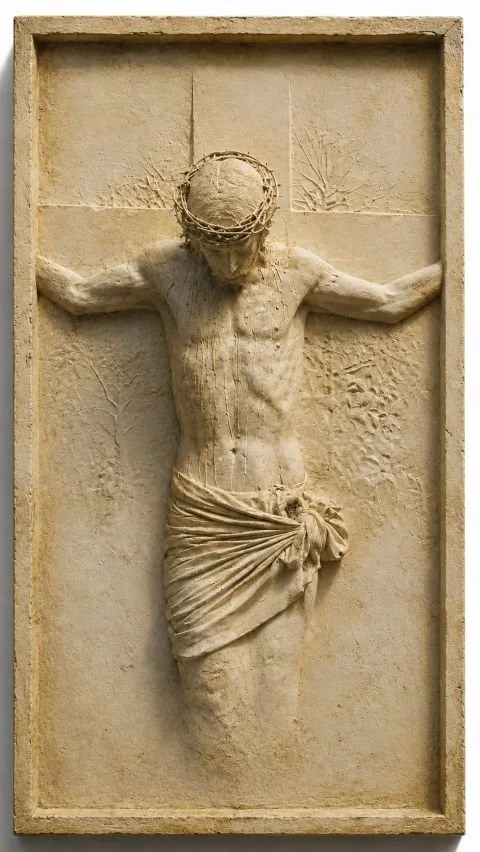
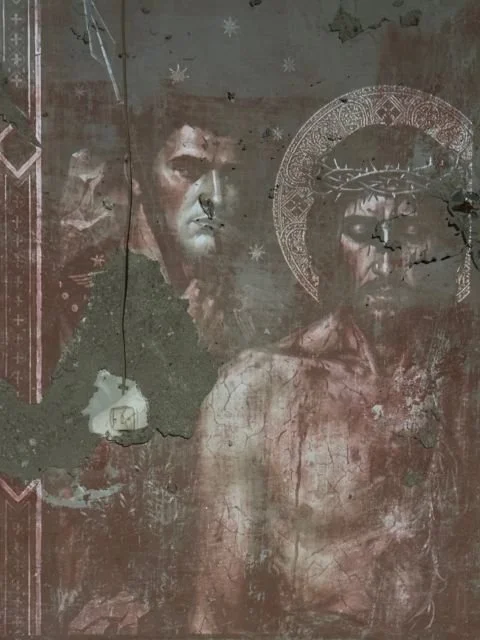
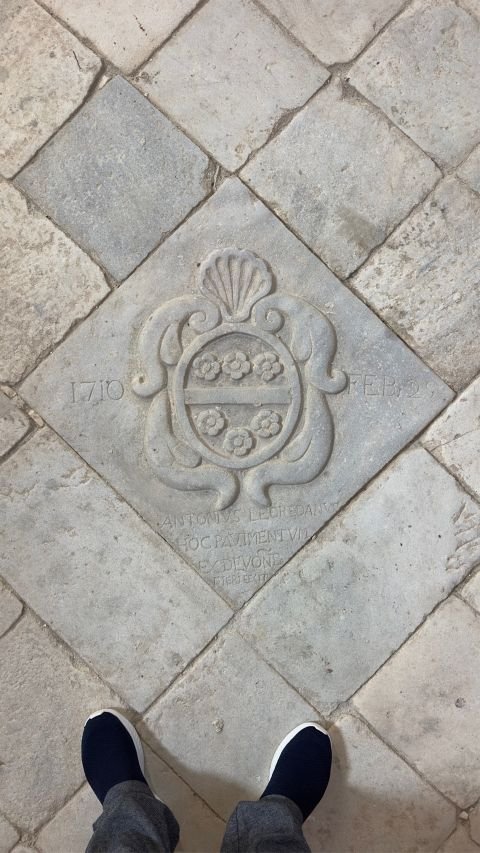
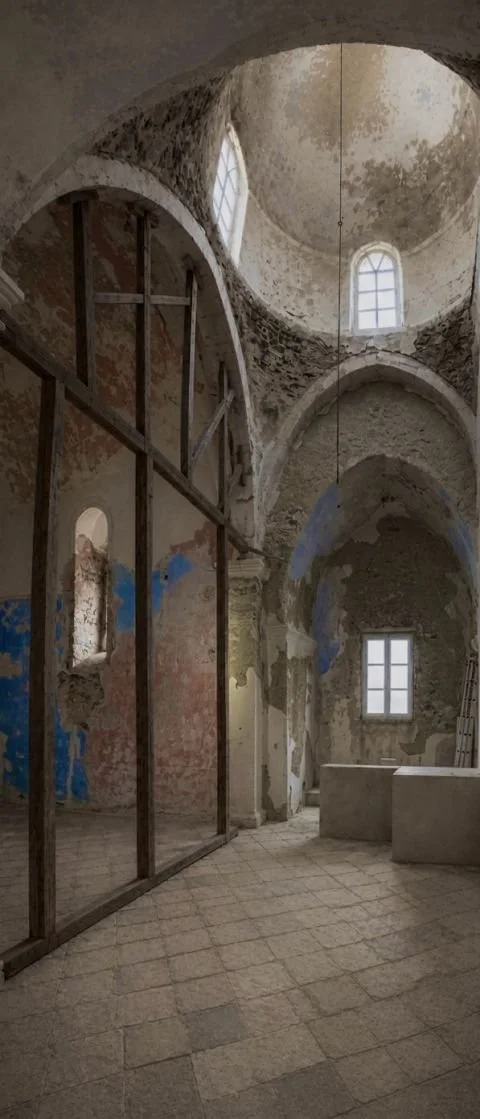
Day five at La Chapelle Saint-Antoine, Naxos
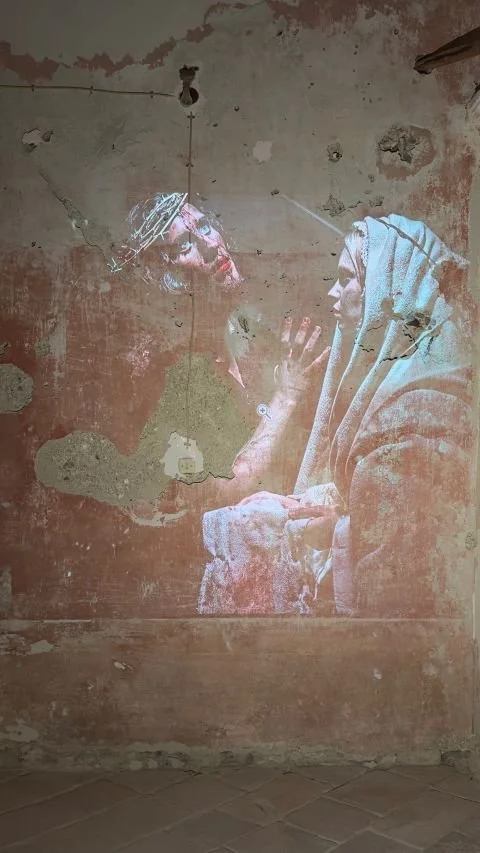
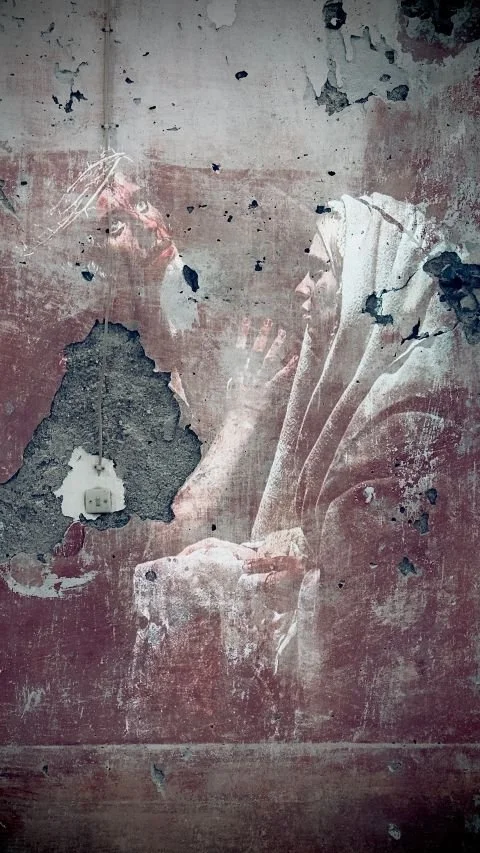
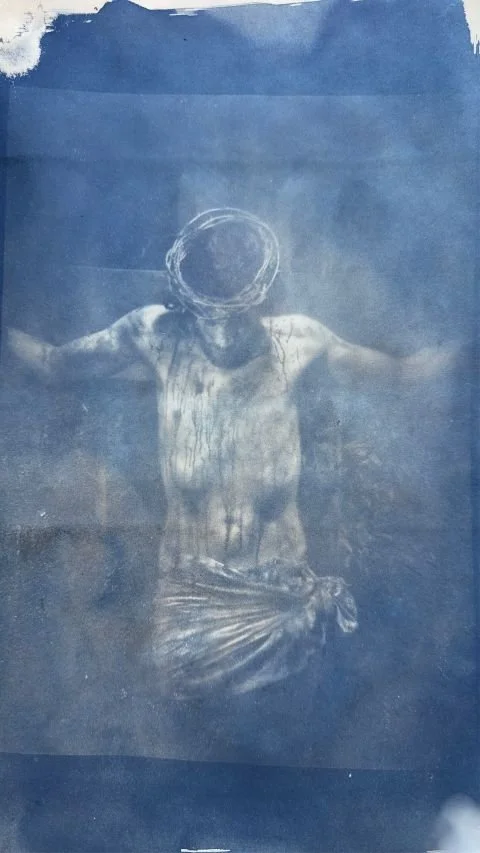
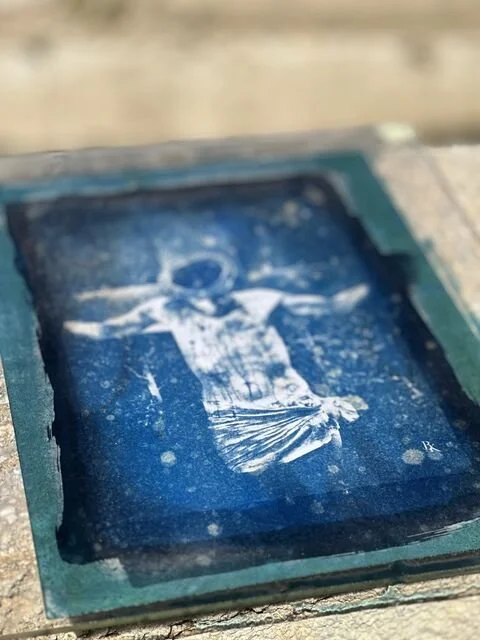
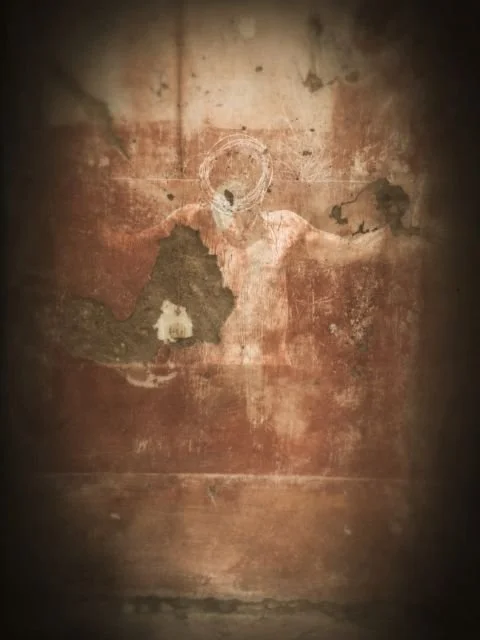
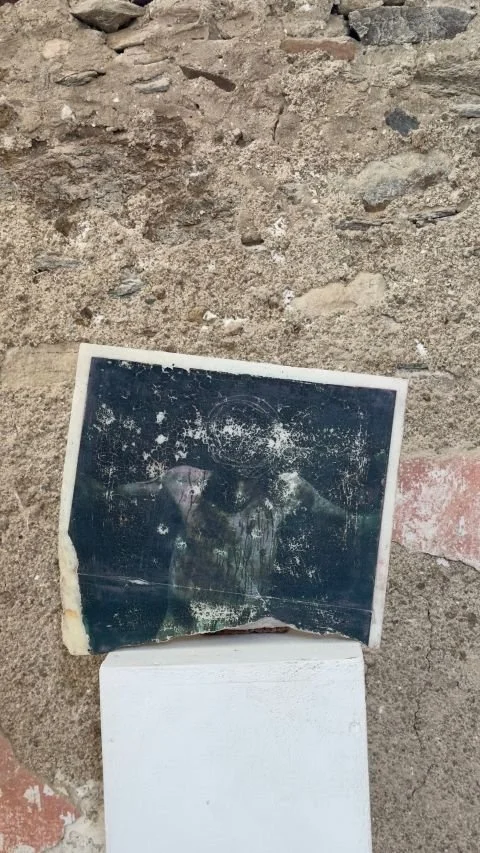
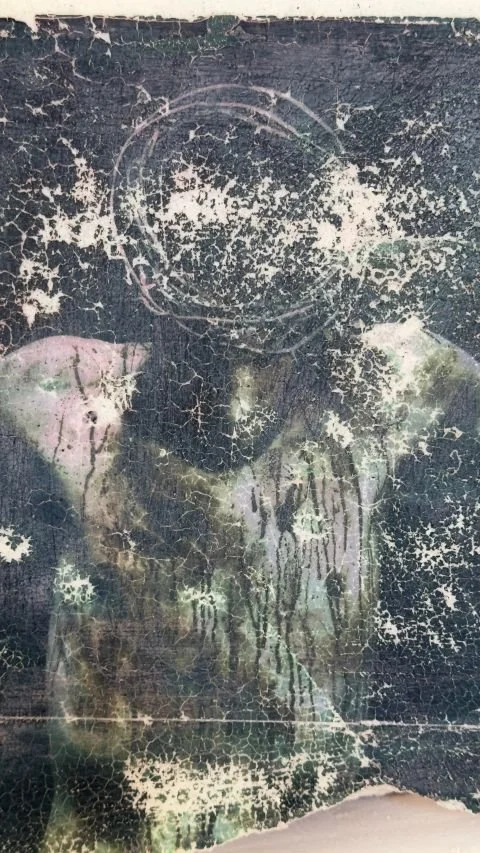
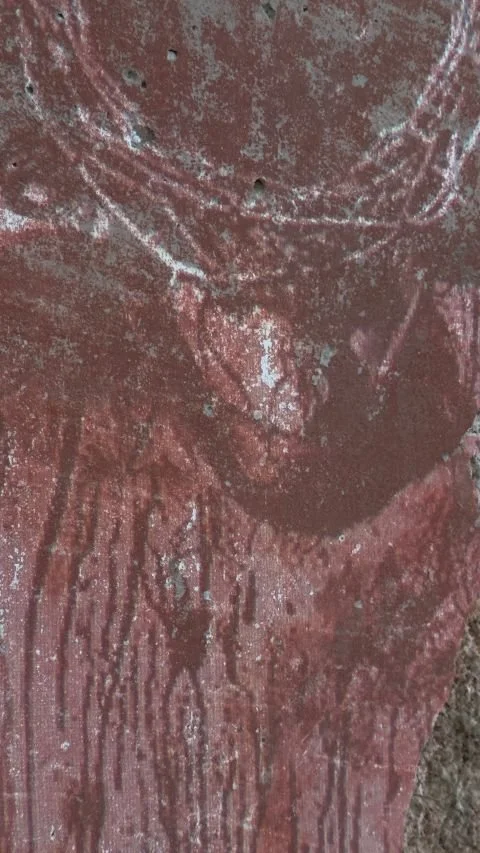
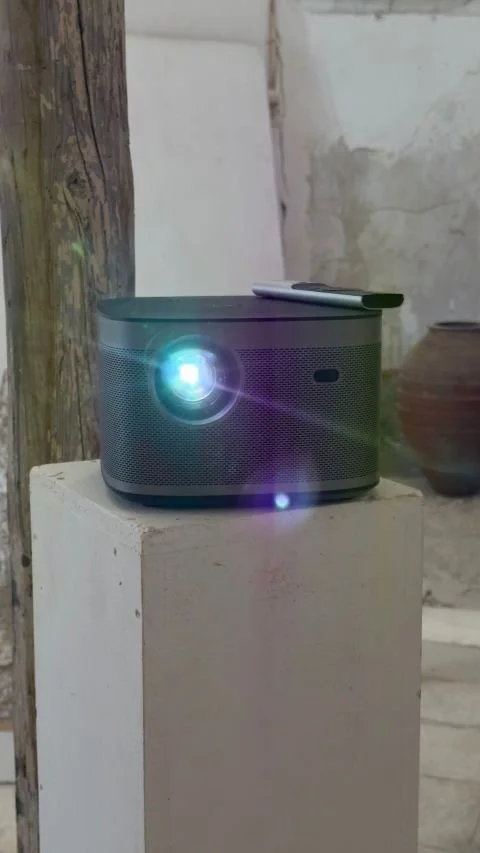
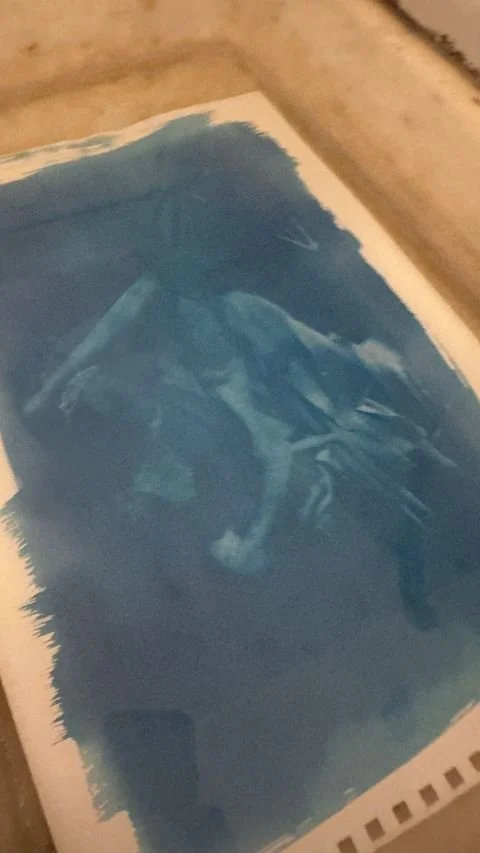
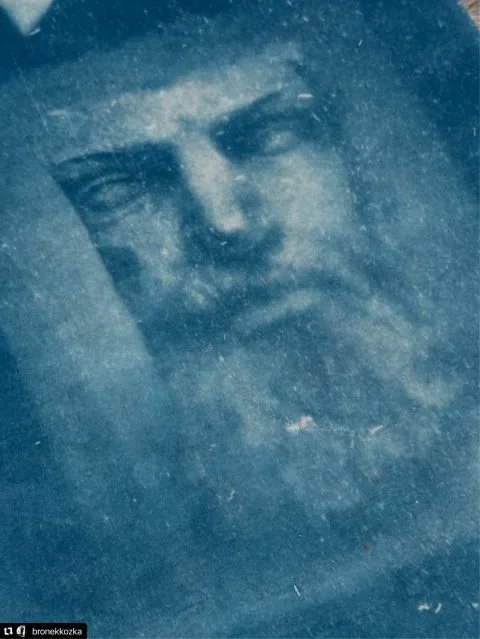
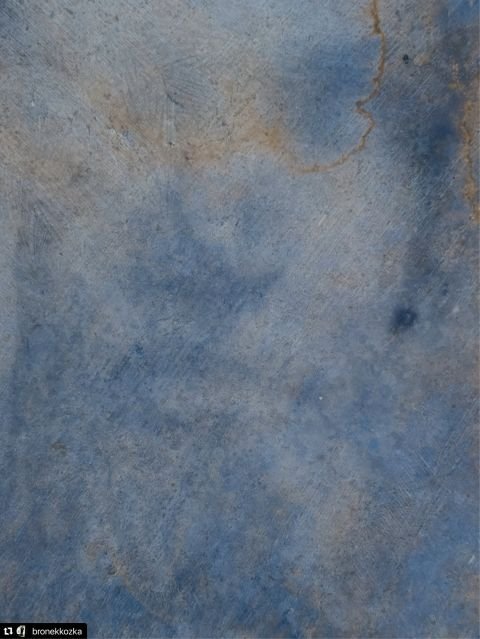
Day five at La Chapelle Saint-Antoine, Naxos. A full day in the studio working with cyanotype, on both paper and the prepared marble. The weather has been ideal for it, clear sky and strong consistent sun, which is…
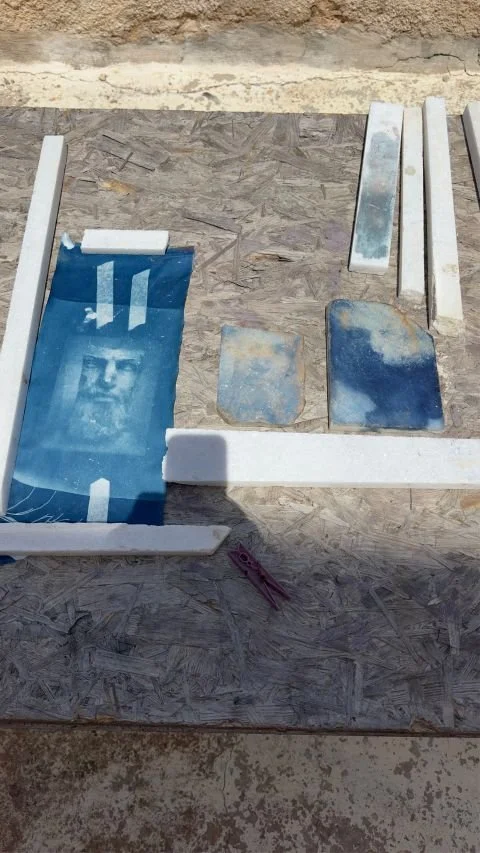
A full day in the studio working with cyanotype, on both paper and the prepared marble. The weather has been ideal for it, clear sky and strong consistent sun, which is exactly what the process needs.
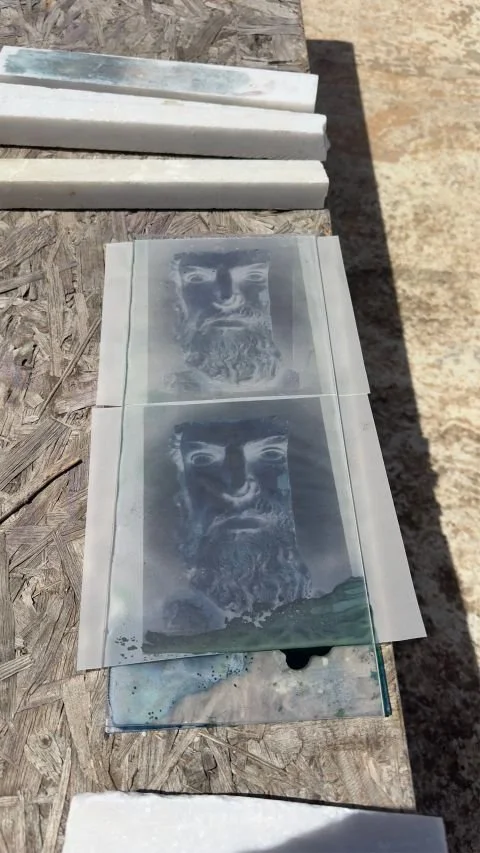
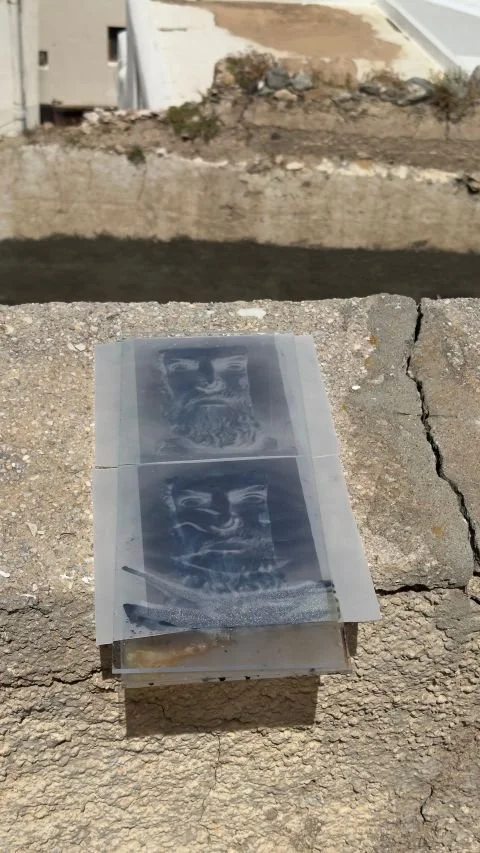
For anyone unfamiliar, cyanotype is one of the oldest photographic printing processes, developed in the 1840s by the English scientist and astronomer Sir John Herschel. The surface is coated with an iron-based solution, a negative is laid on top, and the whole thing is exposed to UV light. Where the light hits, the chemistry oxidises into a deep Prussian blue. After exposure the print is washed in water to reveal the image. A slow, hands-on, weather-dependent process, which is part of why it appealed for this stage of the residency. There is no UV printing on the island, but there is plenty of sun, and the constraint itself has been useful in pushing the work in a direction I might not otherwise have gone.
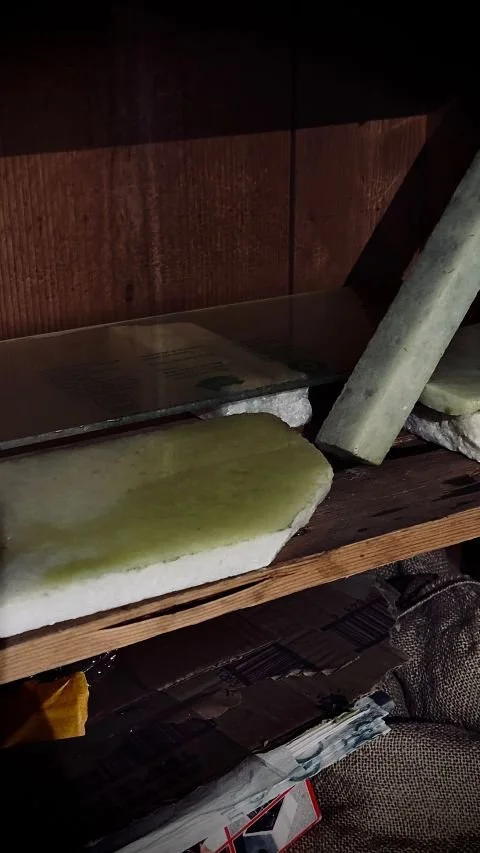
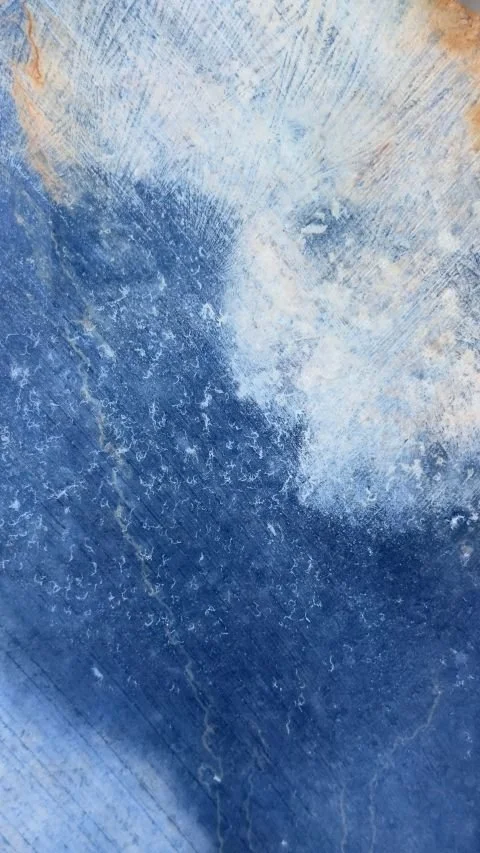
The results on paper today came out as expected, which is reassuring as a baseline. The marble is another matter. The chemistry is soaking too deep into the stone, and the prints, while I quite like them as objects, are not yielding enough detail to do what I ultimately want this body of work to do. The next test will involve laying down a thin coat of a varnish I have on hand, the kind normally sprayed on finished oil paintings, used here as an improvised sealant to hold the chemistry closer to the surface and prevent it from being absorbed too deeply into the marble. One of the constraints of working on a small island is making do with whatever materials are available, and while that is a limitation it is also part of what makes the experience what it is. The work shifts to meet the place.
Days like today are less about producing finished pieces and more about narrowing down on the techniques that will carry the body of work forward. The conceptual frame is still developing, and I am deliberately trying to let the materials and the experiments inform the concept rather than the other way round. That feels appropriate for a residency, where the time is precious and best spent at the bench rather than overthinking at the desk. The reading on the Dionysus story and the deeper mythology of the island continues in parallel, and I expect those threads to begin to converge over the coming days.
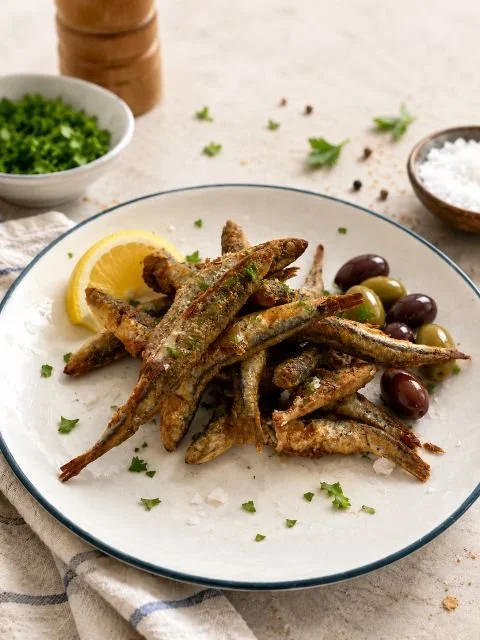
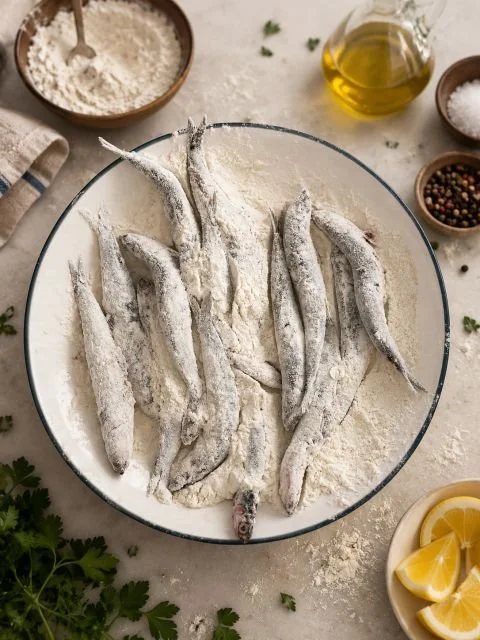
Lunch was small sardines, simply floured and fried with herbs, served with lemon and olives. Quietly perfect. The kind of meal that reminds you exactly where you are.
More tomorrow.
Bronisław Kózka
Day four at La Chapelle Saint-Antoine, Naxos
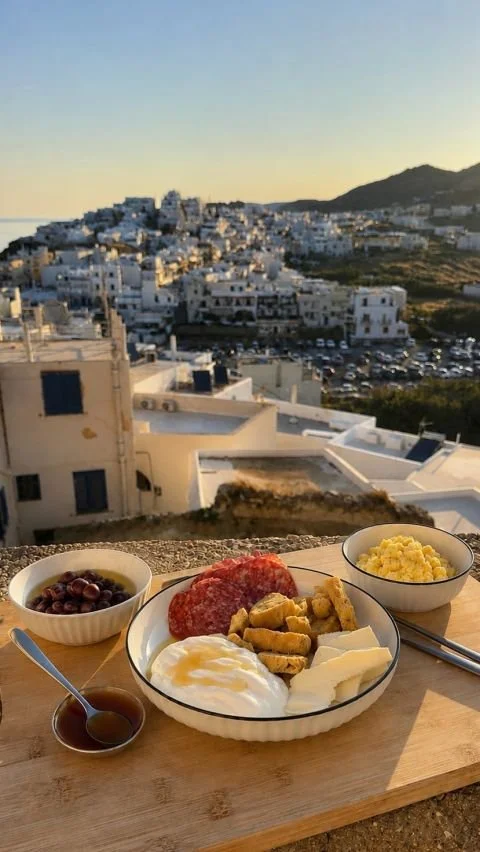
Day four at La Chapelle Saint-Antoine, Naxos. The day began with one of those sunrises that makes you stop on the terrace before doing anything else. Breakfast in that light, then into the studio. Today was largely a…
The day began with one of those sunrises that makes you stop on the terrace before doing anything else. Breakfast in that light, then into the studio.
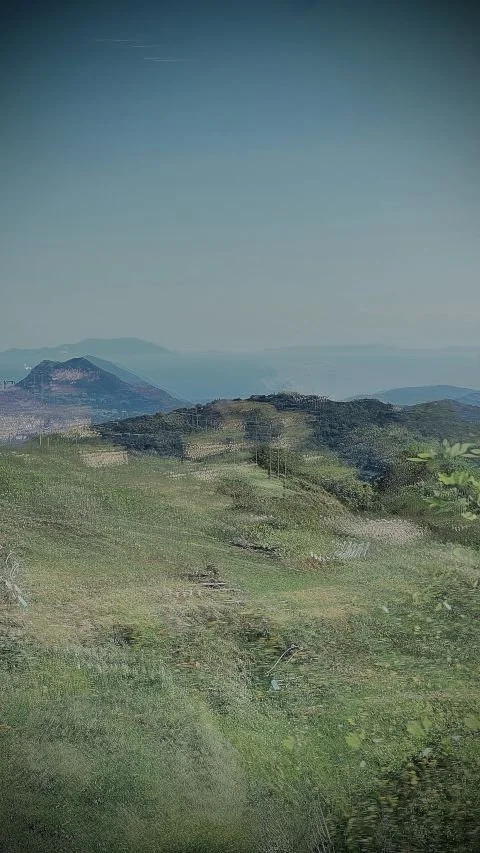
Today was largely a research day. I have been reading into the Dionysus story and the deeper mythological history of Naxos, an island where the god is variously said to have been born, raised, and where he is said to have found Ariadne after Theseus abandoned her on its shores. I am not yet sure where this thread will lead, but it is beginning to feel like a possible direction for the body of work that emerges from this residency. The collision of mythology with the very real landscape I am moving through every day, the same hills and coastline that figure in those stories, has a particular weight to it that is hard to ignore. Whether the work ultimately responds to those narratives directly or simply absorbs something of their atmosphere is a question I am happy to leave open for now.
Alongside the reading, I made some Origin Image work in the landscape. Partly responding to those mythological threads, but mostly as my own way of connecting to the place I find myself in. That has been the function of the Origin Image methodology in my practice for some time now, a contemplative encounter with the landscape that becomes the source material for the studio work that follows. It is the bridge between place and object.
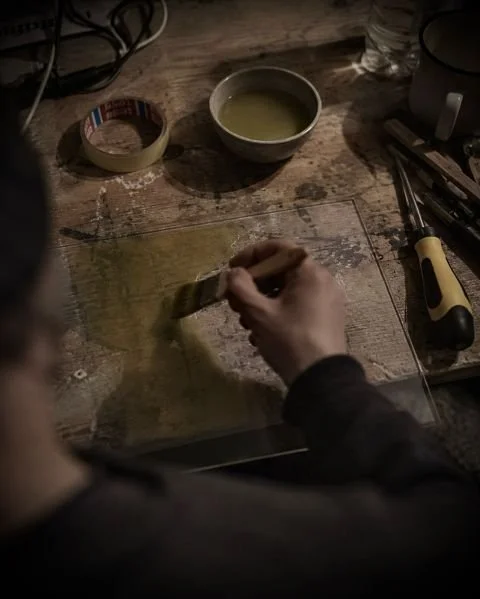
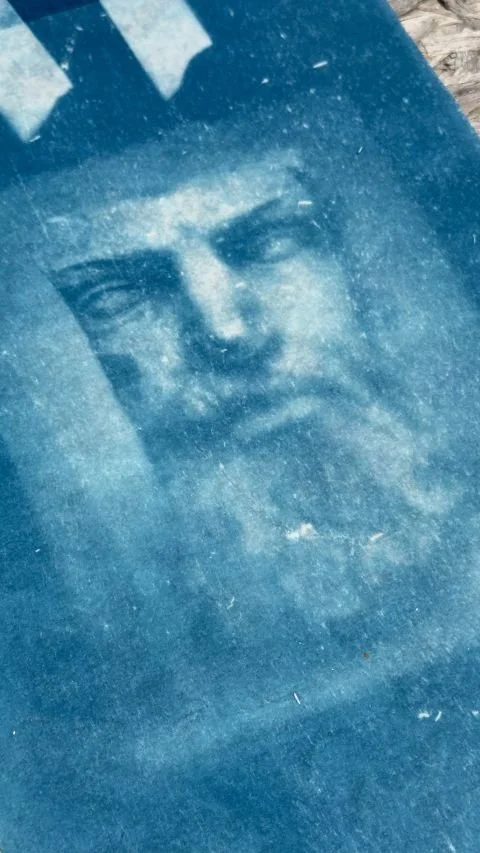
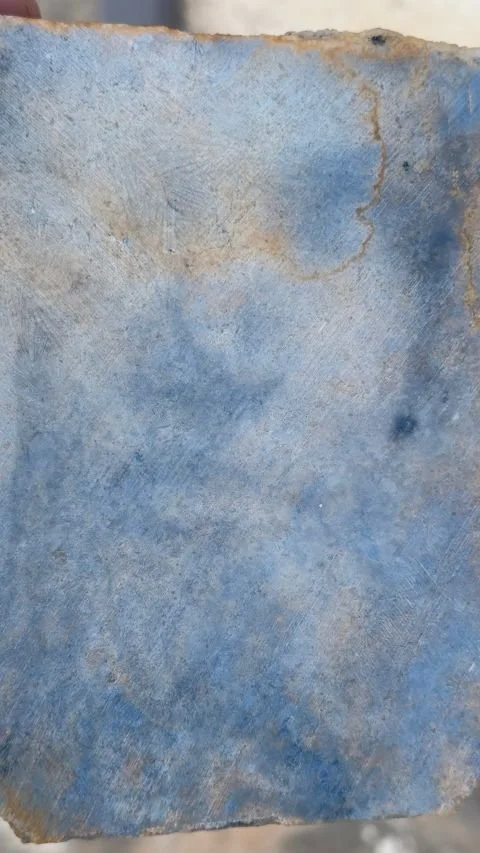
I also began preparing materials to experiment with cyanotypes for the first time, sanding back acrylic to give it some bite and see whether the chemistry will hold to a non-porous surface. The cyanotype process, with its dependence on UV light, feels well suited to the conditions here, and the absence of UV printing on the island has pushed me toward considering older photographic chemistries that I might not otherwise have explored. We will see what comes of it tomorrow.
El-ham cooked a beautiful rice dish for lunch, served with Shitto, a Ghanaian chilli and dried fish paste she had brought with her from Accra. Spicy and genuinely wonderful. I forgot to photograph it. Too hungry, and it was too good. The shared kitchen is becoming one of the quiet pleasures of this residency, and the conversations across cultures and practices that emerge over a meal are part of what makes the experience what it is.
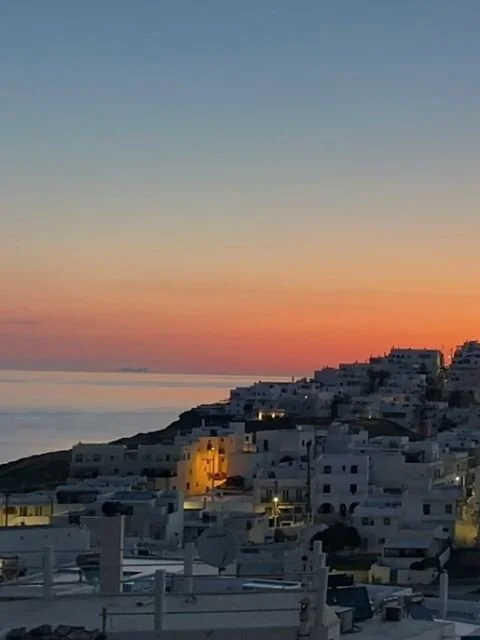
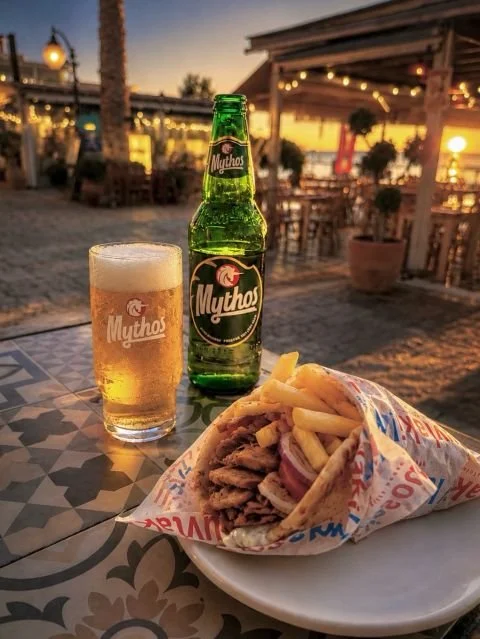
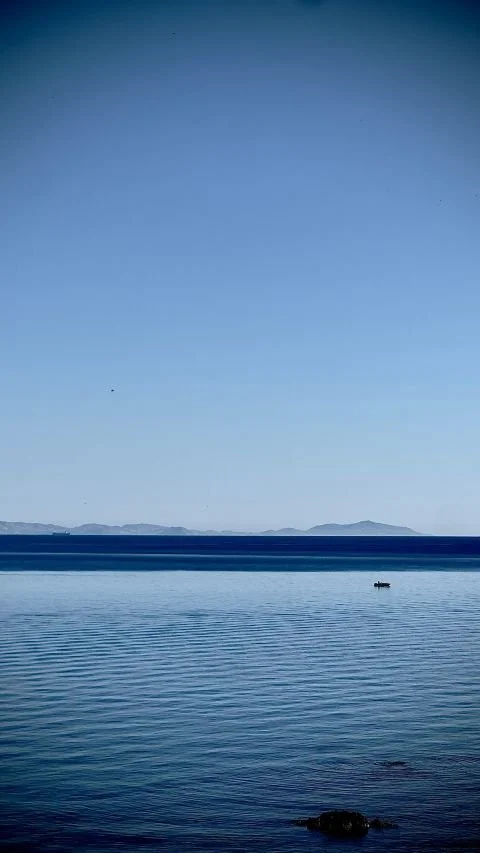
A long day, mostly research, lots of small directions opening up. Ended it with gyros, a cold beer, and the sunset over the Aegean. Hard to argue with that. More tomorrow.
Bronisław Kózka