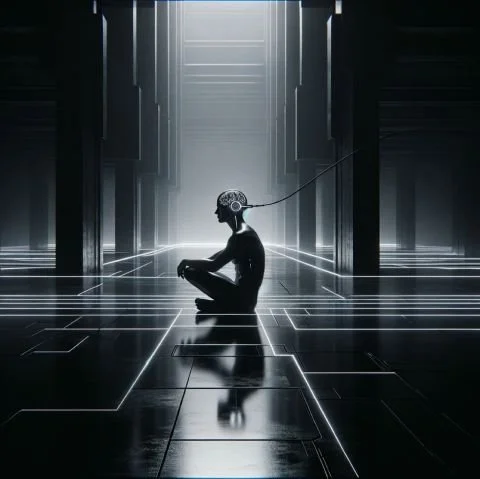
Auditory Perception and Visual Transformation in Art through Brain-Computer Interfaces
---------
The intersection of auditory perception and visual art, mediated by brain-computer interface technology, represents a groundbreaking frontier in artistic expression. This integration not only bridges sensory experiences but also offers a unique perspective on how we perceive and interact with art.
Interplay of Sound and Sight in Artistic Creation
The human brain's response to auditory stimuli, particularly music, can deeply influence emotional and cognitive states. With the advent of BCIs, these auditory-induced brainwave patterns can be harnessed to directly modify visual art. For instance, as a viewer listens to a piece of music, their neurological responses can be captured and translated into real-time changes in a visual artwork, such as a landscape painting. This process creates a dynamic art piece that morphs and evolves in response to the sounds heard, embodying the emotional and cognitive impact of the auditory experience.
From Auditory Stimuli to Visual Alterations
As researchers like Stefan Ehrlich and Kat Agres have shown, BCIs can measure and influence emotional states through music. This capability can be extended to visual art, where the perception of sound – its rhythm, melody, and harmony – could lead to corresponding changes in an image's color palette, texture, and even structural elements. This would result in a visual representation that is in constant flux, directly influenced by the auditory stimuli.
Real-Time Synchronization of Sound and Visuals
Creating a system that achieves real-time synchronization between auditory perception and visual transformation presents significant challenges. It requires a nuanced understanding of how different musical elements correspond to visual changes and how these can be seamlessly integrated without losing the artistic coherence of the original image.
Expanding the Boundaries of Artistic Expression
The use of BCIs to translate auditory experiences into visual changes represents a remarkable expansion of artistic expression. It allows for the creation of art that is not static but a living entity, continuously reshaped by the viewer's auditory experience. This technology not only enables a novel form of artistic interaction but also offers a medium for people to visualize their auditory experiences, creating a tangible representation of the impact of sound on their emotional and cognitive states.
The fusion of auditory perception and visual art through brain-computer interfaces signifies a novel paradigm in art creation. It blurs the lines between the senses, allowing for an art form that is dynamically responsive to sound. As this technology matures, it holds the promise of redefining our interaction with art, making it a more immersive, personal, and emotionally resonant experience.