
Beyond the Language Barrier: How AI Translation Enabled Cross-Cultural Artmaking
Translating Understanding: AI as a Bridge in Cross-Cultural Artistic Collaboration
In a world where cross-cultural artistic collaboration is more vital than ever, the language barrier remains one of the most persistent and under-discussed challenges, especially when the work demands depth, nuance, and conceptual rigour.
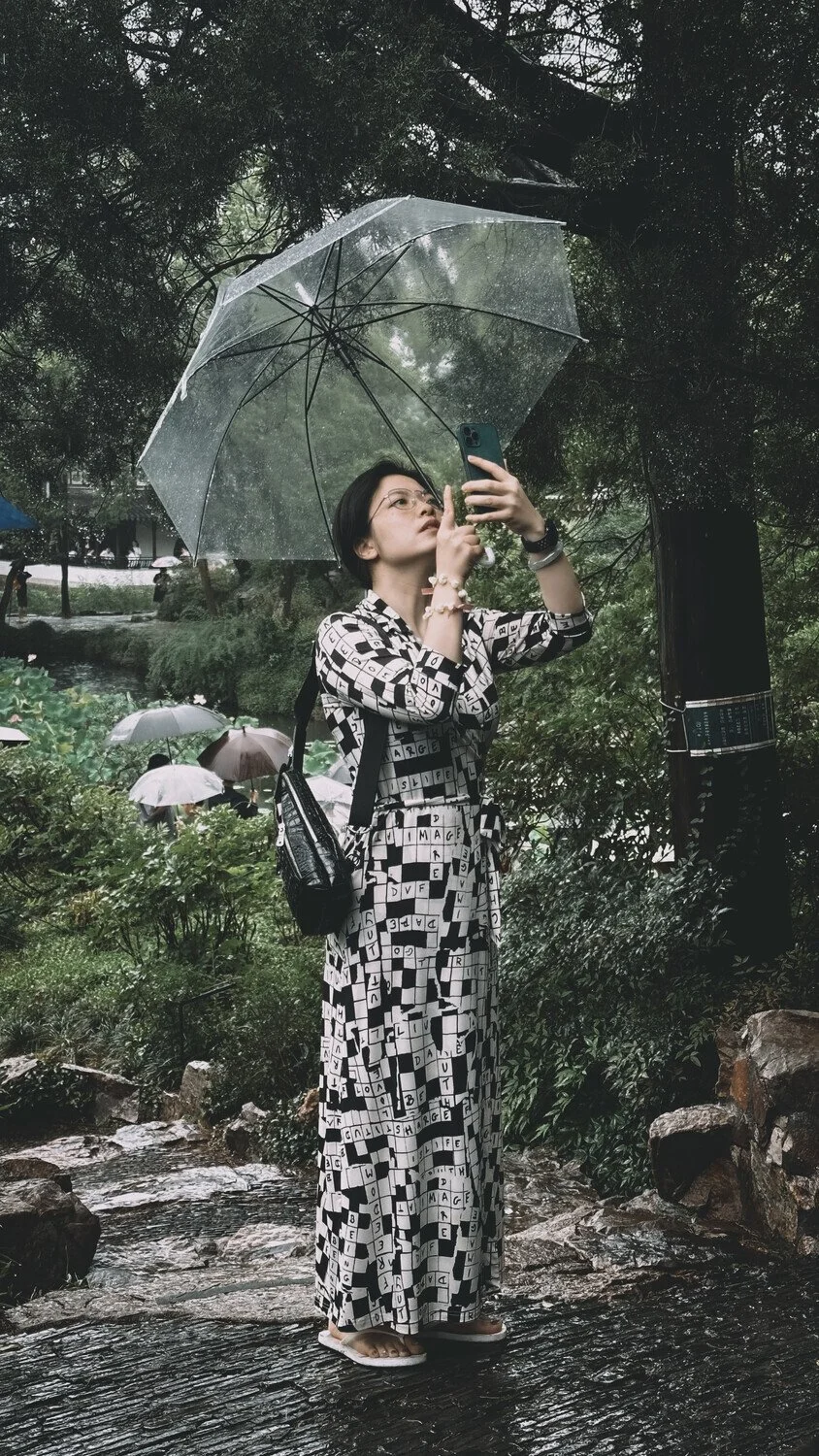
Very recently, I began a new collaborative project with Han Qin, a Chinese-born, New York-based artist, educator, and printmaker whose work explores identity, migration, and cultural memory through both digital and traditional mediums. We share a strong mutual interest in landscape, in the philosophical underpinnings of place, and in the possibilities of artist books as sites of dialogue. Despite these shared interests, we come from different linguistic and cultural frameworks, and that is precisely what makes this collaboration so exciting.
Now, to be clear: Han speaks English exceptionally well. But as we both know from experience, when it comes to discussing our personal art practices, our motivations, doubts, research methodologies, and philosophical orientations, it is always easier to think and speak in one's native tongue. Language is not just a tool for communication; it is where thinking happens.
So I set out to test something: could we use AI, specifically real-time translation tools like ChatGPT's voice and transcription capabilities, to enable a meaningful, flowing, bilingual conversation about art-making, research, and cultural context? Not just to understand each other's words, but to open a shared creative space?
This essay is not about the collaborative work itself, though that is already taking shape beautifully, but rather about how this conversation is even possible. It is about the use of AI as a bridge: not just to carry meaning across languages, but to support an equal, attentive, and reflective exchange between two artists. It is about slowing down, letting ideas land, and discovering whether this kind of technology can do more than translate. Can it translate understanding?
What follows is a reflection on how we are using AI to facilitate creative exchange across English and Mandarin, the benefits and limits of this approach, and what it might mean for other artists, curators, and researchers navigating multilingual work.
We are not claiming perfection. But we are exploring possibility, and in that, there is something quite powerful.
What Normally Gets Lost in Translation
At first glance, translation seems like a technical problem: move meaning from Language A to Language B.
But anyone who has worked in art, writing, or research knows that language is not just a container for meaning. It is where meaning is formed.
This becomes even more pronounced in creative practice, where we do not just describe ideas; we feel our way through them, often out loud, and often with someone we trust.
When two artists collaborate, the language they use does not just transmit thoughts. It builds the creative space between them. It scaffolds trust. It gives shape to intuition. It helps you fumble your way into new understanding: those moments of sudden clarity, the gentle corrections, the tangents that unexpectedly loop back into the work.
When that process is disrupted by language difficulty, it does not just slow things down. It flattens them.
You speak more simply. You drop nuance. You do not take the conversational risks you might take in your mother tongue. Often, you say less, not because you have less to say, but because you are not sure the tools will catch you.
In traditional multilingual collaborations, this can create a real imbalance. The person more fluent in the dominant language ends up leading the dialogue, not because their ideas are better, but because it is easier for them to express them. The other artist becomes cautious, defers, or pulls back.
That was not something we wanted for this collaboration.
Han speaks excellent English. And I have worked internationally for decades. But we both recognised that the richest conversations, the ones about motivation, doubt, intuition, and risk, are easier to have in your native language. You can let your guard down. You can reach further. You can speak the way you think. That is what we wanted for each other.
So we turned to AI, not as a gimmick, but as an experiment.
Could real-time AI translation help us hold space for a more equitable, intimate, reflective conversation? Could it allow us to stay with complexity, to stay with the work, even across two languages?
At first, the results were surprising, in a good way.
The AI did not just help us understand each other's words. It helped us slow down. It created a rhythm: I would speak, pause, then Han would respond in Mandarin, and I would hear it translated. That rhythm became a structure, one that encouraged reflection, allowed silence, and helped us catch subtle gaps in understanding.
And yes, mistranslations happened. But they became entry points.
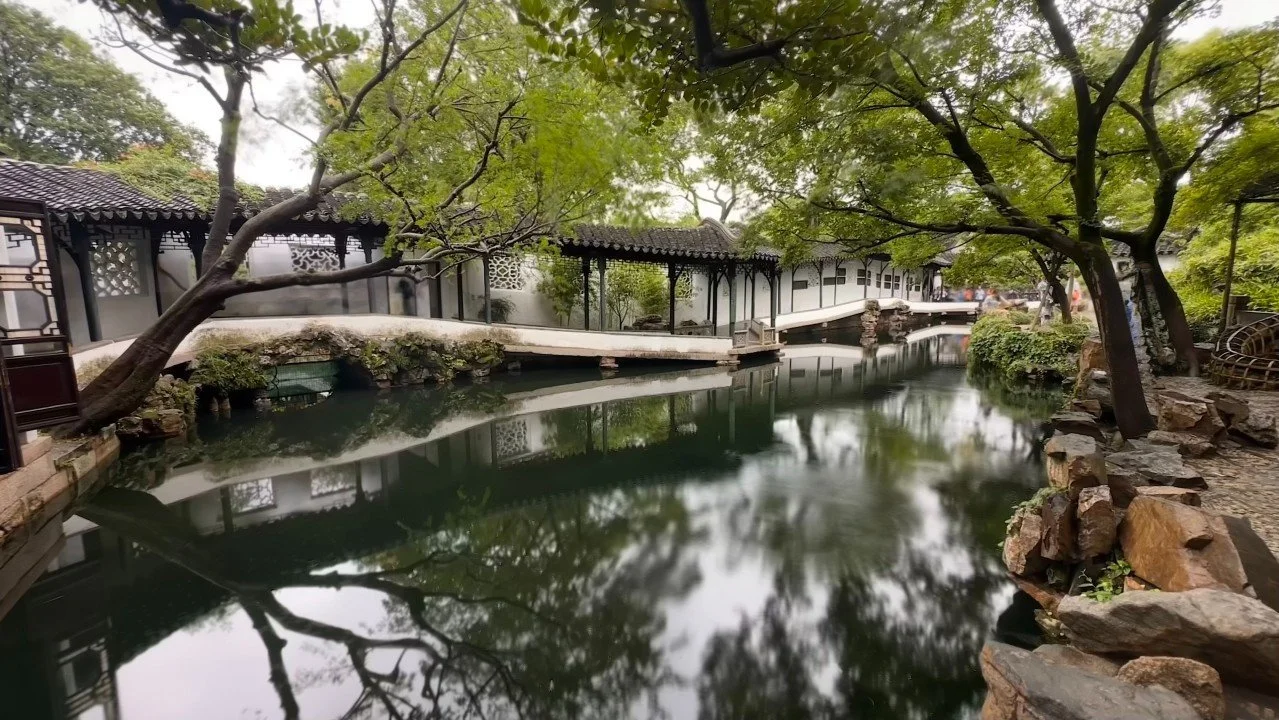
There was one moment I used the word sublime to describe the photographic feeling I had in the Suzhou garden. The AI translated it as magnificent. Technically accurate, emotionally flat.
That single moment opened a whole conversation, about stillness, about shanshui painting, about the Chinese concept of liú bái, the poetic void. The mistranslation did not block the work. It unlocked it.
That would not have happened with a human interpreter. We would not have stopped to ask why a word did not feel quite right. But because the AI was not perfect, we had to co-correct, and that co-correction became collaboration.
So yes, things still get lost in translation. But sometimes, something better gets found.
And maybe that is the quiet revelation here: AI did not just overcome the limits of language. It reframed them. It created slowness, presence, and attention, the very things collaboration needs.
Real-Time Translation in Practice: How We Used AI as a Live Creative Bridge
We did not come into this collaboration trying to solve a problem. We came in wanting to see if a different kind of dialogue was possible, one where each of us could speak in our own language and still arrive at a shared creative space. We knew what we were attempting: nuanced conversations about art, research, and cultural meaning. These are difficult enough in your native language. Attempting them across two languages, in real time, felt ambitious.
And it worked. Not because the AI translation was perfect, but because it enabled flow. That was the real surprise. It allowed us to speak freely, in full thoughts, even complex, layered ones with multiple ideas in play, and it kept up. The conversation did not fragment or stumble. There were occasional glitches, of course, but remarkably few. The technology was robust enough that we could trust it and stay present with each other.
Unlike many translation tools that reduce dialogue to sentence-by-sentence exchanges, this approach gave space for whole thinking. We did not need to simplify what we were saying. We could speak the way we actually think, with tangents, metaphor, abstraction, and emotional weight. It was only necessary to take turns and allow each other to finish before the translation came through. That was not a limitation. It became a structural strength, building attentiveness and rhythm into the exchange.
The AI model we began with was OpenAI's advanced voice mode. It felt almost like a quiet third person in the room, not just translating, but gently shaping the rhythm, occasionally summarising lightly, and doing so with a tone that felt surprisingly human. It never editorialised, but it did carry an intuitive sense of where the conversation was going. Later, due to the length of our session, we transitioned to the basic voice model. This model was more mechanical, more literal, but still excellent. Crucially, the shift in model did not interrupt or diminish our dialogue. The flow continued. The trust remained. In fact, the contrast between the two systems became another layer of the experience rather than a disruption.
One of the richest early exchanges we had was around the idea of "dwelling." I described how I want my photographs to be entered, not just looked at, but lived in, even for a moment. The AI translated "dwell" into a more practical term: "to live" or "to stay." It was not incorrect, but it nudged the conversation in a different direction. Han responded by sharing her own understanding of the concept, rooted in the Suzhou gardens. For her, "dwelling" was not just spatial; it was philosophical. The garden was not merely a physical environment but a way of inhabiting thought. That moment of subtle divergence led to a deeper convergence, not because the translation failed, but because it gave us something to press into.
It is worth being clear: in most cases, the AI did not need correction. It was not only sufficient; it was genuinely nuanced. Rephrasing was rare. The few times we did stop to clarify, it did not feel like a breakdown. It felt generative, an opportunity to look at an idea more closely, to ask: what do you really mean by that?
It surprised us how well it worked, not because the translations were perfect, but because the process invited a different kind of listening. What made this experience distinctive was how easily we could speak long, complex statements with multiple ideas in play, and the system handled them without hesitation. The flow of thought was preserved, and the pace of the exchange was governed only by the need to respect each other's space to speak.
More than anything, the AI helped maintain a kind of equity in the collaboration. Neither of us had to translate for the other. Neither of us had to hold back. Neither of us was at a linguistic advantage. That balance made the conversation more open, more generous, and ultimately more sustainable.
This was not about outsourcing communication. It was about designing a space where communication could be shared. And that space, mediated by AI, turned out to be remarkably human.
Cultural Exchange as a Generative Force: What Was Revealed, Not Just Translated
One of the most powerful aspects of this collaboration has been discovering how our different ways of thinking and making do not compete; they interrogate and enrich one another. And the technology we used, real-time AI translation, did not just enable that process. It shaped it. Not by making things easier, but by holding space long enough for meaningful exchange to happen across difference.
We did not begin this project with a unified method or a neat shared brief. In fact, what makes this process compelling is how differently we each enter the work. My own practice as a photographer is intuitive. I begin by making. I respond in the moment. I walk through the world, through places like the Suzhou gardens, and I let the image form first, unfiltered. The camera captures what pulls at me: space, light, rhythm, atmosphere. The deeper thinking comes after. The reflection is layered in later, through processing, refining, building.
Han's approach, by contrast, is structured around considered engagement. She begins by experiencing the space, but then actively investigates what that experience means. She reads, researches, traces the philosophical and historical structures that shape what she has seen and felt. Her response grows out of that inquiry. Where I reach for form first and interrogate it later, Han begins with conceptual scaffolding and allows the form to emerge in alignment with that thinking.
This distinction, intuitive construction versus reflective excavation, could easily sit in tension. But in our case, it became a source of resonance. And the AI helped make that dialogue possible in real time. We were not flattening each other's methods into a shared system. We were exposing them to each other, watching how they might connect, mirror, or even contradict, and allowing that difference to remain generative.
Take our conversation around the Suzhou gardens as an example. I was drawn immediately to their visual composition, to how they offer up fragmented, shifting scenes as you walk through. For me, it was photographic from the start: the geometry of framing, the softness of filtered light, the embedded sense of movement through stillness. I began composing images on site, almost instinctively, creating work before I had fully understood why.
Han, on the other hand, began by asking: what kind of space is this? She did not rush to produce. She took in the garden as a lived philosophy, a spatial manifestation of values. She reflected on the garden's builders, the inscriptions, the cultural roots. She brought forward ideas from classical Chinese aesthetics, from architecture, from poetic inscription, and let those ideas guide her creative path. For her, making began only once she had entered that world intellectually.
Neither approach was superior. What mattered was that the AI gave us the ability to speak clearly and fully from within our own practices, in our own languages, without having to reduce or adjust our process to fit the other. That created a space not of compromise, but of co-existence. And that co-existence began informing the work.
What emerged was not simply an artwork about gardens. It was a dialogue about attention, about where we start, about how culture, language, and practice shape the route we take towards meaning, and how those routes can be honoured without collapsing them into sameness.
The AI did not create this understanding. But it made it possible. It kept the conversation fluent, but not fast. Responsive, but not rushed. And by doing so, it allowed us to stay inside our distinct modes of thinking long enough for deeper connections to take root.
It is often said that cultural exchange depends on finding common ground. But perhaps the more honest version, and the more useful one, is finding ground that holds difference without turning it into opposition. That is what this process offered: a working method that let us sit alongside each other, not to agree, but to listen and respond. And in that, we found something better than consensus. We found resonance.
Limits and Ethics: Where AI Supported Us, and Where We Still Led
For all the strengths of AI-assisted collaboration, it is important to acknowledge its limits, not as flaws, but as structural realities. We did not come into this process expecting perfection. What we were testing was whether the system was good enough to support real, reflective, emotionally honest dialogue. And overwhelmingly, it was. But it still asked something of us.
AI translation, even at its most advanced, is not neutral. It is trained on dominant linguistic patterns. It sometimes prioritises fluency over fidelity. It can soften edges, round off the strange, and occasionally flatten ambiguity into certainty. These are not failures but characteristics. And once you understand them, you can work around them, or even use them generatively.
We became attuned to this early on. At times, we noticed the advanced voice model summarised lightly, especially when we spoke in layered or poetic language. Not incorrectly; in fact, sometimes with an uncanny intuition. It felt almost like a quiet third presence in the room, shaping the rhythm of the conversation without interrupting it. It was surprisingly effective. But we remained aware that the AI was not simply passing our words through unchanged. It was interpreting structure, and occasionally tone.
Later, when we switched to the basic model, the shift was noticeable. It was more literal, more mechanical. The personality disappeared, replaced by something more utilitarian. And yet the conversation did not suffer. In some ways, it clarified. The change in model did not distort or interrupt what we were doing. It simply altered the flavour of the mediation.
We never mistook the AI for a collaborator. It was a channel, a conduit. And like any channel, it had its frequency. The responsibility to listen, to correct, to clarify remained ours. We were not passive recipients of its output. We were active interpreters of each other's thoughts, using the tool to keep the connection live.
This speaks to a broader ethical point: AI is not a shortcut for understanding. It does not replace effort. It supports it. The best moments in our process came not when the technology was invisible, but when we were aware of it, when we leaned in, when we listened harder, when we treated a clumsy phrase or an imperfect rendering as an invitation to reflect further.
And that effort matters, especially in artistic and cross-cultural contexts, where meaning is rarely direct. Where tone carries weight. Where silence speaks. Where a single word might carry years of lived experience.
We knew from the outset that this kind of work, built on trust, on difference, on shared vulnerability, could not be outsourced to an algorithm. What we were asking of the AI was not to understand us. It was to stay out of the way enough for us to understand each other.
That is the real ethical horizon here. Not whether the tool is perfect, but whether it creates the conditions for real thinking to happen. Whether it allows for respect, for balance, for depth. Whether it invites slowness without forcing simplicity.
In our case, it did.
And more than that, it helped preserve something rare: a feeling that this collaboration was not about compromise, but about invitation, a space where we could both be fully present, fully complex, fully ourselves, across language, across practice, and across time zones.
Not because the AI solved that for us. But because it did not get in the
A Model for Future Collaboration: Rethinking How Artists, Curators, and Institutions Work Across Language
What we have begun to test, in this first meeting, is not just a way of talking across language, but a new structure for collaboration itself. It is early days. The work is still ahead of us. But already, this process has shown us what is possible, and what might be scalable for others working across cultural and linguistic boundaries.
We are not claiming to have invented a new method. What we are doing is combining accessible tools, real-time AI voice translation, with a shared commitment to depth, nuance, and equity in the way we speak and think together. The result is not a shortcut or an optimisation. It is something slower and more careful. And that care makes all the difference.
What surprised us was not that it worked technically, though it did, and impressively well. What struck us was that it worked structurally. It allowed us to stay within our own languages, our own natural rhythms of thought, without having to compromise clarity or presence. The technology adapted to us, not the other way around. That is rare in cross-linguistic exchange.
This is especially relevant in the art world, where the dominant language of international discourse, usually English, can subtly skew the dynamics of dialogue. The person more fluent in that language often ends up leading. The other defers, simplifies, or quietly withdraws. That is not collaboration. That is asymmetry.
What we are trying, and will continue to test as this project unfolds, is a more balanced model. One in which both artists speak fully and freely in their mother tongue, and let AI carry the meaning across. Not perfectly. Not frictionlessly. But functionally enough to preserve nuance, complexity, and difference. And that difference is not a problem to solve; it is the point.
This way of working could be useful not only for artists, but for curators, scholars, and cultural organisations looking to genuinely support intercultural exchange. We are not suggesting that AI replaces careful human translation in all settings. But for ongoing creative dialogue, for the kind of back-and-forth thinking that deep collaboration requires, this approach lowers the threshold for entry. It creates more room for people to show up as they are, not just as they can be understood.
It also reframes translation as something active and ongoing, not static or transactional. In our case, we have come to see the AI not as a device, but as part of the conversational environment, a mechanism that shapes timing, attention, and pacing in a way that deepens rather than dilutes the work. And because we are aware of its limits, of where it flattens or oversimplifies, we step in when needed. But not often. Mostly, we are free to speak.
And we will continue. This first conversation, across languages, across disciplines, across two very different ways of approaching art-making, is the beginning of something we believe can grow. The book we are planning, the dialogue we are shaping, and the structure we are testing all emerge from the same principle: that shared thinking across difference is not only possible. It is necessary. And now, more than ever, there are tools to support it.
We do not see AI as solving a communication problem. We see it as helping hold a space open, long enough, gently enough, and consistently enough, for something meaningful to be built between two people who might otherwise never have spoken this way.
That possibility feels worth pursuing.
Holding Space, Extending Possibility
This first conversation marked more than the beginning of a project. It marked a shift in how we understand collaboration itself. By using AI to hold open a space for nuanced, bilingual exchange, we have started building a working model that prioritises balance, attentiveness, and cultural depth.
And we are just getting started.
While we have been using ChatGPT for this early phase, we are also interested in exploring Chinese-developed models like DeepSeek as part of the ongoing process, not only to test what they offer technically, but to see how different linguistic and cultural architectures might shape the rhythm and tone of future conversations. That, too, is part of the collaboration: allowing the tools themselves to become part of the cultural dialogue.
This is not about efficiency or novelty. It is about building shared understanding, not by erasing difference, but by respecting it. And if AI can help us do that with greater care and clarity, then it becomes more than a tool. It becomes part of the practice.
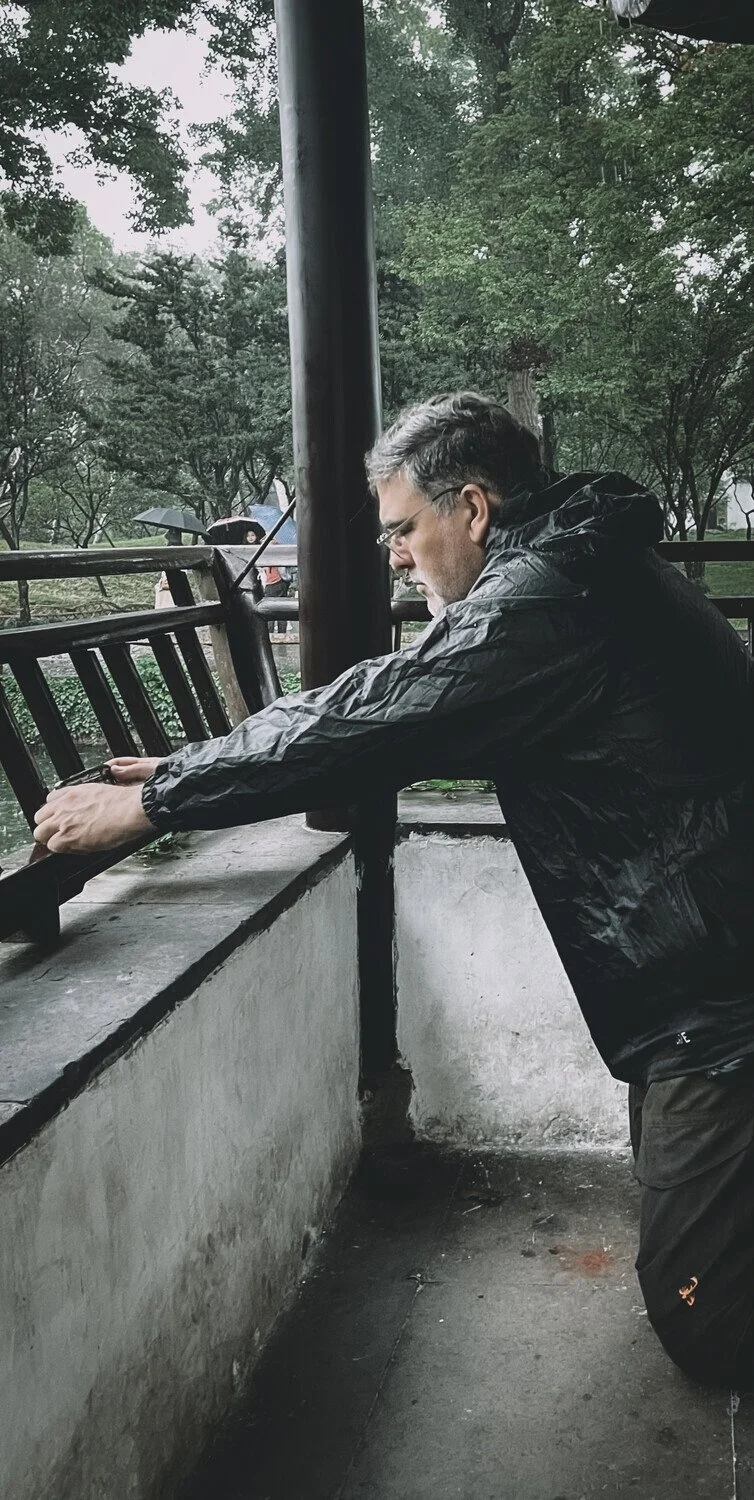
Bronisalw Kozka
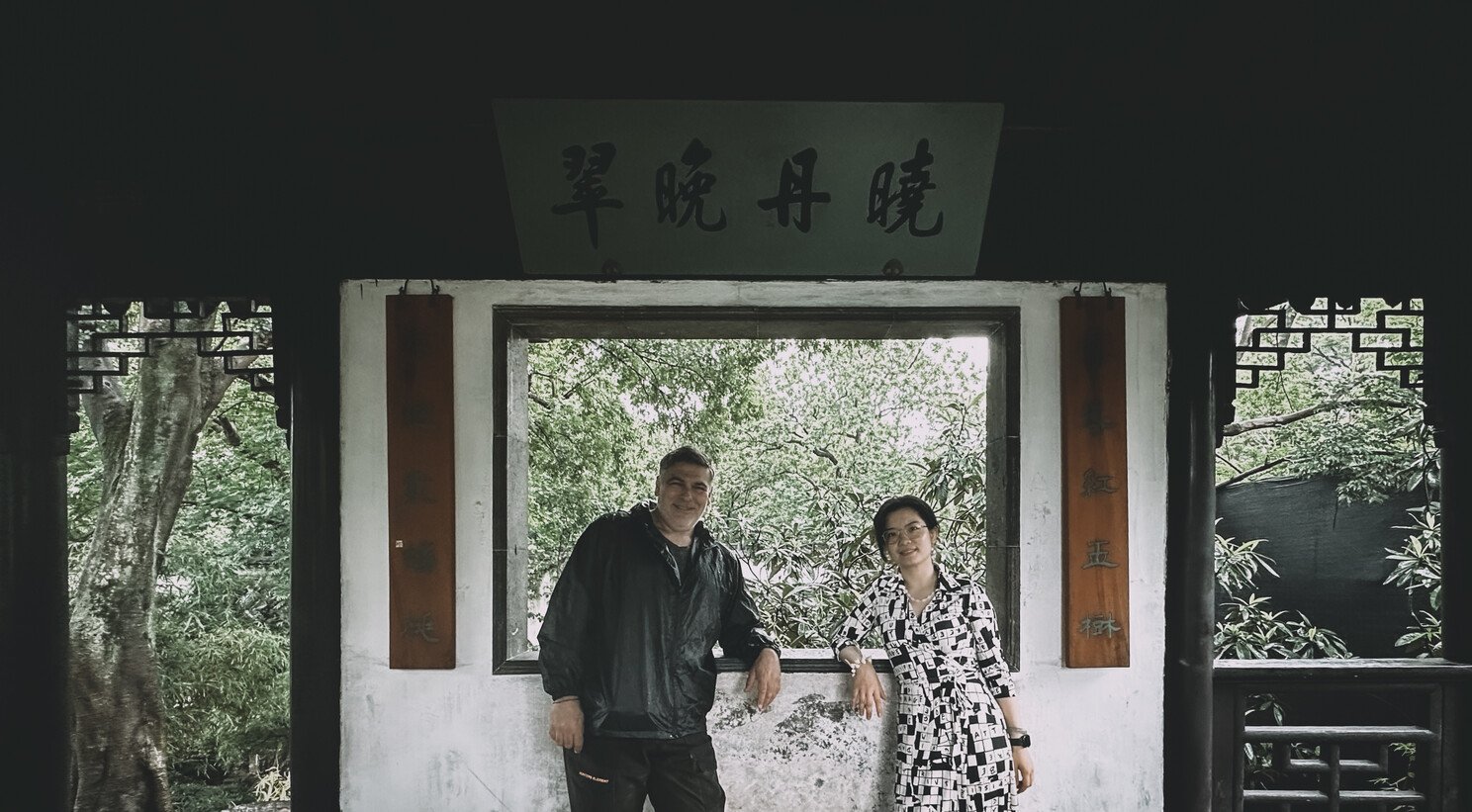
Han Qin is a Chinese-born artist and printmaker based between New York and Hangzhou. Her work bridges digital and traditional media to explore migration, identity, and cultural memory, often drawing on her own transnational experience.
Bronisław (Bronek) Kozka is an Australian artist, photographer, and academic whose practice explores memory, perception, and the sublime through a digitally mediated lens. His work blends advanced photographic techniques with AI, often responding to natural and built environments.