Politics of Violence
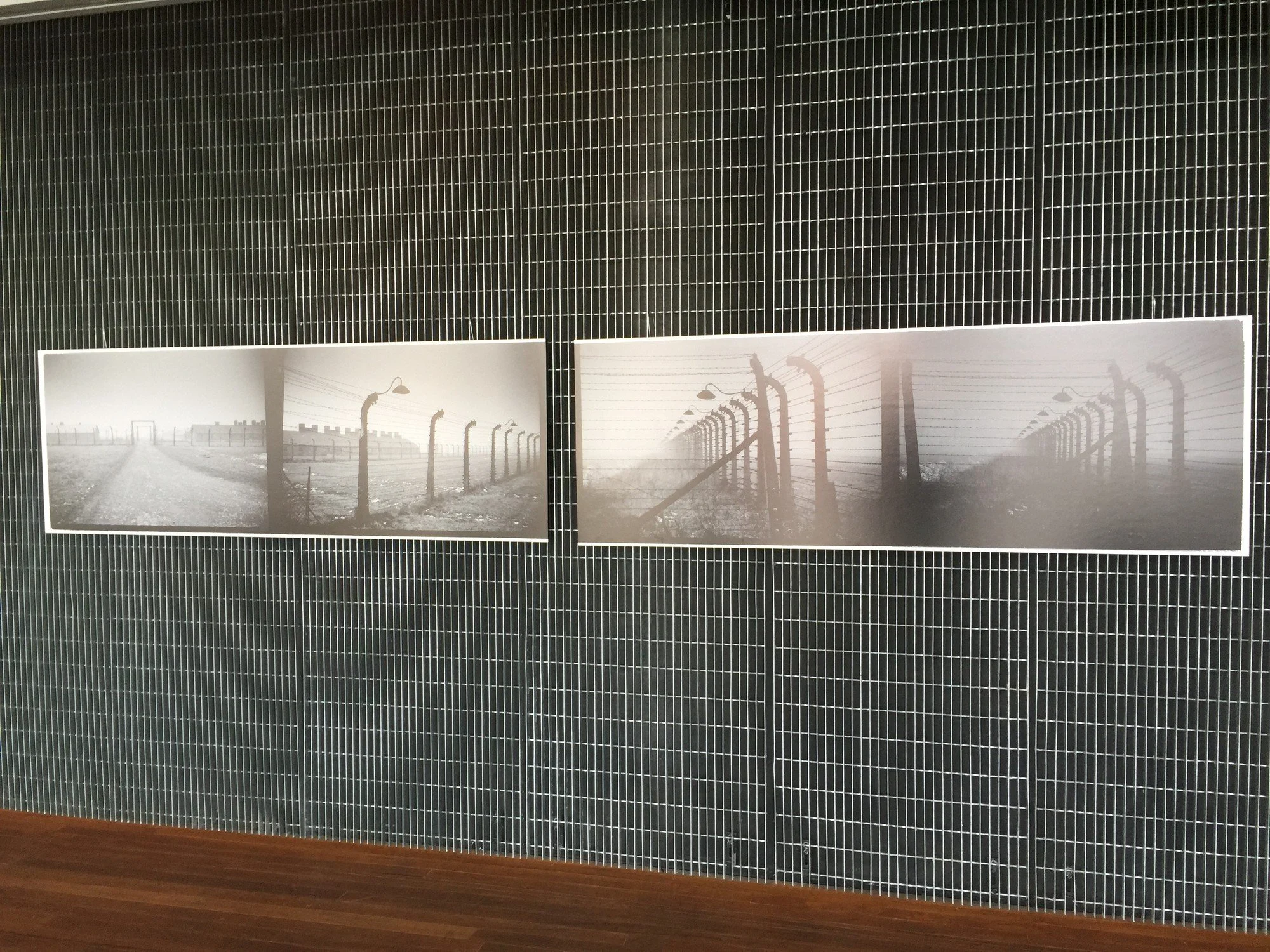
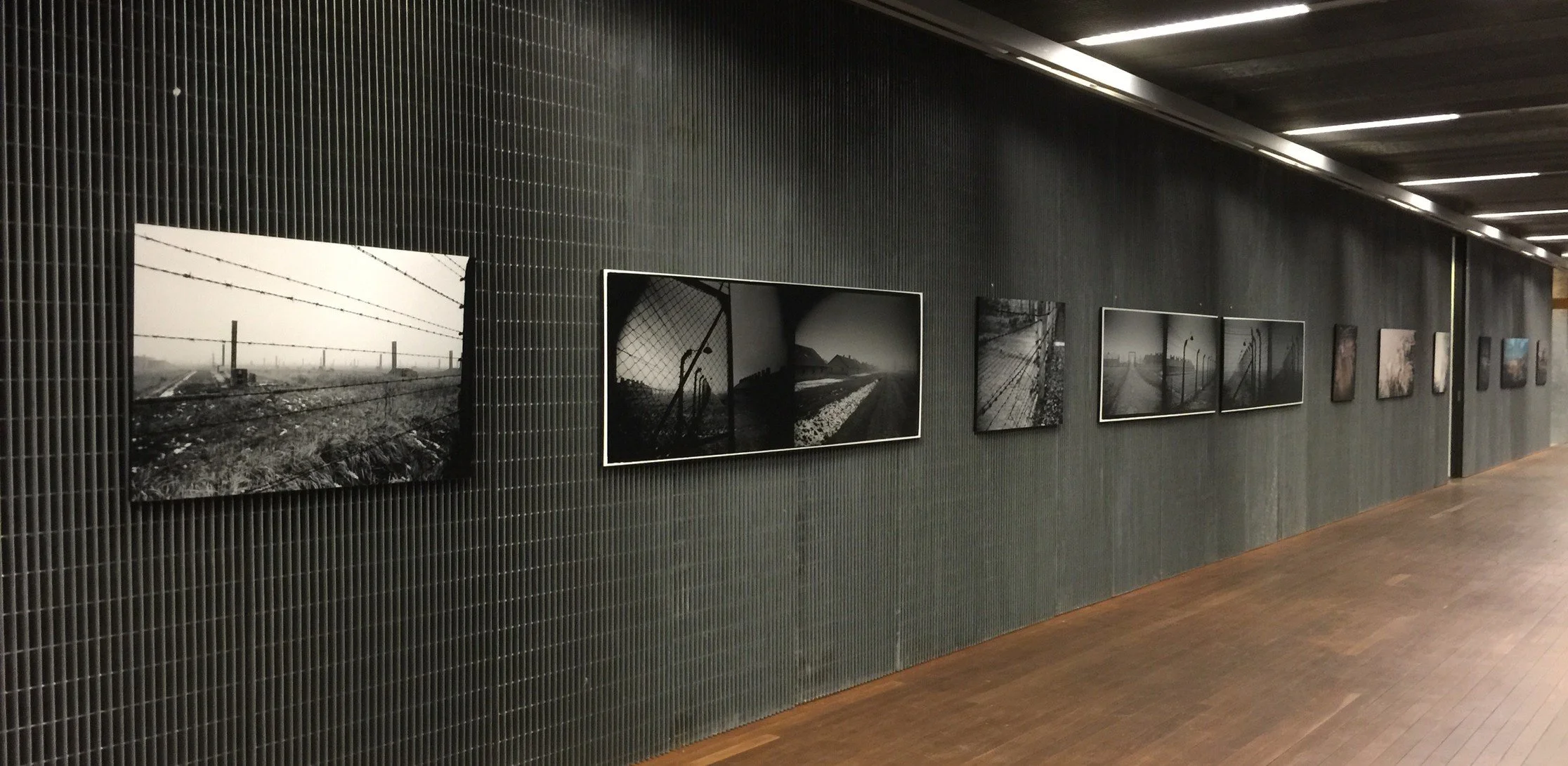
To coincide with the launch of this special edition journal; The Politics of Remembering Violence, Communication, Politics & Culture, Vol. 48. I created a exhibition of photography. The exhibition looked at three separate bodies of work that related to the topic. The exhibition was held at RMIT's Design Hub, September 2015. The following essay is by Prof. Julian Goddard, Head of the School of Art.
When words become unclear, I shall focus with photographs. When images become inadequate, I shall be content with silence. Ansel Adams
Is it possible to make sense of war? Something so horrific but all too real in the lives of millions. Why do we do war? How best to grapple with the understanding of it? The visual record of wars across centuries is strewn with attempts at constructing emotional affect that hope to produce some sort of perspective by which we might approach how to deal with all the complexities and legacies of war. Bronek Kozka’s photographs show us some of the many ways we have tried to picture the emotional memory of war. They are images of images (photographs, dioramas, re-enactments and reconstructed places) designed to produce emotional responses that hopefully give solace and meaning to the tragedy of all wars; images that construct an emotional history of war and its concomitant violence.
Kozka’s photographs document a set of metonyms – images that stand for something far greater their intrinsic reading. The metonymic power of visual images lie in their capacity to move beyond spoken and written language to stand for an emotional experience that is corporal and embodied. Experiences that are hard to fathom and challenge comprehension.
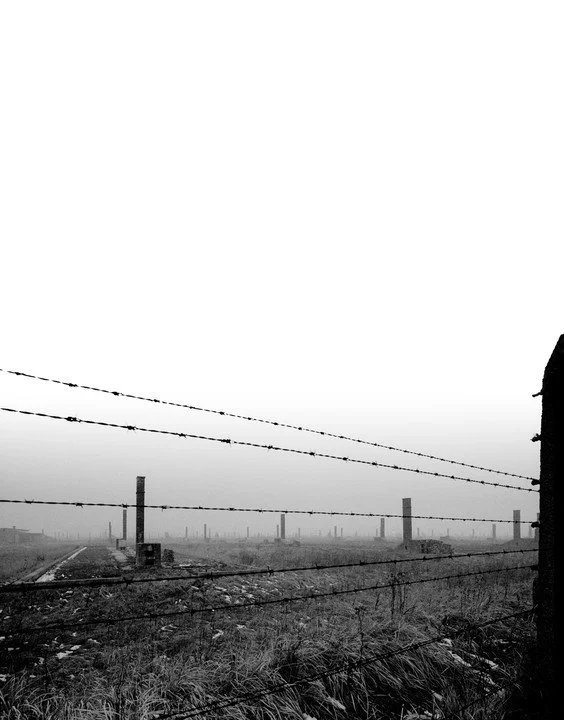
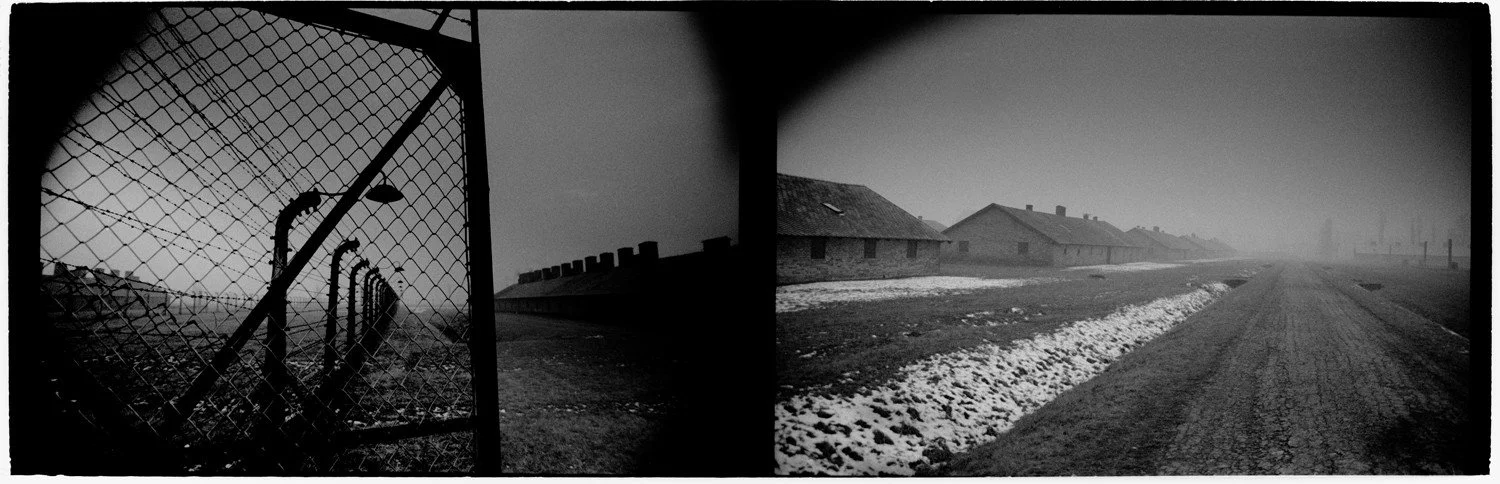
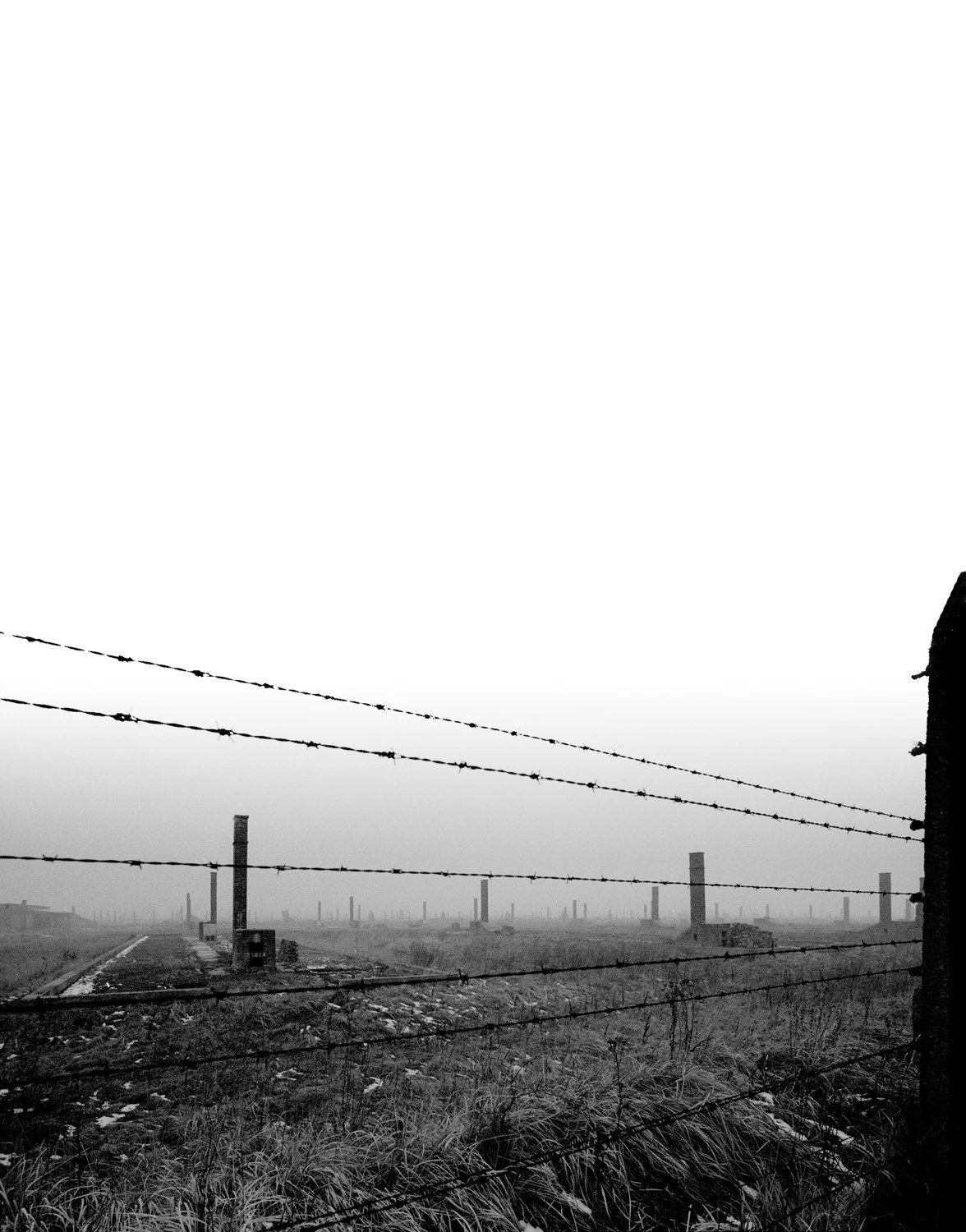
The fabric of the twentieth century includes one of the most unspeakable events of modern culture: The Holocaust (1941-1945) - the industrialised killing of some eleven million individuals, including more than six million Jewish people. By far the most powerful images in this exhibition are those of the remnants of the Auschwitz concentration and extermination camp in Poland, where over one million people were murdered. Kozka’s images, taken at the camp that is now a museum, evoke the unimaginable horror of a history that is almost incomprehensible. These panoramas successfully reconstruct the way in which this place now exists as a memory (nightmare) - a real place that stands as a meta-symbol for atrocity, insanity and Fascism. The metonymic value of this museum is itself hard to comprehend because of what it represents, however if it did not continue to operate with such symbolic force we would be in danger of loosing that memory and put ourselves in even greater danger of repeating what happened at Auschwitz. Indeed these two large panoramas reconstruct the physical experience of visiting the camp through the clever arrangement of various lines of sight that build a set of perspectives that evoke the mad logic of the site.
The pictorial depiction of historical time as a receding perspective is a well-used device in visual culture. Similar to Anselm Kiefer, Kozka’s Auschwitz panoramas use perspective effectively to signal a particularly nasty history. The photographs move us ‘back in time’ through elaborate sightlines pushing our eyes into the background of the images with ever darkening light. The depth of this space is elusive and threatening when understood as a symbol of the atrocious purpose of this space. The variable perspectives in each image also compound the sense of incomprehensibility that confronts us when we try to reconcile the history of this place with its reality. How could such a place be built? How could such an idea have been made real? The answers aren’t easy but they need to be considered.
Similarly the subtle tonal depths of these images compound our experience of the historical tragedy and evil that needs confronting. These dark images are much more than rhetorical as they remind us that the Holocaust was an idea before it was made real. An idea hatched in the dark spaces of the mind of the twentieth century – sinister thinking driven by fanatical ideology which has unfortunate resonance in contemporary twenty first century fundamentalism.
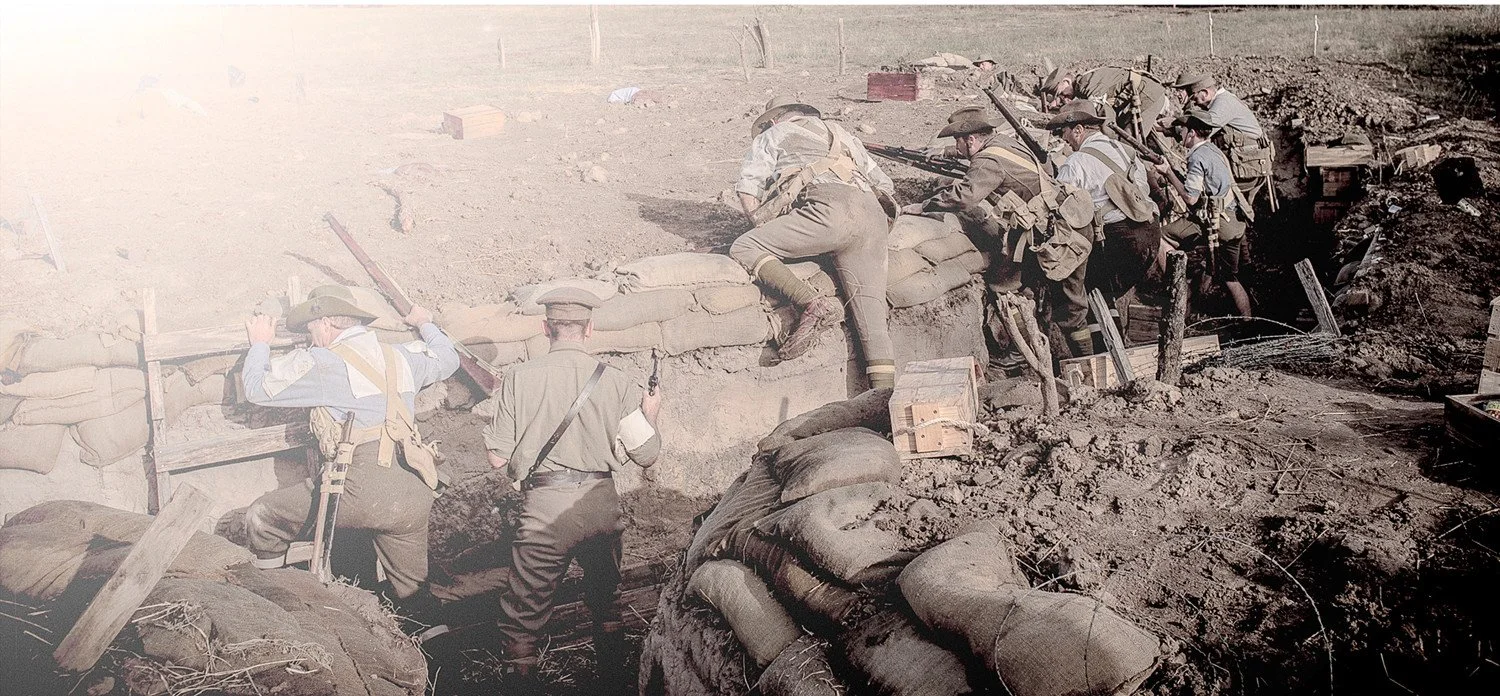
All wars have some sense of warped reasoning but for those left in the wake of such thinking and its consequences the aftermath can be hard to fathom. While the justification for Australia’s involvement in the First World War in Europe and the ‘Middle East’ might still be debated, undoubtedly what Australia is today has in some way been determined by that conflict. Gallipoli (a place) has become a metonym for an idea of Australia (mateship, equality, toughness) and continues to inspire hopes of what Australia might be. Kozka’s photographs of a re-enactment of a charge by Australian soldiers in the Battle of the Nek at Gallipoli (7 August 1915) chronicles the continuing reverence Australians hold for the sacrifices at Gallipoli. That 100 years on people choose to recreate this moment in history is something worth trying to understand. Why create a simulation of this moment? Does re-living (or more precisely re-dying) the historical moment somehow make history real? For those involved in the re-enactment there is surely a feeling of authenticating that moment in history with a view to ensuring ‘they will be remembered’ but the artifice of this simulation can never replace the reality of the horror of the real moment with its the fear and anger and other unknowable emotions experienced by all those men who went to their deaths. The Gallipoli campaign was a disaster in which so many Australians and New Zealanders died for very questionable reasons; yet in the contemporary Australian imagination these men died in the forging of an Australian nation.
How we imagine ourselves is crucial to how we act – but in the case of these simulated images of Australia at war a hundred years ago – it is how we ‘re-act’ that allows us to imagine who we might be. Kozka’s documentation of the re-enactment of the Battle of the Nek, when situated in the context of the other works in this exhibition, reveals another attempt at creating symbolic value based in the memory of war; or more precisely an attempt to create a memory in itself. As the men re-enact the moment they bring a visualisation to an event that could now only be imagined – there is no one still alive who actually experienced it. Even if this imagining is based on an historical record or account – it has to be a simulation that has none of the reality of the desperation of fear and the other emotions driving the real moment one hundred years ago. The recreation is mediated by the very nature of its fabrication. This is the trap of simulation as it can never be the real thing, but always a facsimile. In the re-enactment no one will actually die or be wounded because what Kozka is photographing is a history erased of fear and sanitised for the sake of the demand for contemporary meaning. In a critical sense Kozka’s images reveal the idealisation of this historical moment because of the demand to render it meaningful. The trouble is that by simplifying the Gallipoli campaign to a single image (men leaving the trenches in a charge) – all that was real melts into sentiment that can unfortunately all too easily be turned into nationalist iconography.
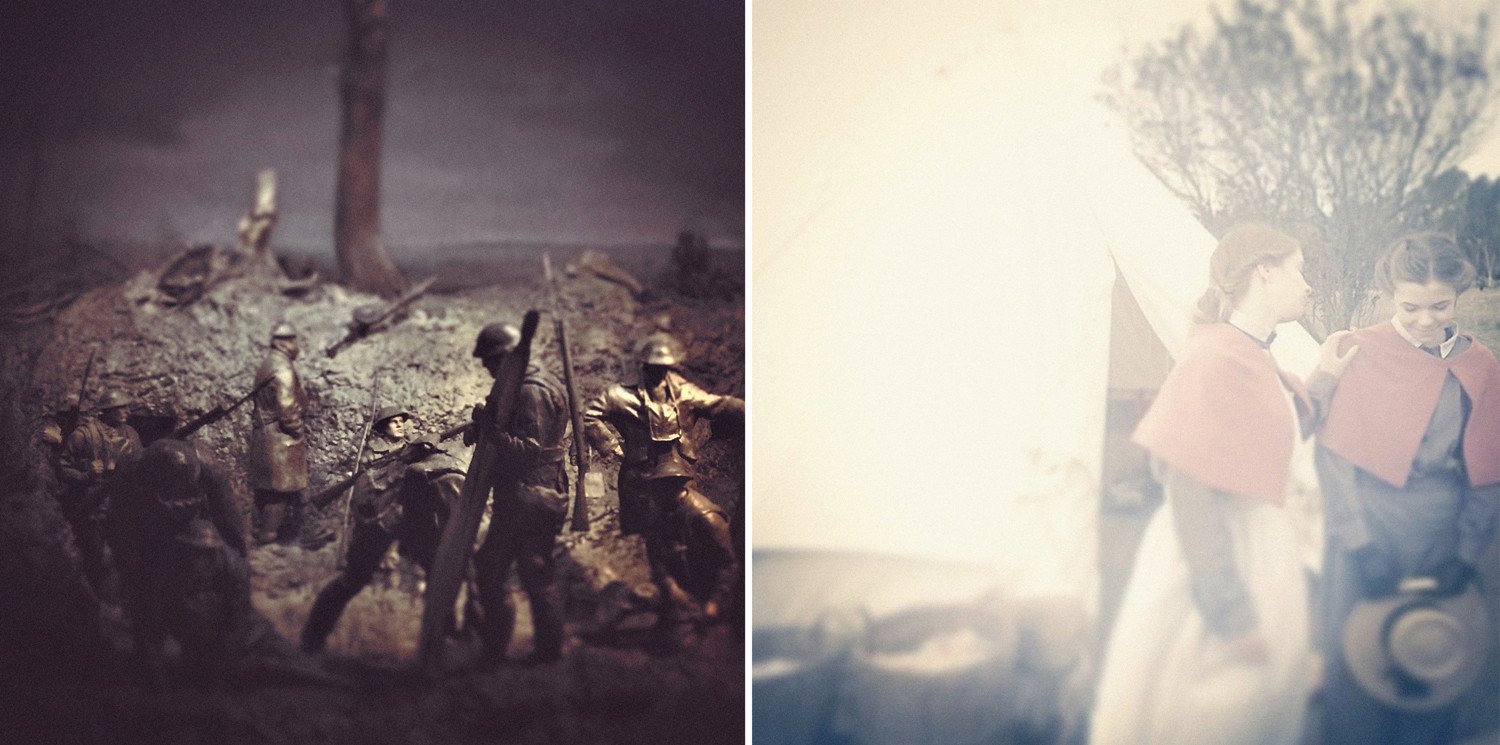
Re-enactment, Nurses, Lemnos is full of sentiment, an image captured by Kozka on the sidelines of the re-enactment of the Battle of the Nek. The two nurses are sharing a moment of friendship and solace. The figure on the left possibly consoling the girl on the right who has seemingly received some sort of bad news. The scene evokes the mateship of the women in a time of uncertainty and grief. They rely upon each other. But again this is a simulacrum – not a reality. While the image relays a scene that may well have been played out throughout World War 1, the artifice in the image drains it of any sense of authenticity. The pristine nature of the costumes, the exaggeration of the poses and the shear obviousness of the set-up all suck authenticity from the image. But this is exactly what Kozka manages to capture - an act of artifice, posing as sentiment. Sentimentality, in the way we understand it today, is a relatively new emotion – a feeling that began to be articulated in the Enlightenment as a way of constructing a relationship with memory and history. A way of remembering people and places that were gone or no longer accessible as a result of personal experiences affected by the onset of change synonymous with the beginnings of modernity. Kozka’s image subtlety critiques the manufacture of sentiment as part of the act of recreating history, revealing the way such history is redesigned and manipulated.

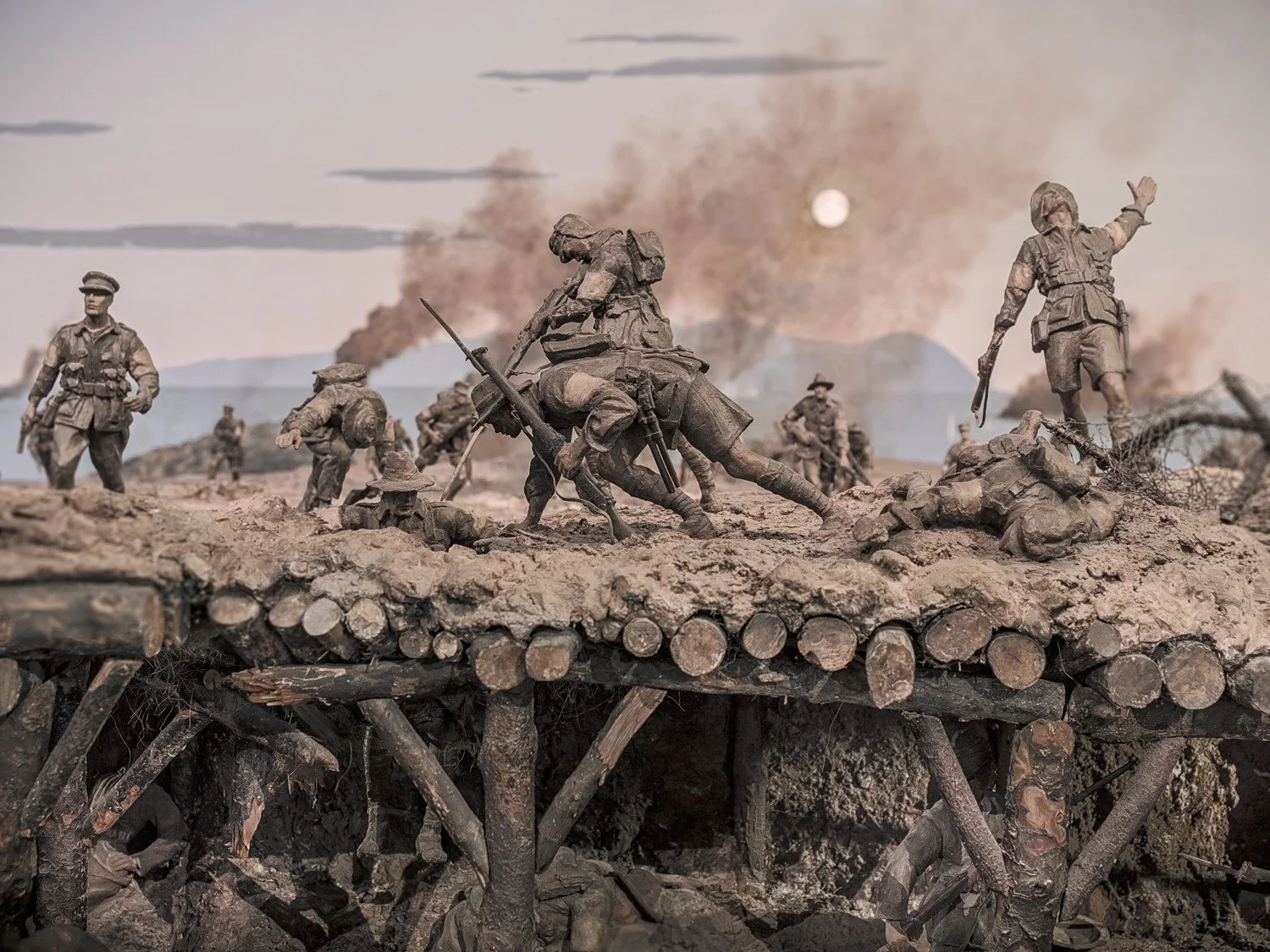
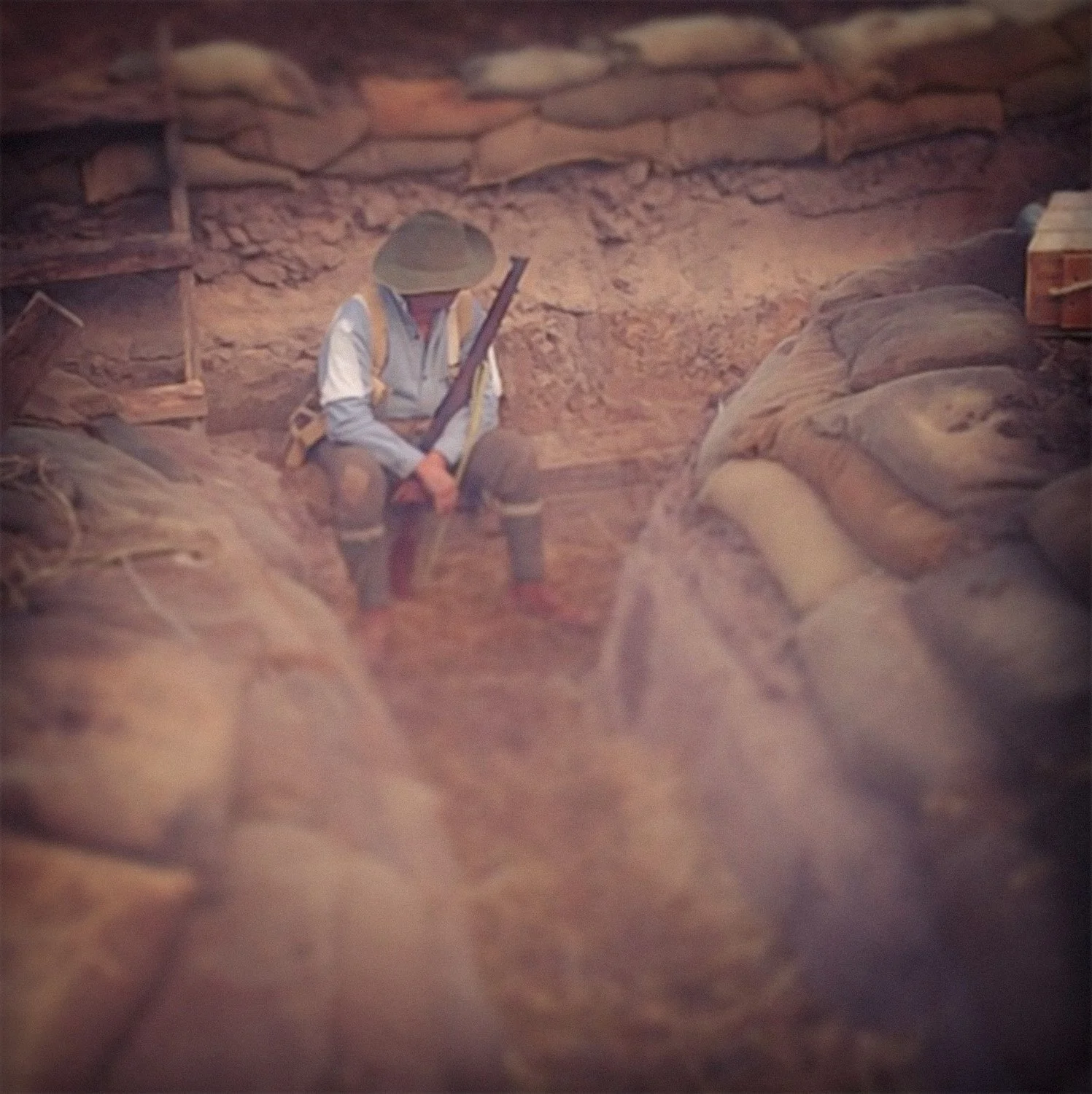
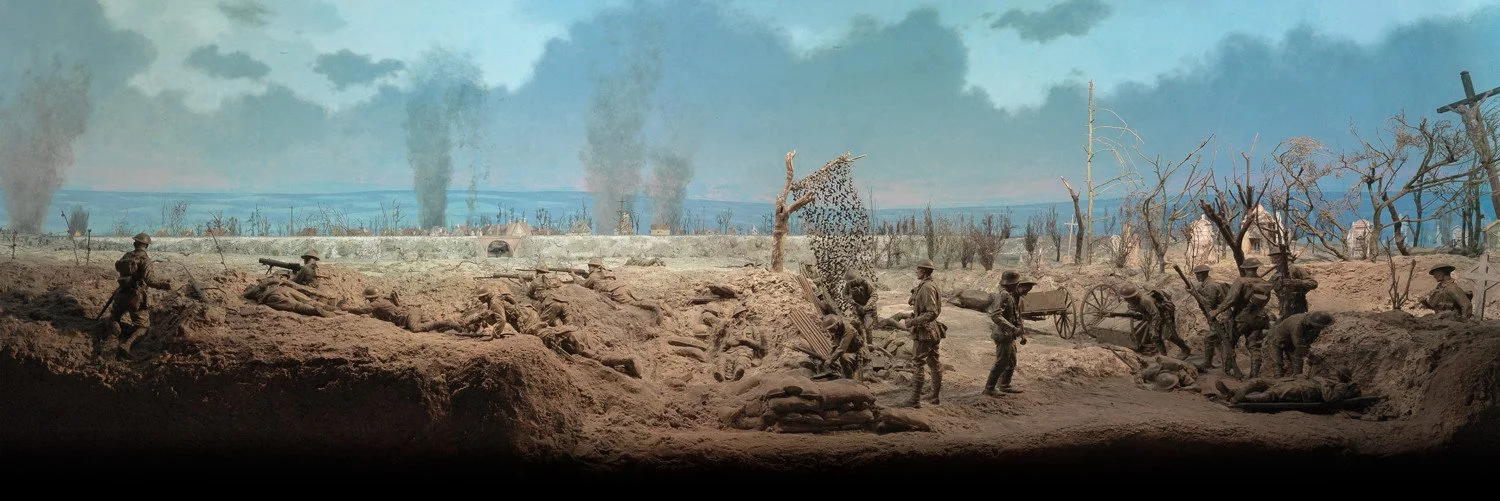
Originating in France in the early nineteenth century the first diorama was built by Louis Daguerre (better known as one of the inventors of photography) in 1822. The English use of the word began a year later when the first building for viewing dioramas was constructed to host Daguerre’s spectacle in London. Famous historical battle scenes such as Waterloo, the Battle of Plassey and the Battle of Crecy – all great British victories - quickly became part of the lexicon of images recreated through dioramas on view for an emerging modern English audience. Famous battles and other scenes from history played an important educational role as well as providing curiosity and entertainment. These 3D renditions of history would have been highly contrived with specific goals – not the least constructing British pride and identity. Similarly the wonderful dioramas at the Australia National War Museum in Canberra, depicting significant battles involving Australian troupes, are images that have become part of the Australian psyche.
Kozka’s photographs of the War Museum’s dioramas capture their historical drama emphasising their ability to model ‘how it happened’ and what it might have been like ‘to be there’. Yet as with the recreation of the Battle of the Nek these images are really about how that experience is constructed and the desire to manufacture history and how to render moments that are seminal in the building of national identity and collective self. The three photographs in this set make one consider why is it that images of war are so important in constructing this identity. Should they be lauded and celebrated (some of the dioramas are now treated historical artworks in themselves) or should they be seen for what they are - highly stylised recreations of history, devoid of the real substance of the horror, fear and insanity of war. They are images of industrial violence rendered as spectacle, meant to reinforce questionable notions of nationalism and the validation of war as a necessary part of the maturation of a nation. War and violence are synonymous, yet somehow some wars become part of the narrative of national character and while we can appreciate that history is written by the victorious or ‘winners’, such thinking must be tempered by scepticism if we are not to eulogise violence as a means to and end.
Kozka castes a critical eye over some of the recreations of particular moments from war that carry strong symbolic meaning. In capturing these symbolic recreations he emphasises how such recreations lend themselves to speak about war and violence in a manner that falls so far short of their horrific realities. By isolating and distancing these recreations through the critical power of the lens his images remind us that history is told and constructed through language which can only hope to simulate history but never be it.
Julian Goddard
Head of School, School of Art, RMIT