
My Artistic Methodology: FAQ
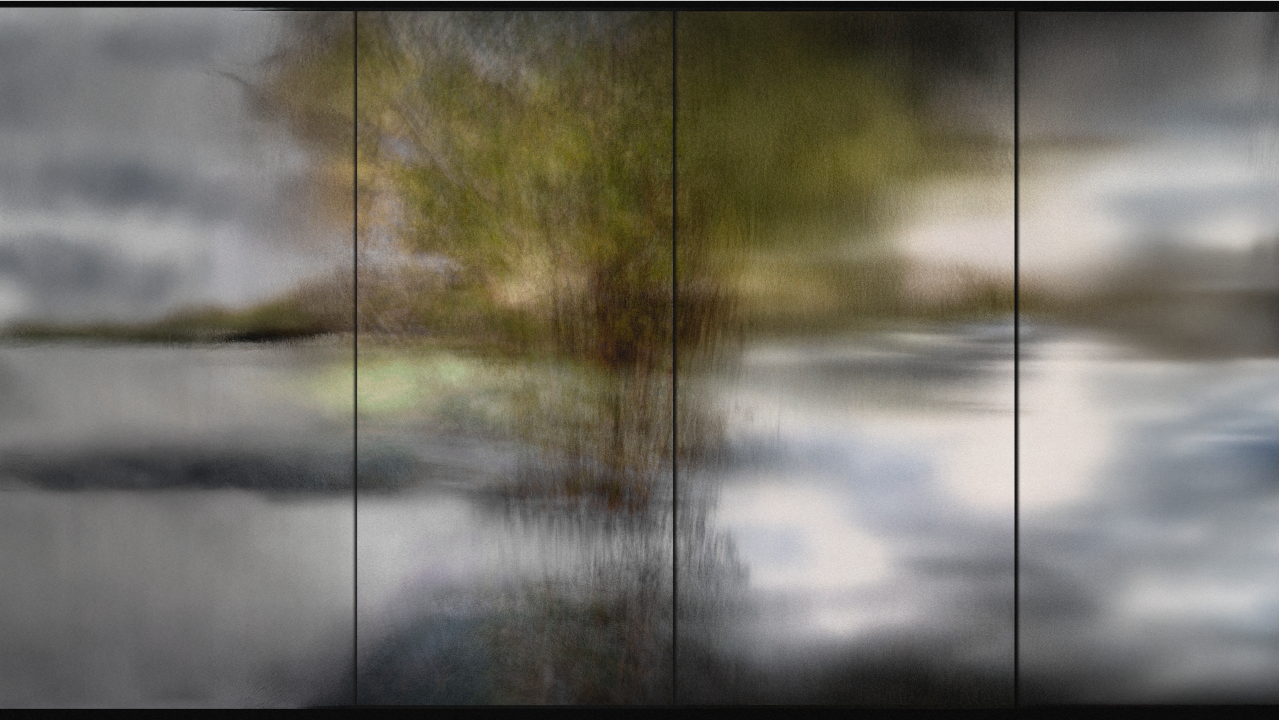
During my residency at the Swatch Art Peace Hotel in Shanghai, the numerous exhibitions and open studios I've participated in have shown me how valuable a clear explanation of my artistic approach can be for visitors. This FAQ is my first attempt to address the questions I'm most frequently asked when presenting my work. It's a work in progress, based on actual conversations with viewers and collectors.
My Method Making Approach
Q: What do you mean by "Method Making" in your artistic practice?
A: Method Making is my immersive approach to creating art that's similar to method acting in performance. Rather than simply documenting a landscape, I physically immerse myself in environments—hiking difficult terrain, experiencing weather conditions, and allowing my physical responses to become integral to the artwork. My bodily movements, breathing patterns, and even fatigue become part of the image-making process. This creates works that capture not just how a place looks, but how it feels to be present within it.
Q: How does your Method Making differ from traditional landscape photography?
A: Unlike traditional landscape photography that often prioritizes a single, perfect moment captured from a fixed position, my Method Making embraces time, movement, and physical engagement. I use real-time layering processes that incorporate my physical responses to the environment—from arm movements to breathing patterns to the effects of exhaustion from hiking. These bodily responses become visible elements in the final work, creating what critic Damian Smith calls "compressed realities" where time operates as an active feature within a still image.
Q: Why do you choose to work this way?
A: I believe that meaningful connection with landscapes requires more than visual observation—it demands physical presence and engagement. My Method Making approach allows me to develop a deeper relationship with the environments I photograph, capturing not just their visual qualities but their emotional and sensory dimensions. This methodology reflects my belief that in our increasingly digital world, we need art that reconnects us with natural environments through embodied experience rather than detached observation.
My Digital-Physical Integration
Q: How do you integrate digital and physical elements in your work?
A: My work exists at the intersection of physical experience and digital mediation. I begin with direct physical engagement with landscapes—hiking, scanning, and photographing—then use digital technologies like LiDAR scanning, AI processing, and layered exposures to create works that maintain the emotional truth of that physical experience. Rather than seeing digital and physical as separate realms, I view technology as a means to enhance and extend our connection with physical environments when used mindfully.
Q: What technologies do you use in your creative process?
A: I employ a range of technologies including LiDAR scanning, Gaussian splat scanning, AI image generation, and advanced digital composition. However, I approach these tools not as technical exercises but as extensions of my sensory engagement with landscapes. For example, when using Scaniverse or Polycam for 3D scanning, the physical act of moving through space becomes a performative element that shapes the final work. The technology captures not just the landscape but my movement and interaction with it.
Q: Does your work critique or celebrate digital technology?
A: My work does both simultaneously. I acknowledge the potential of digital technology to disconnect us from physical environments, but also explore how the same technology, when used mindfully, can create new pathways for environmental reconnection. My practice demonstrates how digital tools can enhance our perception and understanding of landscapes rather than replacing direct experience. This nuanced position reflects my belief that we need to develop more thoughtful relationships with technology in the Anthropocene era.
Shanshui Philosophy and Contemporary Technology
Q: What is shanshui philosophy and how does it influence your work?
A: Shanshui (山水) is a traditional Chinese approach to landscape art that translates literally as "mountain-water." My engagement with Asian art and culture spans over 25 years, beginning with my Master's research, my work with Lesley Kehoe Gallery, and my specialization in photographing Japanese lacquer and contemporary art. This deep connection has profoundly shaped my artistic vision.
Unlike Western landscape traditions that often emphasize realistic depiction, shanshui focuses on capturing the essence or spirit of landscapes through stylized representation. I integrate this philosophy with contemporary digital practices, seeking to evoke the emotional and spiritual qualities of environments rather than documenting them literally. My work, like traditional shanshui, invites viewers to mentally journey through landscapes rather than simply observe them.
I'm particularly influenced by the Tang Dynasty poet Wang Wei, whose poem "Zhong Nan Bie Ye" (终南别业) captures the essence of what I seek in my own work:
I walk until the water ends,And sit to watch clouds arise.
These lines embody the meditative engagement with landscape that drives my practice—the physical journey through space that culminates in quiet contemplation.
Q: How do you combine ancient shanshui principles with modern technology?
A: My approach merges the contemplative aspects of shanshui with the capabilities of digital technology. Traditional shanshui painters would immerse themselves in landscapes before returning to their studios to create works from memory and impression rather than direct observation. Similarly, I physically engage with environments, then use digital tools to create works that express the essence of that experience.
Over the past 15 years, my travels throughout China and involvement in photography festivals like Pingyao and Xposure have deepened this practice. The layering techniques in my digital process echo the ink wash methods of traditional shanshui, creating atmospheric depth and fluid boundaries that prioritize emotional truth over literal representation.
Q: Why is this fusion of ancient philosophy and modern technology significant?
A: This fusion represents a meaningful dialogue between Eastern and Western artistic traditions, as well as between historical approaches and contemporary practices. When I exhibited my Mountain Water series in China, the response was immediate and profound. Chinese photographers, artists, and academics instantly grasped the underpinnings of the work – the dialogue with shanshui painting, the layering of temporal and spatial perspectives, and the philosophical meditation on nature. These interactions were transformative for me.
By applying shanshui principles to digital art, I create work that counters the often detached, accelerated nature of digital media with contemplative engagement. This approach offers a potential pathway for maintaining deeper connections with natural environments in an increasingly digitized world, suggesting that new technologies can be aligned with ancient wisdom about our relationship with nature.
Environmental Connection Through Digital Mediation
Q: How does your work address environmental themes?
A: Environmental connection is central to my practice. My work explores how we might maintain meaningful relationships with natural environments in an era of climate change and increasing digitization. Rather than presenting pristine, idealized landscapes, my images often reveal the complex interplay between human presence and natural systems. The physical immersion required by my Method Making approach also emphasizes the importance of bodily engagement with environments—suggesting that environmental awareness begins with direct experience rather than abstract knowledge.
This theme is particularly evident in my "Hidden in Glass" collaboration with composer Ade Vincent, where we explore natural sanctuaries within urban environments across Australia's capital cities. Using glass as a metaphor for transparency and reflection, we combine advanced AI technology with traditional photography and field recordings to reveal these hidden spaces of environmental connection.
Q: What is the "digital sublime" in your work?
A: The digital sublime in my practice refers to the sense of awe, wonder, and sometimes disorientation that emerges from my digitally-mediated landscapes. Traditional notions of the sublime in art history often focused on nature's overwhelming power and scale. I extend this concept to explore how digital mediation can both enhance and complicate our experience of natural environments. My layered, sometimes deliberately glitched or fragmented images create a new kind of sublime experience that acknowledges both the power of nature and the pervasive influence of digital technology on how we perceive it.
Q: Do you see technology as a barrier or bridge to environmental connection?
A: I view technology as potentially both—its impact depends entirely on how we use it. My practice demonstrates how digital tools, when used with intention and physical engagement, can actually deepen our connection with environments rather than distancing us from them. The key distinction in my approach is that technology serves as a means of extending sensory experience rather than replacing it. This perspective offers a nuanced alternative to both uncritical techno-optimism and wholesale rejection of digital tools, suggesting instead a thoughtful integration that enhances our environmental awareness.
My current project, "Digital Rituals for Environmental Reconnection," directly addresses this question by creating immersive, interactive installations that use digital technology to facilitate deeper connections with natural environments. Through these digital rituals, I invite viewers to reconsider their relationship with both technology and nature.
Technical Process for General Audiences
Q: What is LiDAR scanning and how do you use it in your art?
A: LiDAR (Light Detection and Ranging) is a technology that uses laser pulses to create detailed 3D maps of environments. While it's commonly used in fields like archaeology and autonomous vehicles, I approach LiDAR scanning as a performative, meditative practice. As I move through a landscape with scanning equipment, my physical movements and choices shape the resulting data. The technology captures not just the environment but my interaction with it. I then process this data to create works that reveal both the physical structure of landscapes and my embodied experience of them.
Q: How do you incorporate AI into your artistic process?
A: I use AI not as a replacement for human creativity but as a collaborative tool that extends my artistic vision. I approach AI systems as "digital sediments" that have been trained on vast collections of human-created images. When I feed my own photographs into these systems, the AI responds with interpretations that sometimes reveal unexpected aspects or perspectives. I then engage in a dialogue with these AI-generated elements, selectively incorporating them into compositions that maintain my artistic intent while embracing the generative potential of the technology.
For example, in my "Hidden in Glass" project, I use Adobe's Photoshop Generative Fill alongside traditional photography, creating instantaneous layering techniques that reveal hidden natural sanctuaries within urban environments. The AI helps me uncover aspects of these environments that might otherwise remain invisible, while my artistic direction ensures the work maintains its integrity and purpose.
Q: What is a "splat scan" and how do you use it in your video work?
A: A splat scan (or Gaussian splat scanning) is a 3D scanning technique that I use to create immersive video experiences of landscapes. Unlike traditional video or drone footage, these scans capture environments from multiple angles and heights as I physically move through a space. For my current video triptych project, I'm creating SPLAT scans of three Victorian landscapes—coastal, alpine, and central Victoria—to capture the distinctive character of each environment.
The resulting videos offer viewers a unique perspective that combines the immersive quality of video with the exploratory nature of my physical engagement with the landscape. These works allow viewers to experience something closer to the actual sensation of moving through these environments than conventional photography or video could provide.
Q: What should I look for when viewing your work?
A: When experiencing my work, look beyond the immediate visual impact to notice the layers of time, movement, and physical engagement embedded in each piece. Pay attention to the blurred boundaries, the evidence of movement, and the atmospheric qualities that evoke not just how a place looks but how it feels to be present within it. In my immersive installations, notice how your own physical movement through the exhibition space becomes part of the experience—mirroring my own methodology of embodied engagement with environments.
Also, consider the dialogue between traditional and contemporary elements—how ancient shanshui principles might be expressed through digital media, or how physical presence and digital mediation interact. My work invites you to reconsider your own relationship with both natural environments and the technologies through which we increasingly experience them.
This FAQ is a living document that will evolve as my practice develops and as I receive more questions from viewers engaging with my work. I welcome your feedback and additional questions.