Recently listened to a compelling discussion on The Week in Art podcast about…
Recently listened to a compelling discussion on The Week in Art podcast about Christie's groundbreaking 'Augmented Intelligence' auction—the first major auction house sale dedicated entirely to AI-generated art. As an artist working at the intersection of photography & AI, two aspects particularly resonated with my practice: thoughtful human-machine collaboration & AI's capacity to access our collective memory.
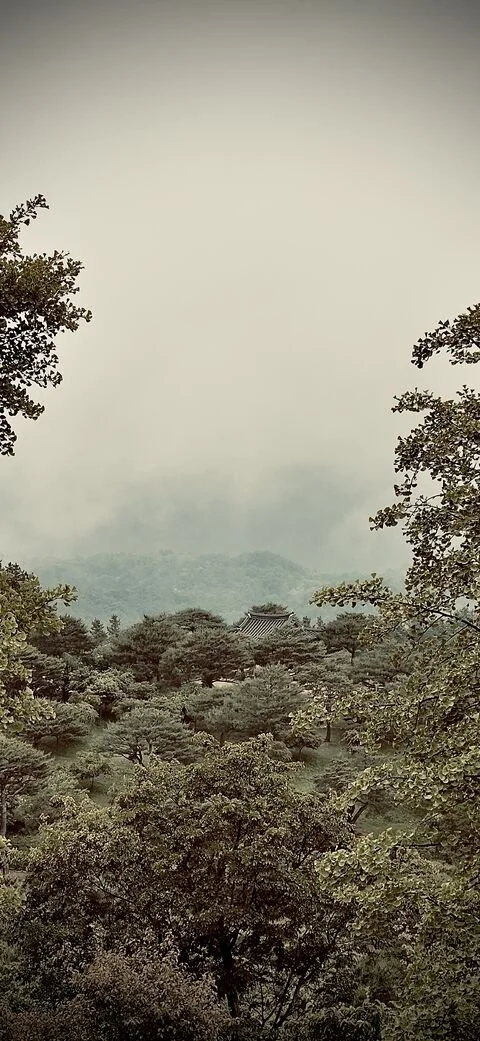
In my work, AI isn't merely a tool—it's a creative partner in dialogue, beginning in the field with what I call the 'origin image'—intuitive, sensory, & situated in real environmental encounters. It's only later, through generative processes & algorithmic augmentation, that this image enters a second life. Ai doesn't complete my work; it converses with it—extending, resisting, sometimes reframing what was first felt on site.
This echoes what Louis Jebb noted about the most compelling AI art emerging from Christie's controversial auction: the importance of thoughtful human-AI connection in creating meaningful work that transcends mere technical execution.
What's equally fascinating is how AI can access our 'collective memories' to create what some describe as profound emotional resonance. When I work with point cloud data, LiDAR scans, or splat renders in projects like my Victorian High Country Series, I'm not trying to reconstruct reality—I'm trying to listen to it.
As Refik Anadol—whose work was featured in the Christie's auction—puts it: 'Data is not just numbers; it's a form of memory and can take any shape or form.' This transforms our understanding of what constitutes artistic material in the digital age."
Christie's auction itself tells a compelling story: it brought in $728,784, surpassing expectations, with nearly half the bidders being Millennials or Gen Z and 37% completely new to Christie's. Yet it also sparked controversy, with thousands of artists signing an open letter protesting the use of AI models potentially trained on copyrighted work without permission.
This tension reveals the urgent need for artists to actively shape how AI develops—not just aesthetically, but ethically."
My current work at the Swatch Art Peace Hotel residency in Shanghai explores these very tensions: between image and data, memory and machine, nature and network. To collaborate—truly collaborate—with AI is not to cede authorship, but to expand it into new territories of meaning-making.
In doing so, perhaps we build something more than pictures: shared perceptual spaces, communal echoes, felt resonances that emerge from the intersection of human sensibility and computational possibility.
The Christie's auction represents just the beginning of this conversation. As Ai becomes increasingly prevalent in creative practice, how do we ensure it serves human flourishing rather than replacing human creativity?
I'd love to hear your thoughts on Ai in creative work—whether you're experimenting with it, questioning it, or still finding your stance.