
Sean Scully: Walls of Light and Shadows of Care, Abstraction & Being Held
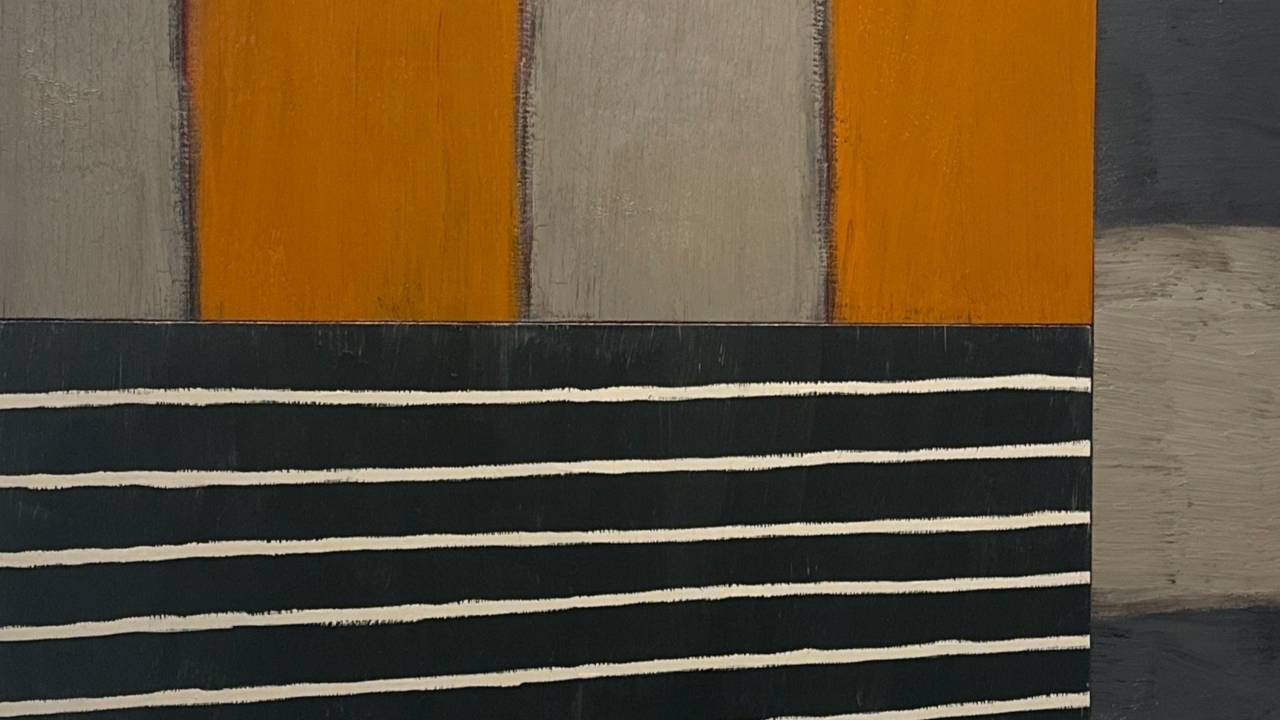
Sean Scully’s retrospective The Horizontal and The Vertical- Daegu Art Museum, May 2025
Two days ago I walked through Sean Scully’s retrospective The Horizontal and The Vertical at the Daegu Art Museum, and I haven’t stopped thinking about it since.
It was an exhibition of deep rhythm—of works that pulse with spiritual weight and structured grace. But more than that, it was an encounter that felt astonishingly intimate, interesting considering the scale of not only the works but the exhibition. As an artist working within abstraction, photography, and digital materiality, I found myself not just inspired but seen. Scully’s practice speaks in forms I recognise: repetition with variation, emotional charge within reduction, the poetic tension of surface and depth.
This article is both a reflection on that exhibition and a meditation on how its ideas resonated with my current project, To be held in the garden—a body of work exploring care, ecology, and the spaces we hold (and that hold us).
A Room of Stripes, a Wall of Thought
Sean Scully’s work lives in structure, but it breathes. You feel that the moment you enter a room of his paintings. Blocks, bands, grids—these are his grammar. But they’re never sterile. Every surface is touched. The hand remains. His abstraction is not about control. It’s about presence.
At Daegu Art Museum, this came through powerfully. From the early geometric tension of Come and Go (1981) to the sensual, almost bodily textures of Night Song (1986), the show built a kind of quiet music. One that moved through decades, materials, and continents.
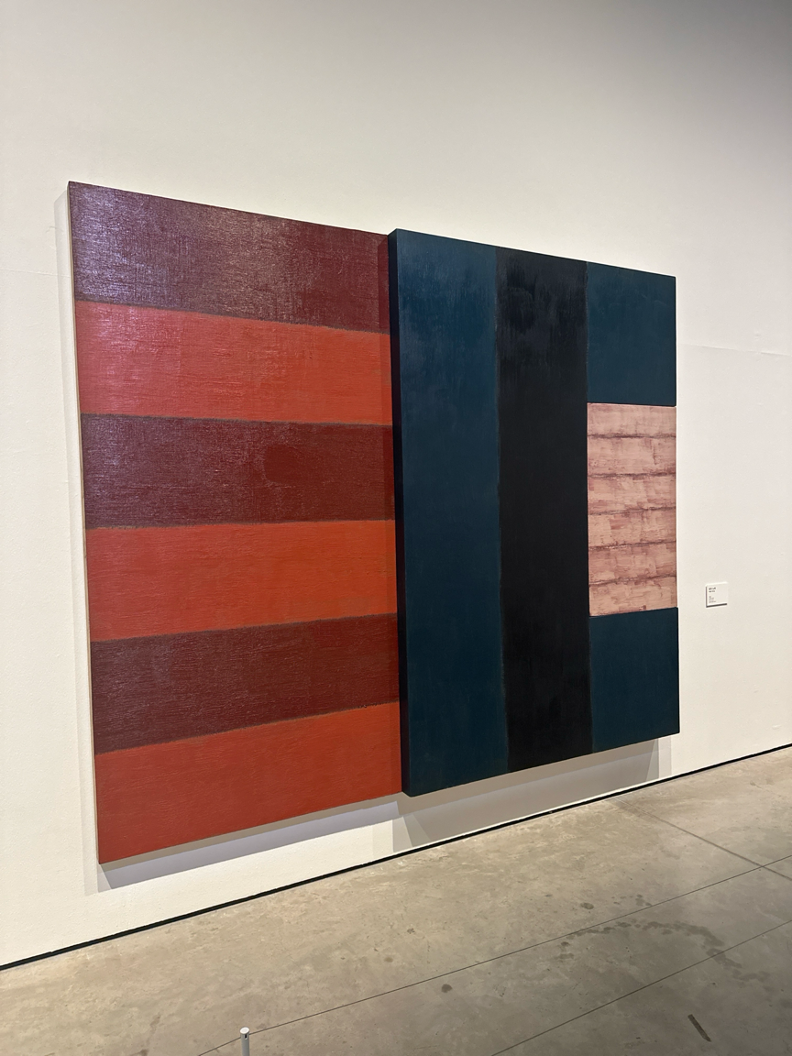
The monumental Landline paintings—layered horizontal bands of colour—evoke not just landscape, but memory. They suggest time pressing gently forward, like waves arriving on a shore. In Landline Edouard (2017), that movement is thick with mood: blue pressed against black, orange drifting into shadow. It reminded me of certain dusk-lit moments on my own photographic walks—where the frame isn’t about capturing what’s seen, but what’s felt just before it disappears.
Metaphysical Stripes, Emotional Depth
One wall text caught me particularly:
“The idea of a ‘wall of light’ is of course metaphysical… So one is looking consciously at one kind of colour, and feeling this rhythm running underneath the painting… offering a very different feeling to the first impression.”
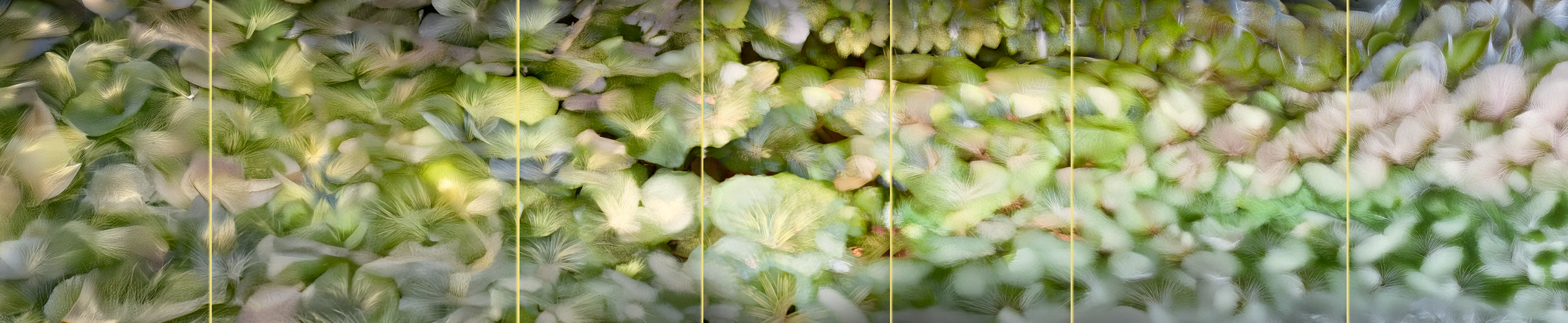
That idea—of looking beneath the surface, of painting (or image-making) as something layered and time-sensitive—is foundational to my own work. In To be held in the garden, I use photography, generative AI, and layered digital processes not to obscure reality, but to unfold it slowly. Like Scully, I believe abstraction can be emotional. Romantic, even. But never naïve.
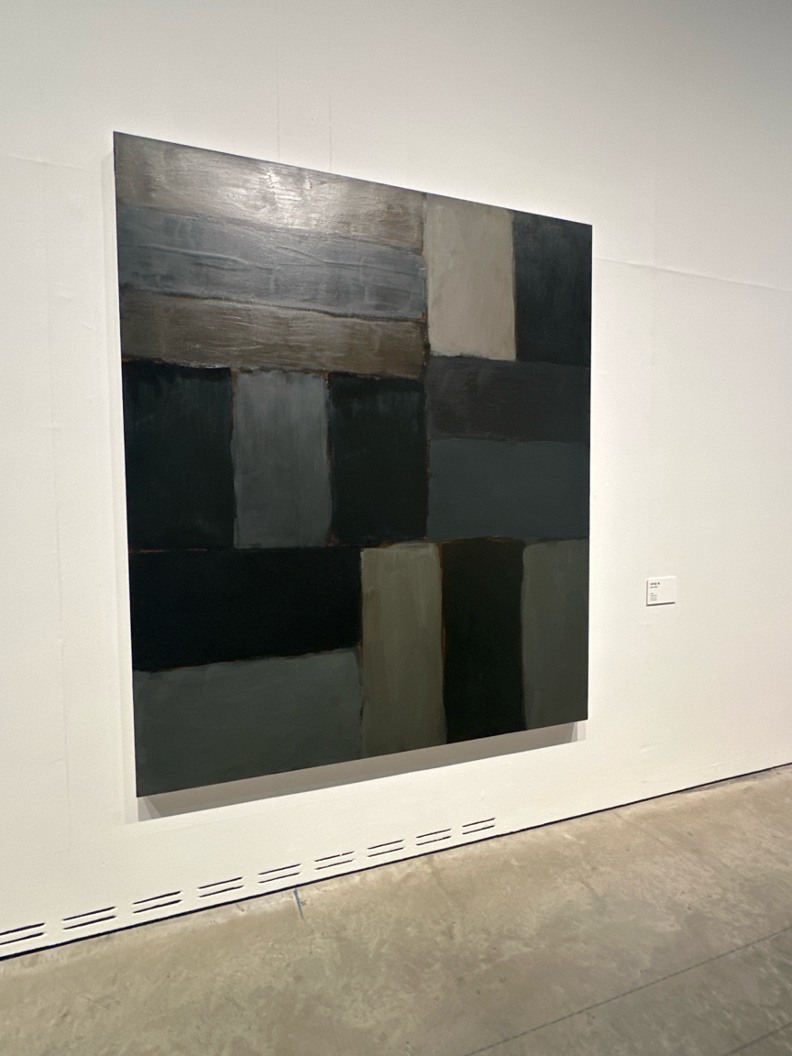
His Dark Wall (2006) exemplifies this. It’s a brooding composition, austere at first glance. But step closer, and the paint shimmers. The blacks are not flat. The greys flicker. The surface tells you one story; the depth tells another. That’s the power of committed abstraction—it invites a longer gaze. It teaches patience. It rewards care.
Belief, Negation, and the Square as Portal
Scully writes that he once placed “nihilism or negativity into the middle of belief” with a black square. That stuck with me. Because that’s also how I’ve come to think of the unresolved gaps in my own medium—particularly in my exploration of point cloud data and Gaussian splat techniques.
In these digital models, there are always voids—spaces between the points, splats that blur without anchoring to any fixed reality. For some, they’re seen as problems to resolve. But I’ve come to see them as full of potential. Like Scully’s square, these voids aren’t negations. They’re spaces of becoming. The unseen between things. The breath between words.
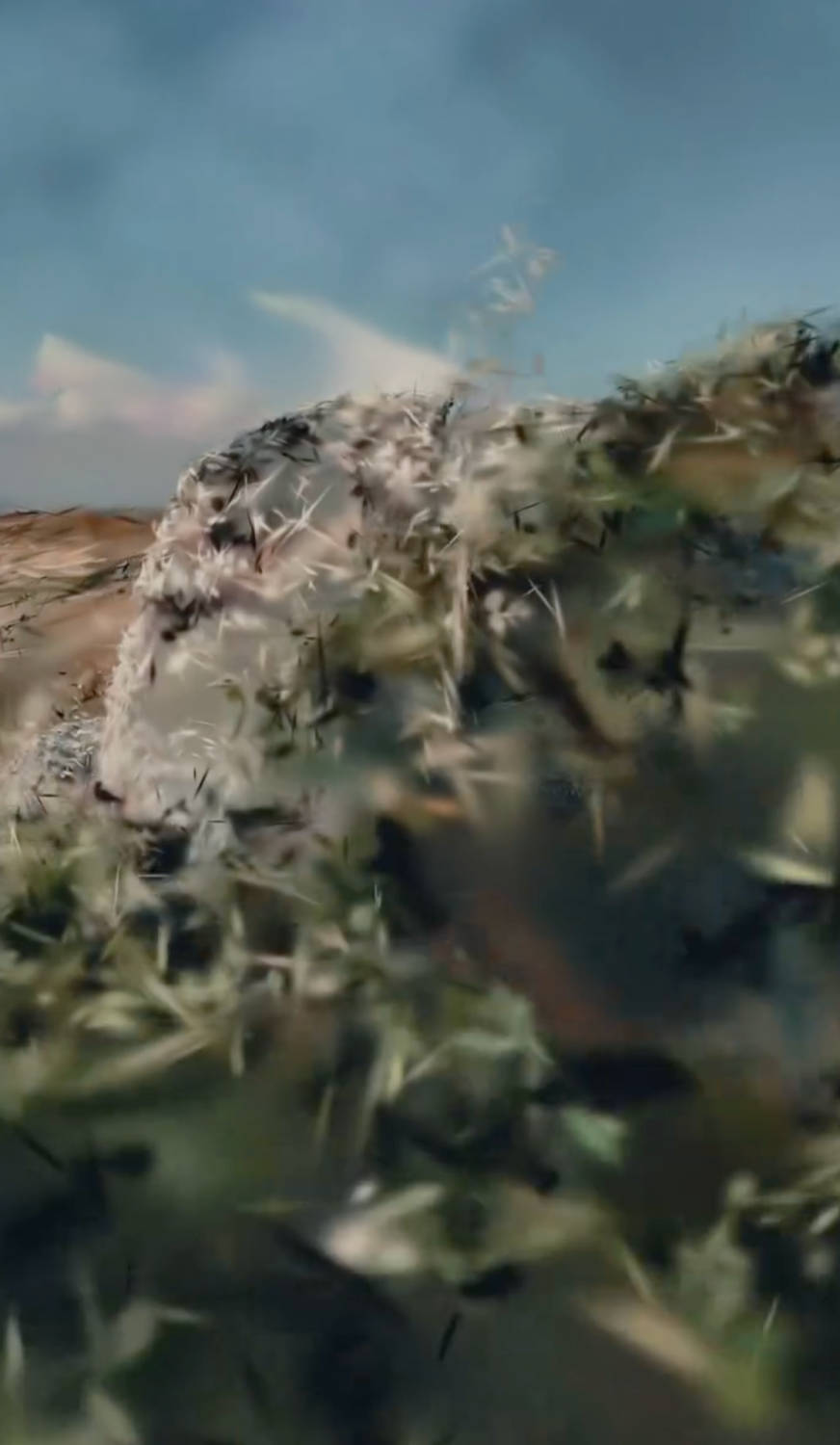
For me, that’s the connection: abstraction is not the absence of meaning. It’s the condition that holds meaning—makes space for it, lets it surface when ready.
From Black and White to the Garden
One quote at the exhibition read:
“Black and White is the absolute colour equivalent of the horizontal and the vertical... I am at my most spiritually ambitious.”
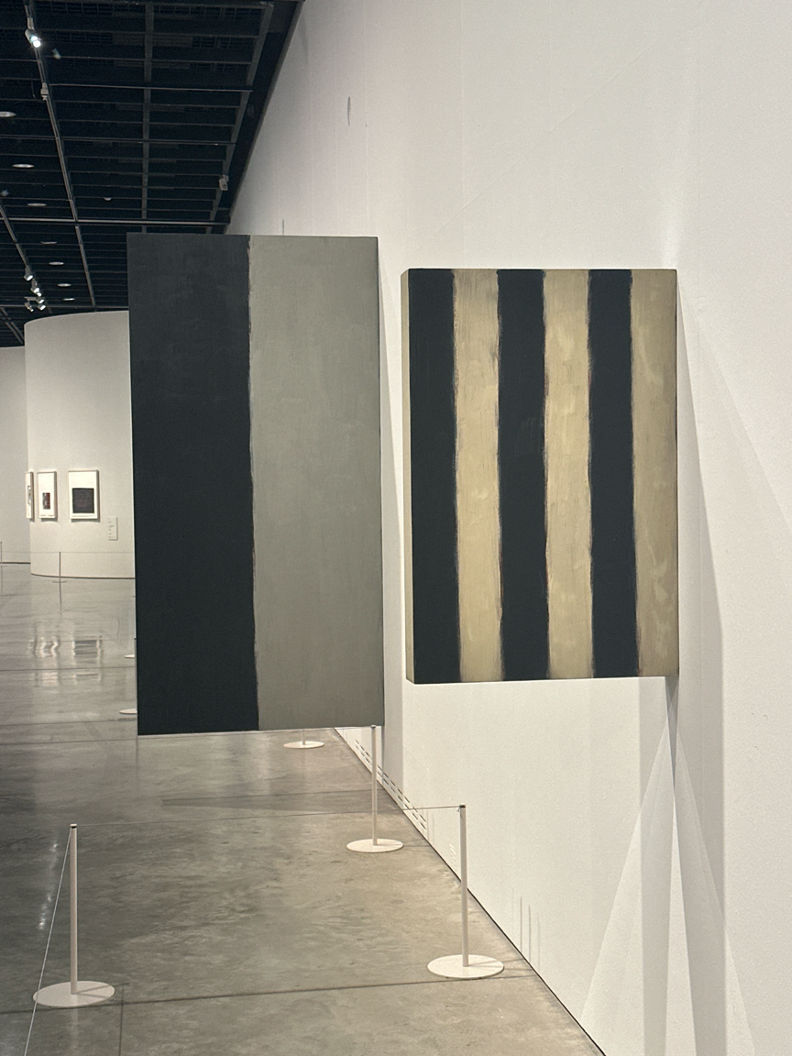
There’s something deeply moving about that ambition. Not flashy. Not didactic. But quietly insistent: that even in reduction, we can reach for the transcendent.
In my current work—To be lost in the garden—I’m searching for that same quality. These are not “pictures of gardens” in any literal sense. They are gestures of care, built slowly. Photographs and textures woven together to evoke being cradled, protected, nurtured—especially in times of ecological or emotional instability.
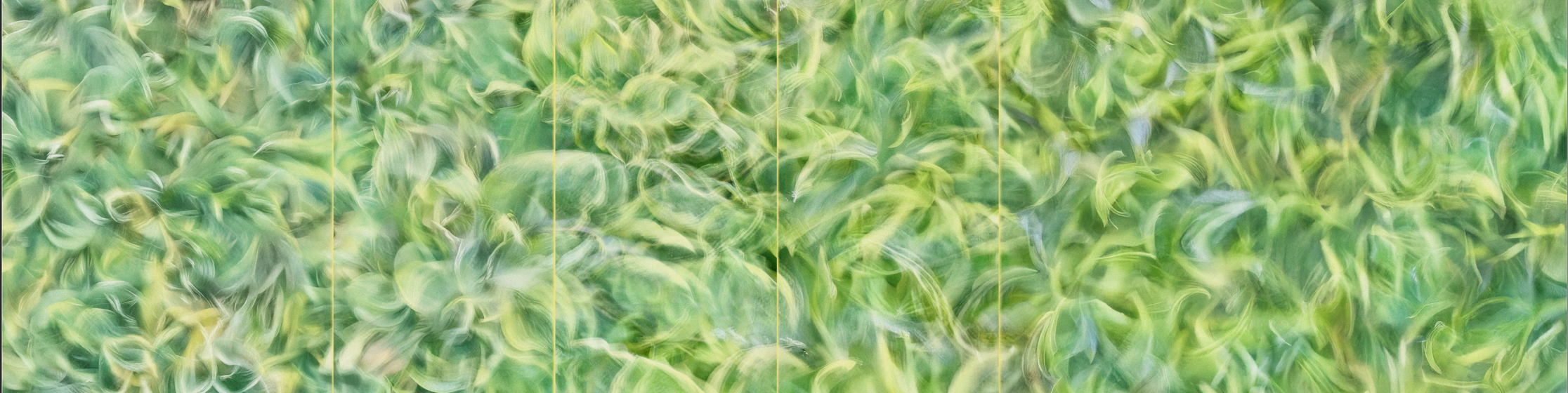
And I realise now, walking through Scully’s rooms, that I’m also building walls of light. Or trying to. Layered images. Folded time. Digital fragments that, when composed with care, might glow.
Lessons in Rhythm and Resonance
Three final works stood out to me.
Block Triptych (2016) – Painted on aluminium, these forms resemble architectural models. Yet they feel deeply human. The brushwork is deliberate but loose. The forms are rigid but tilting. Structure, again, meeting emotion.
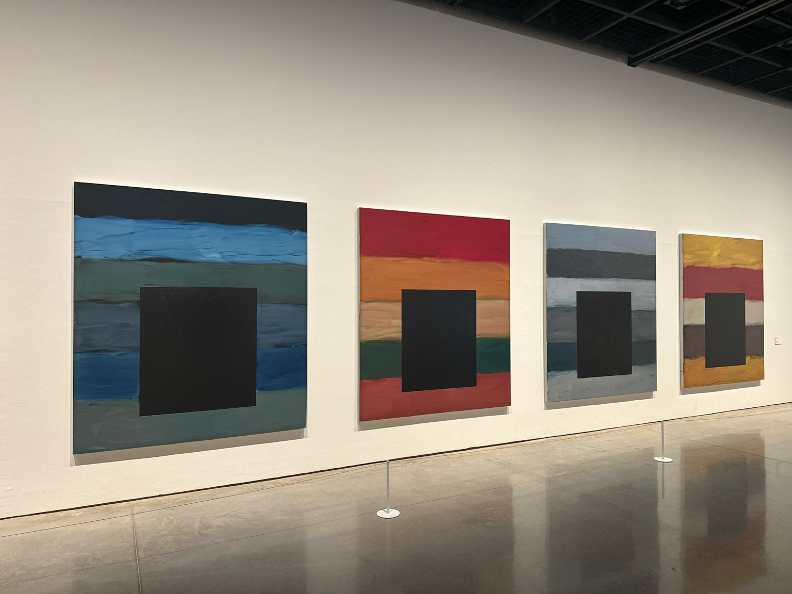
Dark Windows (2020) – A series of colour fields with matte black voids in the centre. At first, I thought of Rothko. But these aren’t windows into spiritual suffering. They’re frames. They pull the eye inward, then stop it. Like breath held in contemplation.
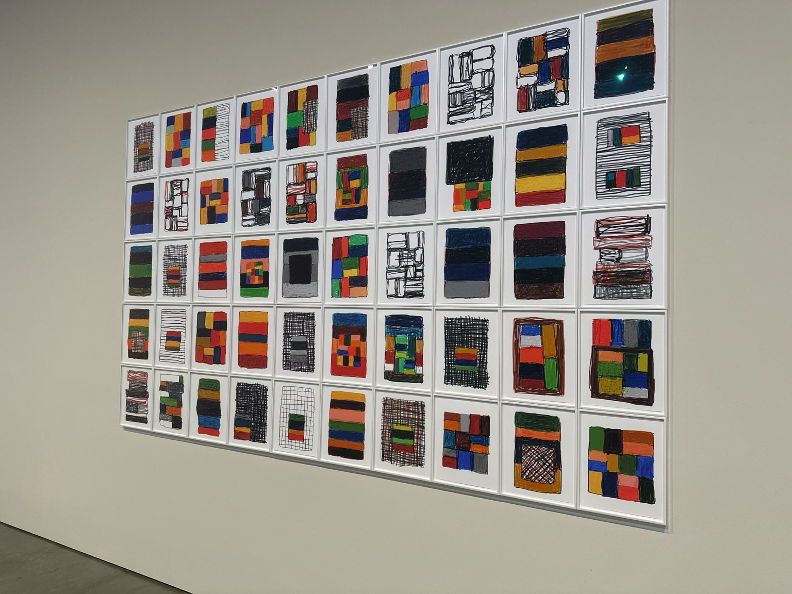
The 50 (2021) – A grid of 50 small prints, sketched on an iPhone, later printed as archival pigment works. It’s a playful, intuitive counterpoint to his monumental canvases. And yet it holds equal weight. It reminded me that all creative acts—digital or analogue, massive or miniature—are part of the same pulse.
Being Held
I walked out of Daegu Art Museum changed—not just as a viewer, but as an artist.
Scully’s work affirmed something I’ve long felt but rarely seen so clearly: that abstraction, when done with care, doesn’t distance—it draws us closer. It doesn’t hide meaning—it lets it emerge slowly, like a garden waking to light.
In a world that so often demands immediacy and clarity, these works taught me the value of ambiguity, rhythm, and touch. And above all, the power of presence. Of staying. Of being held.
That’s what I hope my own work can offer. A place of pause. A layered space. A soft, steady invitation to look again.
If you’re in Daegu before August 17, 2025, don’t miss this exhibition. Whether you’re a painter, a photographer, or someone who just needs to feel something true—you’ll find yourself in good company here.
And if you’d like to see how this experience is shaping my own practice, I’d love to share more about To be held in the garden—feel free to reach out or follow along as I develop the series.
Bronisław (Bronek) Kozka
Artist | Curator | Explorer of the Sublime